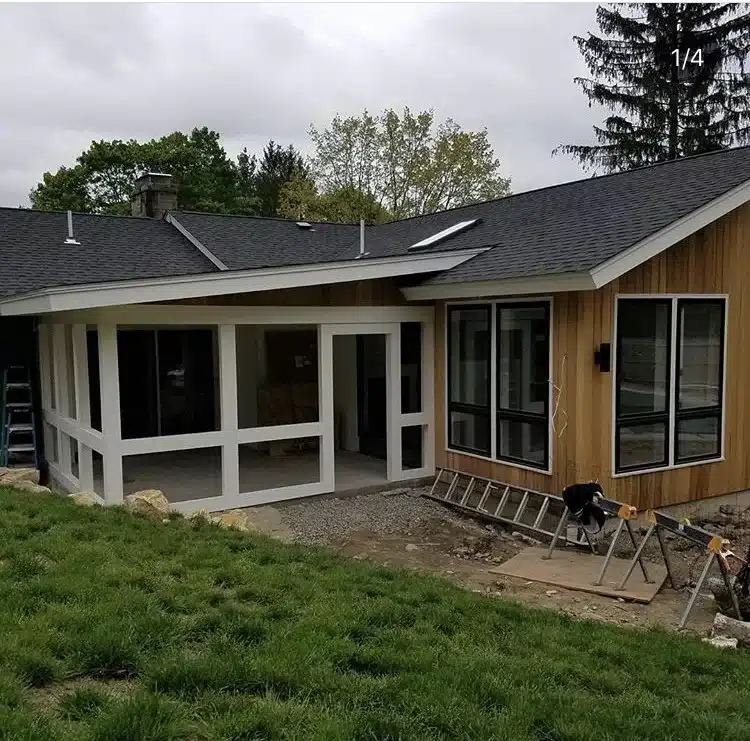
What Does an In-Law Suite Addition Really Cost?
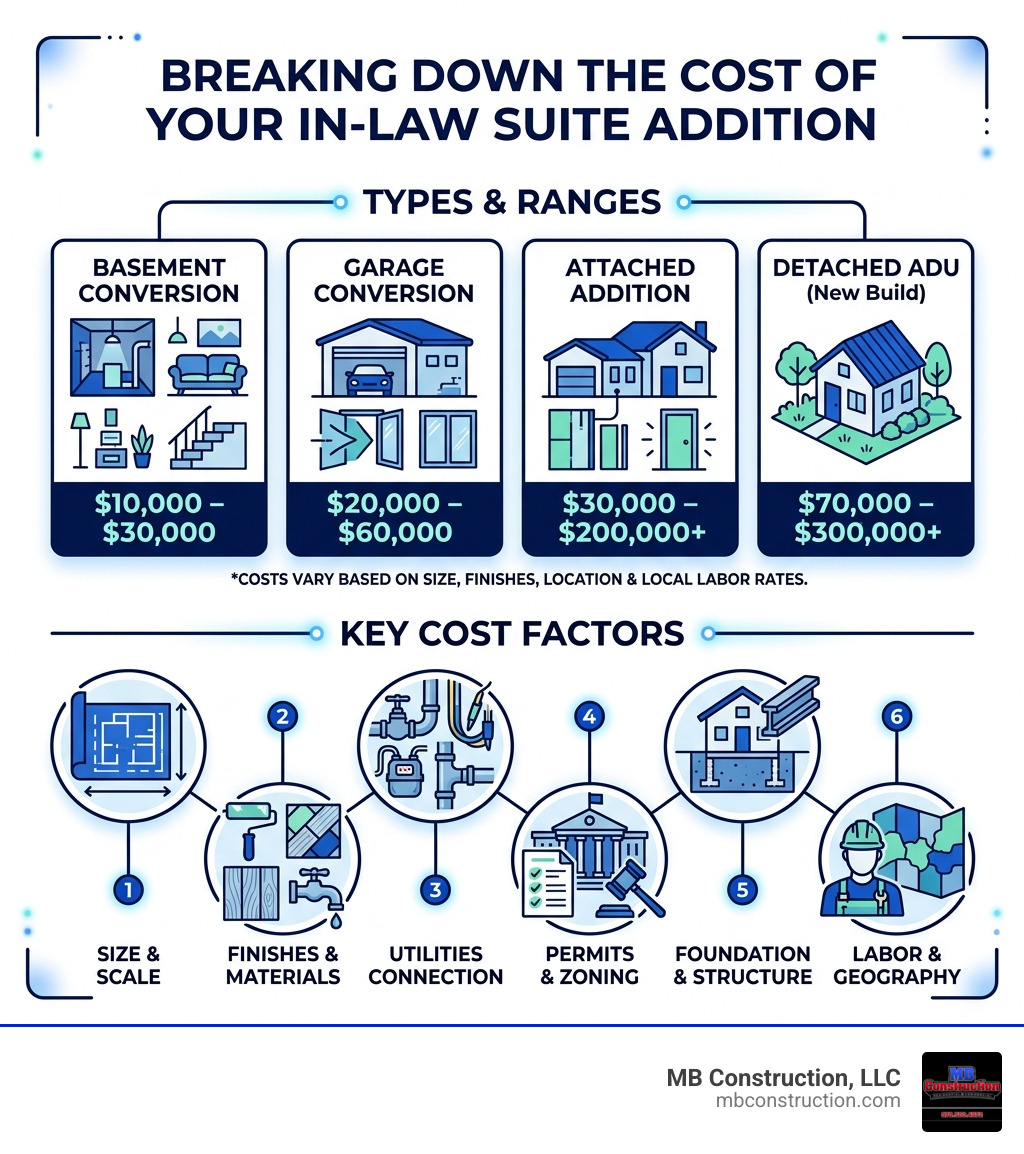
In-law suite addition cost typically falls between $25,000 and $265,000, with most homeowners in the U.S. spending around $82,750. Here’s a quick breakdown by type:
| Addition Type | Typical Cost Range |
|---|---|
| Basement conversion | $10,000 – $30,000 |
| Garage conversion | $20,000 – $60,000 |
| Attached addition | $30,000 – $200,000+ |
| Detached ADU (new build) | $70,000 – $300,000+ |
Costs vary based on size, finishes, location, and local labor rates.
Maybe you have aging parents who need to be close but still want their independence. Maybe you’re thinking about rental income to offset your mortgage. Or maybe you just need more space for a growing family.
Whatever the reason, adding an in-law suite is one of the biggest home decisions you’ll make — and one of the most valuable.
But the cost? It’s not one-size-fits-all. A simple basement conversion and a fully detached accessory dwelling unit (ADU) can differ by hundreds of thousands of dollars. The right budget depends on your home, your goals, and your local rules — especially here in Massachusetts, where zoning laws and labor costs shape every project.
This guide breaks it all down so you can plan with confidence.
In-law suite addition cost word roundup:
- bespoke home construction
- in-law suite addition floor plans with pictures
- pictures of in law additions
Understanding the In-Law Suite Addition Cost by Type
When we talk about an in-law suite, we are essentially discussing an Accessory Dwelling Unit (ADU). These are self-contained living spaces that include a sleeping area, a full bathroom, and usually a kitchenette or full kitchen. Because they function as independent homes, the in-law suite addition cost is heavily influenced by how much new infrastructure we have to build.
In the Greater Boston area and throughout Middlesex County, we see four main ways to bring these suites to life:
Basement and Garage Conversions
These are often the most budget-friendly options because the “shell” of the building already exists. A basement conversion typically ranges from $10,000 to $30,000 for basic setups, though full legal apartments with kitchens can climb higher. Garage conversions often start around $20,000 and can reach $60,000 or more depending on whether the floor needs leveling or the walls need significant insulation.
Attached Additions
This is a “bump-out” or a new wing added to your existing home. It offers a great balance of proximity and privacy. These builds typically start at $30,000 for simple room extensions but can easily exceed $200,000 for high-quality, fully integrated suites that match your home’s existing architecture. For more details on these types of projects, check out our guide on in-law suite additions keeping family close but not too close.
Detached ADUs
A detached suite is a standalone structure in your backyard. Because it requires its own foundation, roofing, and separate utility hookups, it is the most expensive path. Nationally, these range from $70,000 to $300,000, but in high-demand areas like Lexington or Andover, custom builds often sit at the higher end of that spectrum.
For a deeper dive into national averages and data, What Is the Average Cost to Build an In-Law Suite? [2025 Data] provides excellent context on how these prices fluctuate across the country.
Square Footage and Material In-Law Suite Addition Cost

Size is the most obvious driver of price. On average, you can expect to pay between $150 and $300 per square foot for a new in-law suite. A standard 500-square-foot suite might cost $75,000 to $150,000, while a spacious 1,000-square-foot unit could reach $300,000.
Materials take up a significant portion of that budget. Here is how those costs typically break down:
- Foundation: $7,000 – $15,000 (for new additions or detached units).
- Framing and Roofing: $15,000 – $35,000.
- Windows and Doors: High-quality, energy-efficient windows are essential in Massachusetts winters. Expect to spend $3,000 – $8,000.
- Drywall and Insulation: $5,000 – $10,000 to keep the space quiet and warm.
According to How Much Does It Cost to Build an In-Law Suite? [2026 Data] | Angi, the choice of finishes—like granite countertops versus laminate—can swing the total project cost by 20% or more.
Labor and Utility In-Law Suite Addition Cost
Labor in Eastern Massachusetts is a major factor in your in-law suite addition cost. You aren’t just hiring a “builder”; you are hiring a team of specialized experts.
- Plumbing: Adding a new bathroom and kitchenette requires significant pipework. This usually costs between $8,000 and $20,000.
- Electrical: Wiring a self-contained unit with its own breakers typically runs $4,000 to $10,000.
- HVAC: We often recommend mini-split systems for in-law suites. They allow for independent temperature control and usually cost between $3,000 and $8,000 installed, which is much cheaper than extending a central HVAC system.
- Professional Fees: You will need an architect or designer to ensure the space is functional and legal. Architect fees typically range from 10% to 20% of the total project cost.
Permits and egress requirements are also non-negotiable. In Billerica or Reading, a permit might cost anywhere from $500 to $5,000 depending on the project’s scope. If you are building in a basement, you must factor in the cost of egress windows for safety, which can add $2,500 to $5,000 per window. For a more localized look at these numbers, see our article breaking down the average cost of home addition in massachusetts.
Regional Regulations and Zoning in Massachusetts
If you live in Middlesex County or the Greater Boston area, there is some very good news. The Massachusetts Affordable Homes Act, effective in early 2025, has made building an ADU much easier. In many cases, ADUs up to 900 square feet are now allowed “by-right” on single-family lots. This means you may no longer need a special permit to build a suite for your parents or for a tenant.
However, local nuances still exist in towns like Billerica, Lexington, and Wilmington:
- Setbacks: Your addition must be a certain distance from your neighbor’s property line.
- Height Restrictions: Detached units often have strict height limits.
- Utilities: Some towns require separate water or sewer hookup fees, which can add thousands to your in-law suite addition cost.
We stay up-to-date on all these changes to ensure your project doesn’t hit a legal wall. You can learn more about these specific requirements on our adu-in-law addition page.
Maximizing ROI: Is an In-Law Suite a Good Investment?
Is it worth it? From a financial perspective, the answer is usually a resounding “yes.”
Property Value Increase: Adding a legal in-law suite can increase your home’s market value by up to 30%. In a high-demand market like Greater Boston, homes with “multigenerational potential” are highly coveted and often sell faster.
Rental Income: If you aren’t using the suite for family, renting it out can provide a significant stream of passive income. In our region, a well-appointed ADU can rent for $1,500 to $2,500 per month. At those rates, a $120,000 investment could pay for itself in less than seven years.
Universal Design: When we build these suites, we often incorporate “universal design”—features like walk-in showers, wider doorways, and lever-style handles. These make the home accessible for aging parents today and a valuable asset for any future buyer tomorrow. Explore our general home additions page to see how we integrate these features into every build.
Frequently Asked Questions about In-Law Suites
How long does it take to build an in-law suite?
The timeline generally ranges from 2 to 7 months.
- Conversions (Basement/Garage): 6 to 12 weeks.
- Attached Additions: 12 to 20 weeks.
- Detached ADUs: 16 to 24 weeks. That the permitting process in Massachusetts can take an additional 1 to 2 months before a single nail is driven.
How can I save money on an in-law suite addition?
Building a suite is a major investment, but there are ways to keep the in-law suite addition cost under control:
- Stay within the footprint: Converting a garage or basement is almost always cheaper than building “out” or “up.”
- Choose an attached build: Sharing a wall and existing utility lines with the main house saves thousands in labor and materials.
- Opt for standard finishes: You can always upgrade light fixtures or faucets later. Focus your budget on the “bones” like insulation and plumbing.
- Use mini-splits: As mentioned, these save you from the massive expense of re-ducting your entire home.
What financing options are available for ADUs?
Most homeowners don’t pay for an addition in cash. Common options include:
- HELOC (Home Equity Line of Credit): This is the most popular choice, offering flexibility and often lower interest rates.
- Cash-Out Refinance: Replacing your current mortgage with a new, larger one to pocket the difference.
- Construction Loans: Specifically designed for major home improvements.
- Personal Loans: Better for smaller conversion projects (under $50,000).
Conclusion
At MB Construction, LLC, we know that an in-law suite is more than just a line item in a budget—it’s a way to keep your family together, provide for your parents, or secure your financial future. Based in Billerica, we serve neighbors across Middlesex County, from the historic streets of Lexington to the quiet neighborhoods of North Reading and beyond.
Our commitment to quality-driven, time-sensitive projects means we use only premium materials and expert craftsmen. We stand behind our work with guaranteed workmanship because we know how important these spaces are to your daily life.
If you are ready to explore what’s possible for your property and get a detailed estimate on your in-law suite addition cost, we are here to help. Visit our home additions page to start the conversation today. Let’s build something that makes your home work harder for you.