
What You Need to Know Before Adding a Sunroom to Your House
Adding a sunroom to your house is one of the most popular home improvement projects for Massachusetts homeowners — and for good reason.
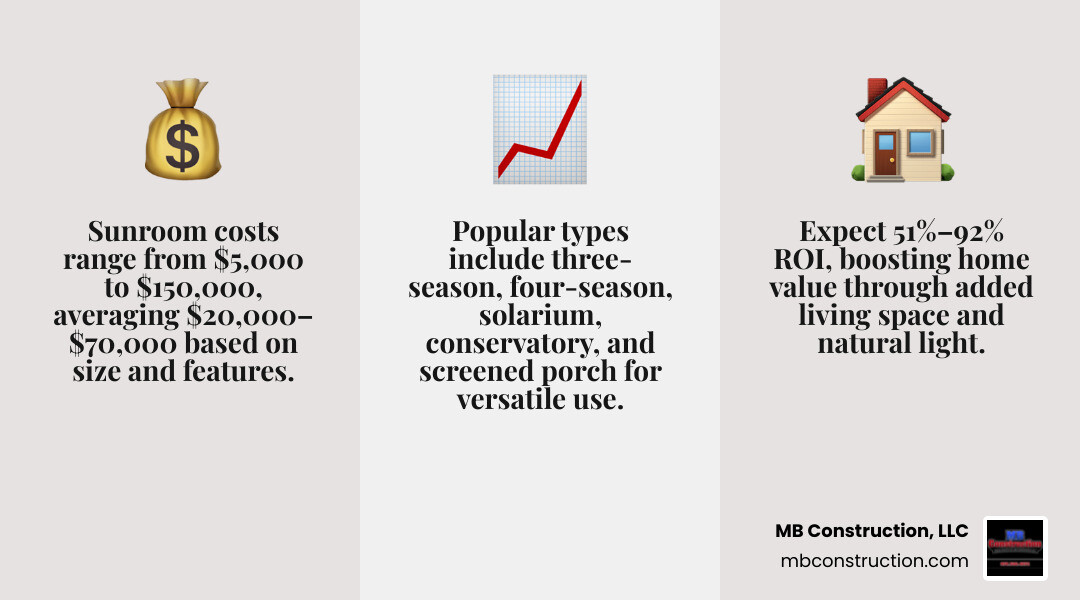
Here’s a quick overview of what to expect:
| Factor | Key Details |
|---|---|
| Cost range | $5,000 to $150,000 (avg. $20,000–$70,000, based on internet data) |
| Cost per sq ft | ~$120 standard; up to $300 for high-end builds |
| ROI | 51%–92% return on investment |
| Types | Three-season, four-season, solarium, conservatory, screened porch |
| Permit required? | Yes, in most Massachusetts towns |
| Best for | Extra living space, home office, indoor garden, dining area |
A sunroom sits somewhere between a full room addition and an outdoor porch. It’s enclosed, filled with natural light, and designed to connect your indoor living space to the outdoors — without the bugs, wind, or cold.
Picture yourself on a quiet morning, coffee in hand, watching the backyard come to life through floor-to-ceiling glass. That’s the appeal. But before you get there, there’s a lot to plan — type, location, materials, permits, and budget.
This guide covers everything you need to make a smart decision, whether you’re in Andover, Lexington, Wilmington, or anywhere else in the Greater Boston area.
Important adding a sunroom to house terms:
Understanding Sunroom Types and Their Benefits
When we talk about adding a sunroom to house structures, it’s important to realize that “sunroom” is a broad umbrella term. In Middlesex County, the type of room you choose determines whether you’ll be enjoying it year-round or just during our beautiful (but brief) New England summers.

There are four primary styles we see most often:
- Three-Season Sunrooms: These are designed for use from spring through fall. They typically feature single-pane glass and lack heavy insulation or a connection to your home’s central HVAC system. They’re fantastic for enjoying a breeze in Reading or North Reading without the mosquitoes, but they’ll get chilly once the November frost hits.
- Four-Season Sunrooms: This is a true home addition. These rooms are fully insulated, feature thermally broken frames, and are tied into your home’s heating and cooling systems. Whether it’s a heatwave in Burlington or a blizzard in Chelmsford, a four-season room remains a comfortable, livable space.
- Solariums: If you want to feel like you’re living in a glass bubble (in the best way possible), a solarium is the answer. These structures feature glass walls and a glass roof. They offer unparalleled views of the sky but require careful planning regarding energy efficiency and cleaning.
- Conservatories: Often the most ornate option, conservatories are traditionally used as greenhouse spaces. They feature elaborate glasswork and are perfect for homeowners in Carlisle or Bedford who want a dedicated space for exotic plants and elegant afternoon teas.
For those looking for a unique perspective, we often suggest looking into Top Tier Sunroom Designs For Your Second Floor to maximize views and save backyard space. According to the Sunroom Addition Guide (6 Planning, Permits & More), choosing the right type is the foundation of a successful project.
Popular Uses for a Sunroom
The beauty of adding a sunroom to house layouts is the sheer versatility of the space. We’ve helped clients in Billerica and Tewksbury transform these areas into:
- The Ultimate Home Office: Natural light is a proven mood-booster. Working from a sunroom can make those long Zoom calls feel a lot less like a chore.
- Indoor Garden Oasis: For the green thumbs in Wilmington and Andover, a sunroom provides a controlled environment to grow tropical plants, succulents, or even citrus trees that wouldn’t survive a Massachusetts winter outdoors.
- Dining with a View: Imagine hosting a dinner party where you can see the stars or the falling snow while staying perfectly warm.
- Relaxation and Wellness: Many of our clients use their sunrooms as dedicated yoga studios, reading nooks, or meditation spaces where the connection to nature helps them unwind.
Planning and Designing Your Sunroom Addition
Designing a sunroom is about more than just picking out pretty windows. It requires a strategic look at how the structure will interact with the sun and your existing home.
One of the most critical factors is “heat gain exposure.” If you place a sunroom on the wrong side of your house, it could become a literal sauna in the summer or a walk-in freezer in the winter. We recommend working with a professional remodeling services team to evaluate your specific lot and architectural needs.
As noted in Sunroom Additions: Design Ideas and Considerations for Your Home, you want the addition to look like it was built with the house, not tacked on as an afterthought. This means matching rooflines, siding, and even the trim details found in your original architecture.
Choosing the Right Location for Adding a Sunroom to House
Location is everything. Here is how we break down orientation for our Middlesex County clients:
- Southern Exposure: This is the “gold standard” for northern climates like ours. A south-facing sunroom will capture the maximum amount of sunlight during the winter, helping to naturally warm the space. However, you’ll need to plan for cooling solutions (like ceiling fans or high-end shades) for the peak of summer.
- Northern Exposure: This provides lower levels of light and less heat. It’s ideal if you want a consistent, soft light for an art studio or a quiet reading room that doesn’t get too hot.
- Eastern Exposure: You’ll get the morning sun—perfect for breakfast nooks—and shade in the afternoon when temperatures rise.
- Western Exposure: Be careful here. Western sun can be incredibly intense in the late afternoon, often requiring specialized window coatings to prevent glare and overheating.
Beyond the sun, consider privacy from neighbors in denser areas like Greater Boston and site factors like existing trees or patios that might impact the foundation.
Materials and Structural Integration
When adding a sunroom to house exteriors, the materials you choose will dictate the room’s durability and energy efficiency. We pride ourselves on being a home remodeling contractor that uses only premium materials to ensure your investment lasts for decades.
Common framing materials include:
- Vinyl: The most popular choice due to its low maintenance, excellent insulation properties, and cost-effectiveness.
- Aluminum: Strong and lightweight, aluminum allows for thinner frames and more glass area, though it isn’t as naturally insulating as wood or vinyl.
- Wood: Best for traditional aesthetics and screened-in rooms, but it requires more maintenance (painting and staining) to prevent rot.
The glass is the most important component. We highly recommend double-paned glass with a Low-E (low-emissivity) coating. This microscopic layer reflects heat back to its source—keeping heat inside during the winter and outside during the summer. Argon gas filling between the panes can further increase insulation values.
Structural Requirements for Adding a Sunroom to House
A sunroom isn’t just a “box of glass” sitting on the ground. It requires serious structural integrity. As experts in home additions, we focus on three key areas:
- The Foundation: You can’t just build a four-season room on a standard wooden deck. It needs a solid foundation—typically a concrete slab or footings that reach below the frost line—to prevent shifting during the freeze-thaw cycles common in Eastern MA.
- Roof Flashing: This is where many DIY projects fail. Proper flashing ensures a watertight seal where the sunroom roof meets the house. Without it, you’re looking at leaks and wood rot.
- Wall Attachment: We ensure the sunroom is structurally tied into your home’s existing studs or headers. This isn’t just for stability; it’s a requirement for modern building codes.
Cost Analysis: What to Expect When Adding a Sunroom to House
Let’s talk numbers. The cost of adding a sunroom to house projects can vary wildly based on your choices. Based on internet data, the average cost for a sunroom addition typically falls between $20,000 and $70,000, though the full range is much broader.
| Sunroom Type | Average Price Range (Internet Data) | High-End Custom Range |
|---|---|---|
| Screened-In Room | $5,000 – $15,000 | $30,000+ |
| Three-Season Room | $10,000 – $40,000 | $80,000+ |
| Four-Season Room | $25,000 – $80,000 | $150,000+ |
| Solarium / Conservatory | $30,000 – $90,000 | $150,000+ |
Note: These are average costs based on internet data. Your specific project in Lexington or Andover may vary based on site conditions and material choices.
While a sunroom is often more affordable than a garage addition, a high-end four-season room with full HVAC and custom masonry can certainly reach the higher end of the spectrum.
Factors Affecting the Total Investment
Several variables will push your project toward the lower or higher end of those ranges:
- Square Footage: Larger rooms require more materials and labor. A standard 12×12 room is a common starting point.
- HVAC Integration: Extending your home’s ductwork or installing a dedicated mini-split system for a four-season room adds to the cost but ensures year-round comfort.
- Glass Quality: Moving from standard double-pane to triple-pane or specialized UV-reflecting glass will increase the initial investment but save you money on utility bills.
- Site Prep: If we need to excavate a slope or remove a large tree in your North Andover backyard, those labor costs will be reflected in the total.
The good news? The return on investment (ROI) for a sunroom is impressive, often ranging from 51% to 92%. Beyond the financial gain, the lifestyle improvement of having a bright, cheery space during a gray Massachusetts winter is, for many, priceless.
Frequently Asked Questions about Sunroom Additions
What is the difference between a solarium and a sunroom?
While the terms are often used interchangeably, the main difference is the roof. A standard sunroom has an opaque roof (usually shingles or panels that match your house), while a solarium has a glass roof. Solariums offer more light but can be harder to keep clean and more expensive to heat and cool.
Do I need a building permit for a sunroom in Massachusetts?
Yes. Whether you are in Billerica, Chelmsford, or Burlington, any structural addition requires a permit. This ensures the foundation is safe, the electrical wiring is to code, and the structure can handle New England snow loads. We handle the permitting process for our clients to ensure everything is above board.
How does a sunroom impact my home’s resale value?
Adding a sunroom to house value is a proven strategy. It increases your home’s usable square footage and “curb appeal.” Four-season rooms generally offer a higher ROI than three-season rooms because they are considered year-round living space, which appraisers value more highly.
Conclusion
Adding a sunroom to house layouts is a transformative journey that blends the best of your indoor and outdoor worlds. From the initial design phase to the final walkthrough, it’s a project that requires precision, quality materials, and a deep understanding of the local climate.
At MB Construction, LLC, based in Billerica, MA, we specialize in high-quality, time-sensitive home additions across Middlesex County and the Greater Boston area. Our team of expert craftsmen is dedicated to providing quality-driven results that stand the test of time, whether you’re in Andover, Lexington, or Wilmington.
Ready to stop dreaming and start building? We provide guaranteed workmanship on all home additions. Contact us today to schedule a consultation and let us help you avoid a “glassy mess” by doing it right the first time.
