
Strategic Benefits of Second-Story Sunroom Additions
A 2nd story sunroom is an enclosed, glass-wrapped room built at the upper level of your home — and it’s one of the most versatile additions a Massachusetts homeowner can make.
Here are the top second-story sunroom designs to consider:
- Artist studio or creative workspace — Large windows, panoramic light, and privacy make upper-level sunrooms ideal for creative work.
- Home office — Elevated, quiet, and flooded with natural light — a far better setup than a spare bedroom.
- Luxury lounge or dining area — Enjoy al fresco-style entertaining year-round with elevated backyard views.
- Yoga or fitness studio — Natural light and seclusion create a calm, energizing space.
- Indoor garden or conservatory — High sun exposure supports thriving plants like succulents, orchids, and citrus.
- Guest suite or reading room — A bright, peaceful retreat above the noise of daily life.
Unlike a ground-floor addition, an upper-level sunroom gives you something most rooms simply can’t — elevation. You’re above the fence line, above the foot traffic, and above the ordinary. Sunrise views, treetop sightlines, and a real sense of seclusion come standard.
For homeowners in Andover, Lexington, Burlington, and across Greater Boston, this type of addition also solves a common problem: you need more space, but you don’t want to sacrifice your yard.
Building up — not out — keeps your outdoor space intact while dramatically expanding your livable square footage.
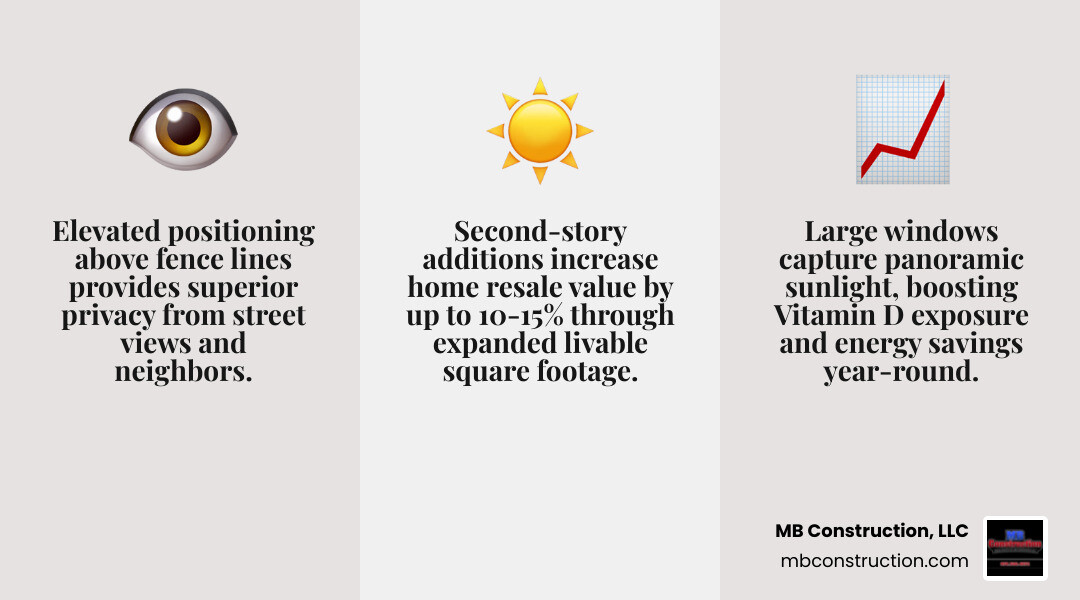
Primary Benefits of a Second-Story Sunroom
When we talk to homeowners in Billerica and surrounding Middlesex County, the first question is often: “Why go up instead of out?” The answer lies in the unique perspective a second-story addition provides. A 2nd story sunroom acts as a private sanctuary, physically removed from the high-traffic areas of the first floor.
Beyond the obvious aesthetic appeal, these rooms offer tangible lifestyle improvements. They provide a safe, mud-free environment for pets to bask in the sun and offer parents a “bird’s eye view” of the backyard. From a financial standpoint, adding a sunroom increases your home’s square footage and resale value, making it a savvy investment for long-term residency. If you are considering expanding your living space, you can Explore Second and Third Floor Additions in Billerica, MA to see how vertical growth preserves your precious lawn and garden space.
Enhanced Privacy and Elevated Perspectives
One of the most significant advantages of an upper-level sunroom is the inherent privacy it affords. At ground level, expansive windows often require blinds or heavy curtains to block the view of neighbors or street traffic. On the second floor, you are naturally secluded. You can enjoy floor-to-ceiling glass without feeling like you’re on display.
This elevation also transforms your relationship with the outdoors. Instead of looking at your fence, you are looking over it. For homes near the water or those with lush wooded backyards in Carlisle or Concord, the panoramic views are unmatched. You get the best seat in the house for sunrises and sunsets, creating a daily connection to nature that ground-floor rooms simply cannot replicate.
Maximizing Natural Light in a Second-Story Sunroom
Natural light is more than just a design choice; it is a health necessity. Research shows that increased sun exposure helps regulate our circadian rhythms, improves mood, and boosts Vitamin D levels. By placing your sunroom on the second story, you often clear the shadows cast by nearby trees or adjacent buildings, ensuring your room stays bright from dawn until dusk.
This abundance of light also offers energy-saving potential. During our crisp Massachusetts winters, a well-positioned 2nd story sunroom acts as a passive solar heater, trapping warmth and reducing the load on your primary heating system. With modern UV-protective glass, you can enjoy these benefits without worrying about fading your furniture or overheating during the summer months.
Versatile Functional Designs for Upper-Level Sunrooms
Because the second floor is typically quieter than the first, these sunrooms lend themselves to more focused or restorative activities. Whether you’re looking for a professional workspace or a place to host intimate dinners, the design possibilities are limited only by your imagination.
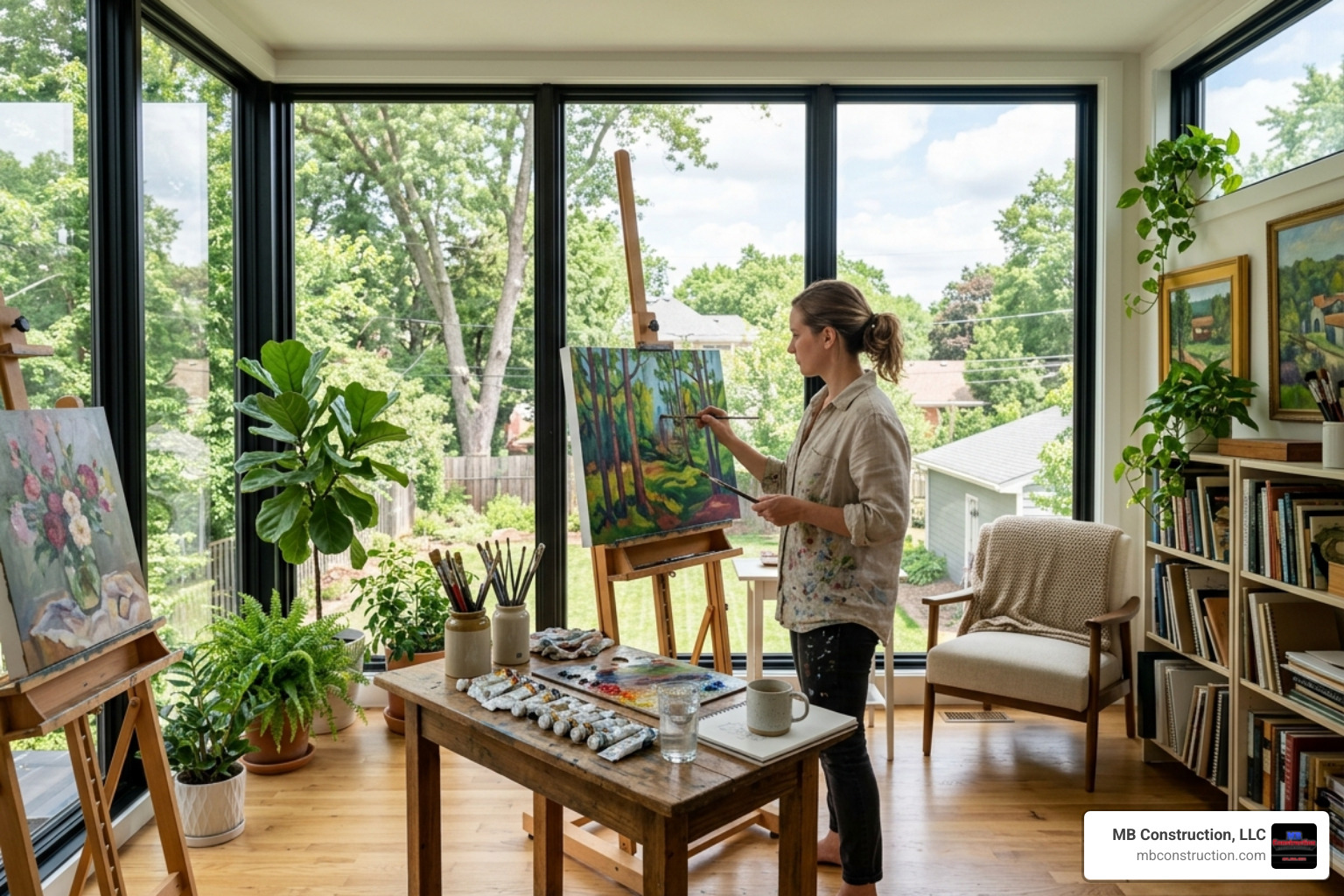
For many of our clients in the Greater Boston area, the sunroom becomes the most used room in the house. You can Discover Second and Third Floor Additions in Lexington, MA to learn how these spaces can be tailored to your specific hobbies and lifestyle needs.
Creative Studios and Home Offices
If you are an artist, writer, or remote professional, light is your best friend. A second-story sunroom provides a “floating” workspace that feels separated from the distractions of the kitchen or living room. The architectural interest of a sunroom—perhaps featuring a vaulted ceiling or exposed wood beams—provides a much more inspiring environment than a windowless basement office.
Productivity thrives in spaces that feel open and airy. Imagine taking a conference call while overlooking your garden or painting a landscape with the benefit of true, natural color rendering that only sunlight provides. These rooms offer the quiet and focus necessary for deep work while keeping you connected to the beauty of the outdoors.
Luxury Lounges and Dining Areas
On the other hand, if your goal is relaxation, a sunroom can serve as a high-end lounge. Many homeowners choose to furnish these spaces with plush, fade-resistant seating and vintage decor to create a “garden room” feel. It’s the perfect spot for a morning coffee or a glass of wine at sunset.
For those who love to entertain, an upper-level dining area offers a unique “al fresco” experience without the bugs or the wind. You can host dinner parties under the stars, protected by high-performance glass. It creates a dramatic, memorable setting for guests and provides a seamless transition if your sunroom opens onto an elevated deck or balcony.
Structural Considerations and Material Selection
Building a sunroom on the second floor requires more technical expertise than a standard ground-level porch. We must account for the weight of the glass, the structural integrity of the existing house, and the local building codes in towns like Chelmsford or Wilmington.
| Feature | Three-Season Sunroom | Four-Season Sunroom |
|---|---|---|
| Usage | Spring, Summer, Fall | Year-round |
| Insulation | Minimal | High-performance |
| Glass | Single or double pane | Triple-pane, Low-E |
| HVAC | Usually none (or space heater) | Fully integrated |
| Cost | Lower initial investment | Higher investment, better ROI |
Every project starts with a structural appraisal. To ensure your home can support the new load, you should Learn About Second and Third Floor Additions in Concord, MA and consult with experts who understand the engineering involved in vertical expansions.
Essential Materials for a Second-Story Sunroom
The materials used in a 2nd story sunroom must be both beautiful and durable. We often recommend:
- Insulated Glass: Essential for temperature control and energy efficiency.
- Natural Wood Beams: Provides a warm, classic aesthetic that complements New England architecture.
- Luxury Vinyl Plank (LVP) Flooring: This is an excellent choice for sunrooms because it is moisture-resistant and won’t warp under direct sunlight. It’s also pet-friendly and scratch-resistant.
- Composite Decking: If your sunroom includes an exterior landing or stairs, composite materials are preferred because they won’t rot or require the heavy maintenance of traditional wood.
- Knee Walls: A solid base (often made of brick, stone, or wood) that supports the window frames and provides a place for electrical outlets and heating vents.
HVAC and Temperature Control in a Second-Story Sunroom
To make your sunroom comfortable in July and January, temperature control is key. For four-season rooms, we often integrate the addition into the home’s existing HVAC system. However, many homeowners opt for a ductless mini-split system. These units provide both heating and cooling specifically for the sunroom, allowing you to control the temperature independently from the rest of the house.
Other smart additions include radiant floor heating—which feels incredible on a cold winter morning—and high-quality ceiling fans to circulate air during the summer. If you Explore Second and Third Floor Additions in Andover, MA, you’ll see that proper ventilation and thermal efficiency are what turn a “porch” into a true year-round living space.
Investment and Construction Process in Massachusetts
Adding a second story is a significant undertaking, but it is often more cost-effective than moving to a new home in the competitive Massachusetts real estate market. The process involves several stages, including architectural design, permitting with your local town hall, and the actual physical construction.
We handle the heavy lifting, from securing zoning approvals to the final walkthrough. You can View Our Home Additions Services to see how we manage these complex projects from start to finish. For specific local insights, check out our dedicated pages for Second and Third Floor Additions in Reading, MA.
Estimated Costs for Elevated Additions
When budgeting for a 2nd story sunroom, it is important to remember that prices vary wildly based on the size, materials, and structural requirements of your home. Based on average internet data, the cost for a sunroom addition typically averages $25,000, with a wide range of pricing from $15,000 to over $250,000 depending on the scope of work.
The lower end of that scale typically represents a simple three-season enclosure on an existing structurally sound deck. The higher end involves a fully integrated, four-season room with custom masonry, high-end HVAC, and significant structural reinforcement to the home’s foundation. For a more tailored estimate, look into Second and Third Floor Additions in Wilmington, MA to understand the factors that influence pricing in our region.
Selecting the Right Contractor
A second-story addition is not a DIY project. It requires expert craftsmen who understand how to tie new framing into an existing roofline without causing leaks or structural failure. At MB Construction, LLC, we pride ourselves on quality-driven, time-sensitive projects. We use premium materials and offer guaranteed workmanship to ensure your new sunroom is a seamless part of your home.
Residents looking for Second and Third Floor Additions in Burlington, MA know that choosing a contractor with local experience is vital. We understand the specific weather challenges of Middlesex County—from heavy snow loads to humid summers—and build our sunrooms to withstand them all.
Frequently Asked Questions about Second-Story Sunrooms
Can I build a sunroom on top of an existing deck?
It depends on the deck’s original construction. Most standard decks are built to support “live loads” (people and furniture), but not the “dead load” of a permanent roof, walls, and heavy glass. In many cases, we can reinforce the existing structure through foundation underpinning or adding support beams. An engineering review is always the first step. To learn more about the technical side, see Second and Third Floor Additions in Chelmsford, MA.
What is the difference between a three-season and four-season room?
The primary difference is the level of insulation and the presence of a climate control system. A three-season room is designed for use in spring, summer, and fall. It usually has thinner glass and lacks permanent heating. A four-season room is built just like any other room in your house, with full insulation, high-performance glass, and integrated HVAC. For a deeper dive into which is right for you, check out Second and Third Floor Additions in North Reading, MA.
Do I need to move out during construction?
For a second-story addition, it is often recommended to vacate the home for at least a portion of the project. Removing the roof and tying in new structural elements creates significant dust and noise. Additionally, utilities like electricity and HVAC may be temporarily disrupted. We use strict dust mitigation and safety protocols to minimize the impact, but for the comfort of your family, many people choose to stay elsewhere during the “rough-in” phase. You can find more project phasing tips at Second and Third Floor Additions in Tewksbury, MA.
Conclusion
A 2nd story sunroom is more than just an addition; it is a lifestyle transformation. It offers a unique blend of privacy, natural light, and breathtaking views that you simply can’t find on the ground floor. Whether you envision a quiet artist’s studio, a productive home office, or a luxury lounge for entertaining, we have the expertise to bring that vision to life.
At MB Construction, LLC, we are committed to providing quality-driven results for homeowners throughout Billerica, MA, and the surrounding communities. From the initial structural appraisal to the final coat of paint, our expert craftsmen use premium materials to ensure your new space is beautiful, durable, and safe.
We proudly serve Andover, Bedford, Burlington, Carlisle, Chelmsford, Concord, Lexington, North Reading, Reading, Tewksbury, and Wilmington. If you’re ready to elevate your living experience and add lasting value to your property, Start Your Home Addition Project Today and let us help you build the sunroom of your dreams.
