
Crawl Space Excavation: A Professional Overview
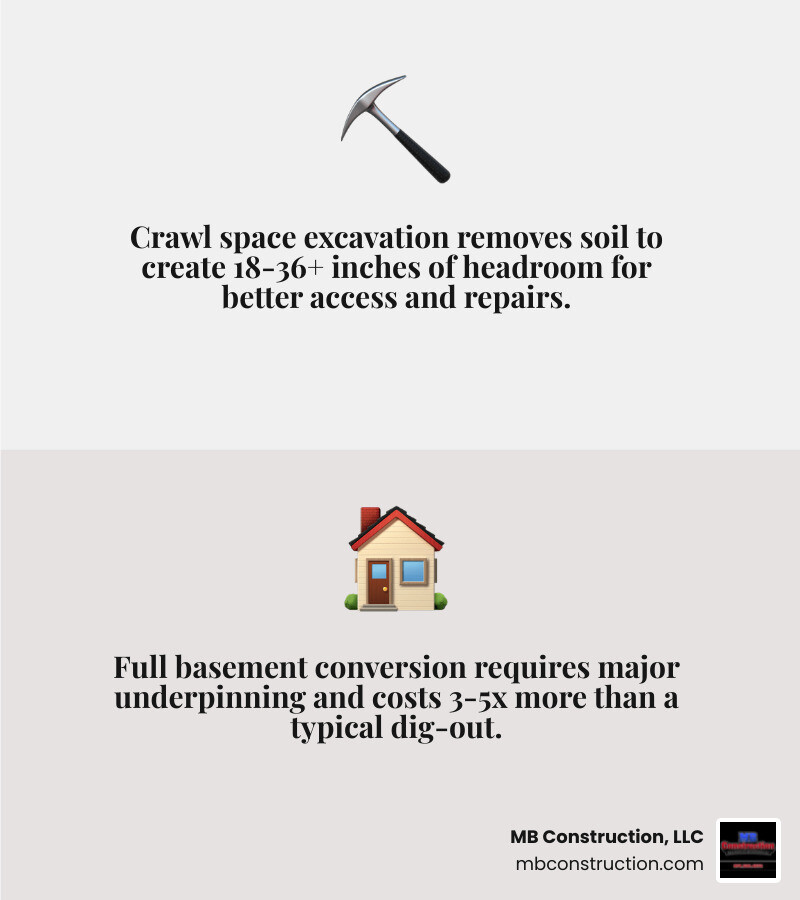
Crawl space excavation is the process of removing soil from beneath your home to increase clearance, improve access, or prepare the space for moisture control and repairs.
Quick answers for homeowners evaluating this project:
- What it is: Digging out soil under your home to gain headroom, fix drainage, or access utilities
- Typical clearance goal: At least 18 inches (code minimum), with most functional projects targeting 36+ inches
- Average cost range (based on internet data): $1,000 for minor dig-outs up to $150,000+ for full foundation work
- DIY possible? For small areas with good access — but structural work always needs a professional
- Permit required? Yes, in most Massachusetts towns including those in Middlesex County and Greater Boston
- Best alternatives: Encapsulation, interior drainage, or dehumidification when clearance isn’t the core issue
If you own an older home in Andover, Chelmsford, Burlington, or anywhere in the Greater Boston area, there’s a good chance your crawl space is too shallow to work in comfortably — or too damp to ignore.
Many homes built in the mid-20th century were constructed with crawl spaces that made sense at the time. But decades of soil settling, moisture intrusion, and shifting drainage patterns have left many of those spaces barely functional. One contractor forum contributor described the reality: working in 15 inches of headroom is physically demanding, and soil removal is often more challenging than the excavation itself.
This guide covers everything you need to evaluate a crawl space excavation project — from structural risks and safe digging distances to real costs, permit requirements, and whether it’s worth doing at all.
Understanding Crawl Space Excavation and Its Benefits
When we talk about crawl space excavation, we are referring to the intentional removal of earth from the area beneath your first floor. This is a strategic home improvement aimed at solving specific functional problems that many homeowners in Middlesex County face.
What crawl space excavation means
In its simplest form, a crawl space dig-out involves lowering the floor of the crawl space. Many older homes in the North Reading and Reading areas were built with “rat slabs” or dirt floors that sit just inches below the floor joists. Crawl space excavation increases that vertical gap. Whether it’s a partial deepening to reach a leaking pipe or a full-scale dig-out to make the area accessible for storage, the goal is to create a usable, manageable environment where there was once only cramped, dark earth.
Crawl space excavation vs full basement conversion
It is important to distinguish between a simple dig-out and a full basement conversion. A conversion is a massive structural undertaking that usually involves jacking up the house, pouring new footings, and creating 7 to 8 feet of headroom. Crawl space excavation is often more focused on utility and maintenance.
| Feature | Crawl Space Excavation | Full Basement Conversion |
|---|---|---|
| Primary Goal | Maintenance access & moisture control | New livable square footage |
| Typical Depth | 18 to 48 inches | 7 to 9 feet |
| Structural Impact | Moderate (requires benching/support) | Extreme (lifting house/new foundation) |
| Cost Range | $1,000 – $50,000+ | $50,000 – $500,000+ |
| Permit Needs | Structural/Building permits | Full engineering & major permits |
Common reasons to excavate a crawl space
Why do homeowners invest in crawl space excavation? For most of our clients in Billerica and Lexington, it comes down to these factors:
- Headroom: Maintenance and repairs are impossible without adequate clearance.
- Utility Access: HVAC technicians often require at least 18 to 24 inches of clearance to service equipment.
- Moisture Control: Deepening the space allows for the installation of proper drainage, sump pumps, and thick vapor barriers.
- Structural Health: Removing damp soil that is touching floor joists prevents wood rot and sagging floors.
The Professional Crawl Space Excavation Process
At MB Construction, LLC, we know that digging under a house is as much about what you leave behind as what you take out. A professional project follows a strict sequence to ensure your home doesn’t settle or crack during the process.
Site evaluation, permits, and structural review
Before the first shovel hits the dirt, we conduct a thorough assessment. In towns like Bedford and Carlisle, local building codes are strict. We look at the depth of your existing footings—the concrete “feet” your house stands on. If we dig deeper than those footings without a plan, the house could literally slide into the hole. This stage often involves a structural engineer who determines the “angle of repose” for the local soil, ensuring we don’t undermine the foundation.
Excavation, soil removal, and foundation protection
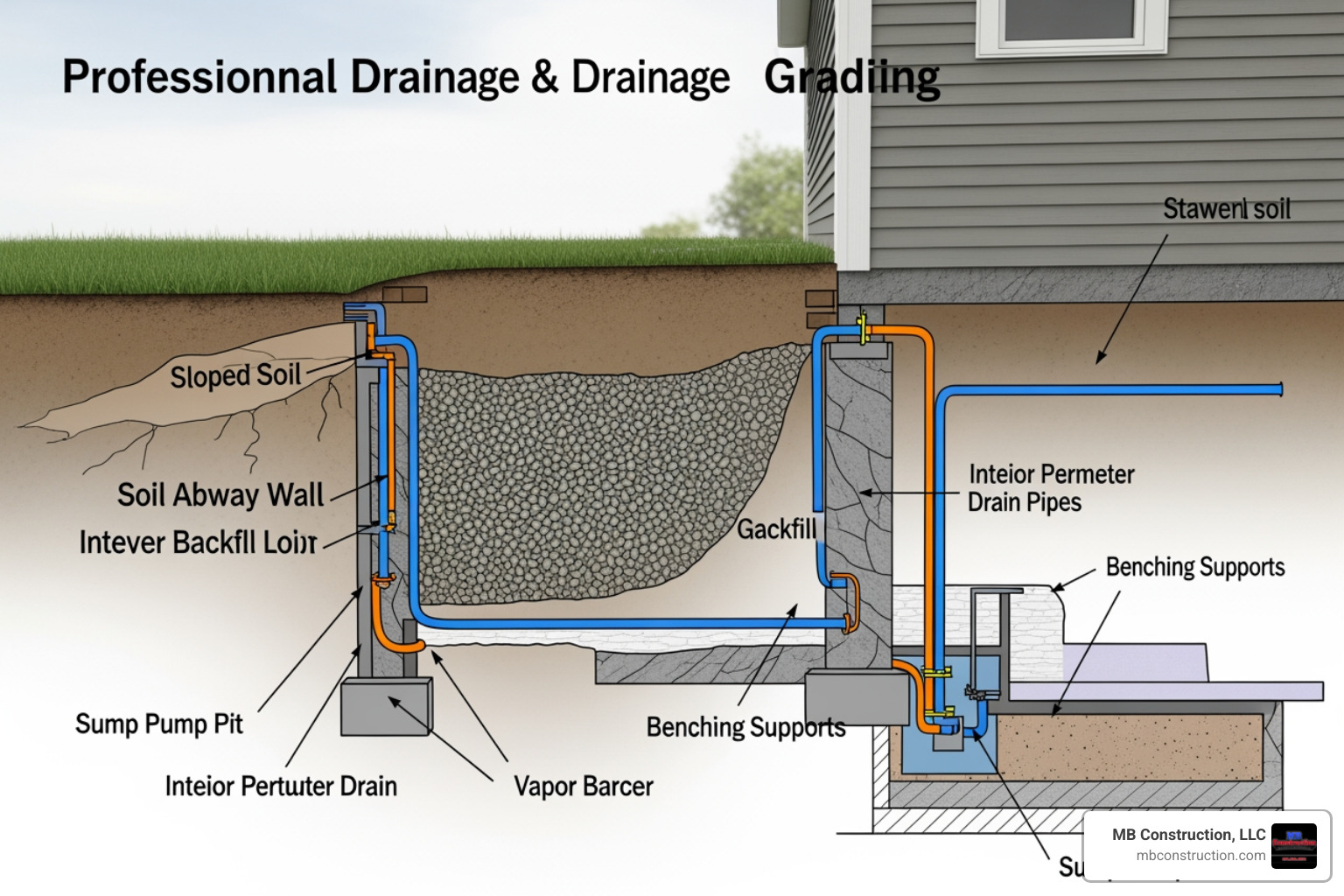
The actual digging is often done by hand or with specialized mini-equipment designed for tight spaces. We are extremely careful to respect the “zone of influence”—the area of soil that supports the weight of your foundation. To protect this, we might use “benching,” which leaves a shelf of soil against the foundation wall, or “underpinning,” which involves pouring new concrete under the existing footings to make them deeper.
Drainage, vapor barriers, and finishing steps
Once the soil is removed, we don’t just leave a bigger hole. We install interior drainage systems and sump pumps to manage the groundwater that frequently plagues Greater Boston homes. We then lay down a heavy-duty vapor barrier to keep the space dry. This process, often called encapsulation, ensures the newly excavated space stays clean and functional for years.
More info about excavation services
Tools and Techniques for Crawl Space Excavation
Some homeowners in Wilmington and Tewksbury attempt their own dig-outs. While we always recommend professional oversight for structural work, some individuals take on smaller, non-structural clearing themselves.
Best tools for crawl space excavation in low-headroom areas
If you are working in a space with only 15 to 20 inches of clearance, a standard shovel is ineffective. You’ll need a “stubby” shovel—one where the handle has been shortened to approximately 18 inches. Other essential tools include:
- Mini pick-axes: For breaking up rocky soil common in New England.
- High-output headlamps: To maintain visibility while keeping both hands free.
- Respirators: To protect against dust and mold spores.
- Knee pads and “creepers”: To protect the body while navigating over rocks and dirt.
Techniques for moving dirt in tight crawl spaces
Moving significant amounts of soil through a small access hole is a primary challenge. Homeowners often use a “bucket relay” or a “drag sled” (a plastic tote with a rope attached). One person fills the tote, while a partner outside the crawl space pulls the rope to remove the soil. Some individuals use industrial insulation vacuums or shop-vacs with a “cyclone” separator for dry, sandy soil, though this is less effective for heavy clay.
Real-world DIY challenges and when to stop
The physical toll of this work is significant. Four hours of digging in a confined position can cause substantial muscle strain. You should stop immediately if you encounter:
- Water: If the excavation area begins to fill with water, professional drainage intervention is required.
- The Bottom of the Footing: Never excavate below the concrete base of your foundation wall.
- Large Roots or Pipes: Damaging a main sewer line or a structural tree root can lead to expensive repairs.
Structural Considerations and Soil Conditions in Excavation
The biggest danger of crawl space excavation is the risk of foundation collapse. Your house is heavy, and the soil beneath it is under immense pressure.
How far from footings can you safely excavate?
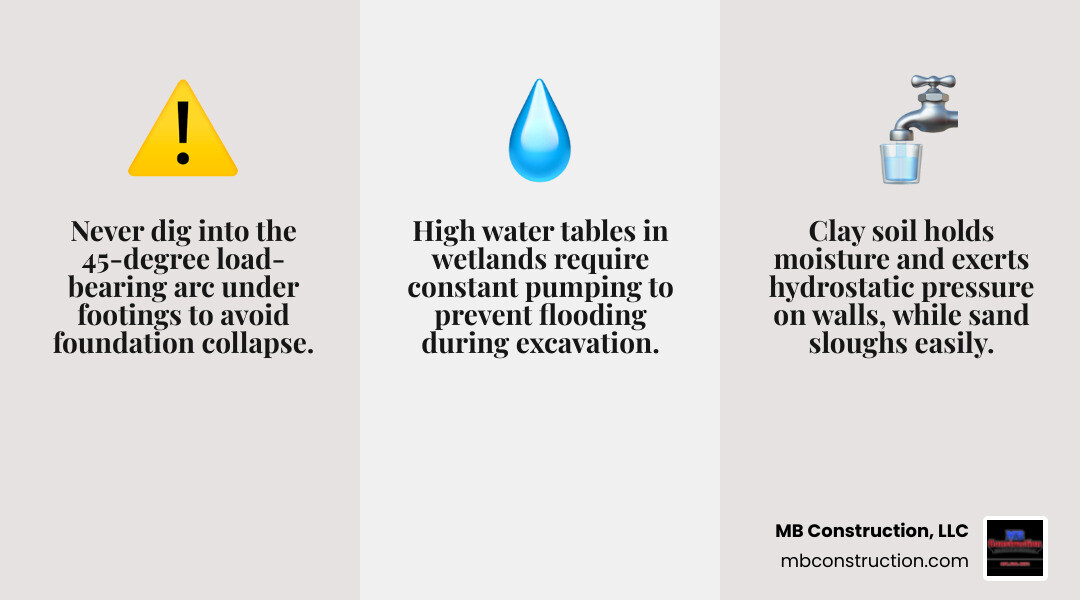
The golden rule is the 45-degree rule. Imagine a line extending downward and outward from the bottom of your footing at a 45-degree angle. This is the “load-bearing arc.” If you dig into this triangle, you are removing the support for your house. To dig deeper than the footing, you must stay far enough away to leave a “bench” of soil, or you must underpin the foundation with new concrete.
How soil type and moisture change the excavation plan
In Middlesex County, we deal with everything from sandy soil to dense glacial till.
- Sandy soil: Easy to dig but prone to caving in. It requires more conservative benching.
- Clay: Holds its shape well but is incredibly heavy and holds moisture, which can put “hydrostatic pressure” on your foundation walls.
- High Water Table: In areas near Eastern MA wetlands, digging even a foot down can hit the water table, requiring constant pumping during the project.
The biggest dangers of crawl space excavation
Beyond structural collapse, there are hidden dangers. Confined spaces can trap dangerous gases or lack adequate oxygen. There is also the risk of utility damage; many older homes have gas lines or electrical conduits buried just beneath the surface of the crawl space.
Regulatory Compliance, Project Costs, and Alternatives
Navigating the legal and financial side of excavation is just as important as the digging itself.
Typical building code and permit requirements
In Massachusetts, most towns require a permit if you are moving more than a minimal amount of earth or affecting the structural integrity of the home. The International Residential Code (IRC) generally requires a minimum of 18 inches of clearance under wood joists. If your project involves plumbing or electrical upgrades, you’ll need specific permits for those as well.
Average crawl space excavation costs by project size
Based on internet data and common industry rates, the costs for these projects vary wildly. Please note that these are average ranges and can change based on the specific conditions of your home in Greater Boston.
- Minor Debris Removal/Leveling: $1,000 – $5,000
- Partial Dig-out (for utility access): $3,000 – $15,000
- Full Crawl Space Excavation & Encapsulation: $10,000 – $50,000
- Major Foundation Underpinning/Deepening: $25,000 – $250,000+
The high end of the scale reflects projects where the entire house must be stabilized or the foundation completely replaced due to poor soil or structural failure.
When crawl space excavation is worth it and when alternatives are better
If your goal is just to stop a musty smell, encapsulation (sealing the space with plastic) is much cheaper and more effective than digging. However, if you literally cannot fit a human being under the house to fix a pipe, excavation is your only real choice. It’s a “serviceability” upgrade that pays off when you need repairs or when you go to sell the home and the inspector needs to see the underside of the structure.
Long-term benefits after a successful dig-out
A successful crawl space excavation provides:
- Improved Air Quality: By removing damp, organic-rich soil and replacing it with a clean, dry floor.
- Higher Resale Value: Home inspectors and buyers prefer a clean, accessible crawl space.
- Energy Efficiency: It’s much easier to insulate a crawl space properly when there is room to work.
Common Questions Regarding Crawl Space Excavation
How long does crawl space excavation usually take?
A standard professional dig-out for a 1,000-square-foot home usually takes between one and two weeks. This includes the time needed for soil removal, drainage installation, and final inspections. DIY projects can take months of weekend work.
Which professionals should homeowners hire for a complex dig-out?
You should look for a team that includes:
- Structural Engineer: To verify the plan.
- Excavation Contractor: Like us at MB Construction, LLC, to handle the heavy lifting.
- Waterproofing Specialist: To ensure the new excavation does not accumulate water.
How should homeowners prepare before work begins?
- Clear the perimeter: Move bushes or items away from the access point.
- Map your utilities: Know where your water, gas, and sewer lines enter the house.
- Protect your interior: Excavation is dusty; cover furniture near the crawl space hatch.
- Check your insurance: Ensure your policy covers foundation work.
Conclusion
Crawl space excavation is a transformative project that moves your home from “unserviceable” to “well-maintained.” While the costs can range significantly—from a few thousand dollars for a small area to upwards of $250,000 for complex structural work—the peace of mind that comes with a dry, accessible foundation is invaluable.
If you are in Billerica, Andover, or the Greater Boston area and are tired of working in 15 inches of dirt, it’s time to look at professional options. At MB Construction, LLC, we specialize in quality-driven, time-sensitive projects that protect the structural integrity of your home while giving you the space you need.
