More Families Are Adding In-Law Suites — Here’s What You Need to Know First
An in-law suite addition is a self-contained living space built on your property — attached to your home, detached in your backyard, or converted from existing space like a garage or basement — designed to give a family member their own private area while staying close.
Here’s a quick look at what’s involved:
| Step | What It Means |
|---|---|
| Define your needs | Who will live there? Full-time or part-time? Accessibility required? |
| Choose a suite type | Attached addition, detached ADU, garage conversion, or basement conversion |
| Set a budget | Costs range from ~$40,000 (basement conversion) to $275,000+ (detached ADU) |
| Get permits | Zoning approval, building permits, and inspections are required in Massachusetts |
| Build and inspect | Construction typically takes 6–20 weeks depending on project scope |
Multigenerational living is growing fast. According to the National Association of Realtors, 14% of home buyers in 2023 specifically looked for homes that could fit extended family. And nearly one in five young adults currently lives in their parents’ home.
For Massachusetts homeowners — especially in towns like Billerica, Burlington, Lexington, and Andover — an in-law suite isn’t just a family solution. It’s also one of the smartest investments you can make in your property.
But it’s also a project that can go sideways fast without the right plan. Zoning rules, permit timelines, accessibility requirements, contractor selection — there’s a lot to juggle.
This guide walks you through every step, so you can make confident decisions without the stress.

Easy in law suite addition word list:
What is an In-Law Suite Addition?
In the simplest terms, an in-law suite (often called a “granny flat” or a secondary suite) is a secondary dwelling unit on a single-family lot. While the name implies it’s for your spouse’s parents, these spaces are increasingly used for adult children, live-in nannies, or even as a luxury guest retreat.
To truly function as an independent home, a proper in law suite addition should include several essential features. It isn’t just an extra bedroom; it’s a “home within a home.” This means including a private entrance so your loved ones can come and go without walking through your living room at midnight. Inside, you’ll typically find a kitchenette, a full bathroom, and a dedicated living area.
The trend toward in-law suite additions is driven by more than just a desire for closeness. With the median cost of assisted living facilities reaching approximately $5,350 per month in 2023, many families in Middlesex County are realizing that building a suite is a far more cost-effective long-term solution. It allows for “aging in place,” where seniors stay in a familiar environment while maintaining their dignity and independence.
Types of Suites: Attached, Detached, and Conversions
When we sit down with homeowners in Billerica or Reading, the first question is always: “Where should we put it?” There are four primary ways to add this space to your property, and each has its own set of pros and cons.

Attached Additions
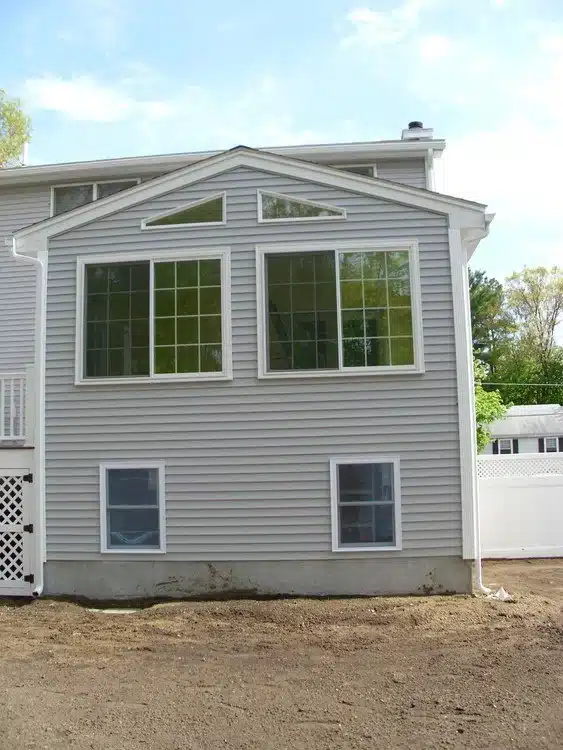
This is a “bump-out” or a full-scale addition built onto the side or back of your existing house. This is often the best choice for aging parents because it allows them to remain on the ground floor with easy access to the main kitchen or laundry if needed. It requires a new foundation and roofline, making it a mid-to-high cost option.
Detached Accessory Dwelling Units (ADUs)
A detached ADU is a standalone structure. Think of it as a tiny house in your backyard. These offer the most privacy and are excellent for rental potential. In Massachusetts, new laws like the Affordable Homes Act are making it easier to build these “by right,” though they are generally the most expensive type of addition because they require entirely new utility hookups.
Garage Conversions
If you have a two-car garage that’s mostly collecting junk, converting it into a suite is a brilliant move. Since the structure is already there, you save on framing and roofing. You can either convert the ground floor or build an apartment above the garage to preserve your parking space.
Interior Conversions (Basements and Attics)
Converting a finished basement is often the most budget-friendly route. If your basement has a walk-out exit, it’s a perfect candidate for an in-law apartment. Attics can also work, though they are less ideal for seniors due to the stairs.
Costs, Zoning, and Regulations in Middlesex County
Budgeting for an in law suite addition requires looking at more than just lumber and labor. In Middlesex County, costs can vary significantly based on the type of construction.
| Project Type | Estimated Cost Range | Typical Timeline |
|---|---|---|
| Basement Conversion | $35,000 – $75,000 | 6–10 Weeks |
| Garage Conversion | $45,000 – $85,000 | 8–12 Weeks |
| Attached Home Addition | $75,000 – $200,000+ | 12–20 Weeks |
| Detached ADU | $100,000 – $275,000+ | 16–24 Weeks |
Zoning and Permits
Zoning is the “make or break” part of your project. In Billerica and Burlington, we have to look closely at setback requirements — how far the new structure must be from your neighbor’s fence. Many towns in Middlesex County cap the size of an in-law suite at a certain percentage of the main home’s square footage (often 30-40% or a maximum of 900 square feet).
According to the National Association of Home Builders, local regulations are slowly becoming more flexible to accommodate the housing crisis, but you still need a pile of permits. You’ll need building, electrical, and plumbing permits at a minimum. If your home in Carlisle or North Andover is on a septic system, the Board of Health may require a system upgrade to handle the “extra” bedroom.
Designing for Accessibility and Aging in Place
If the suite is for an older family member, “future-proofing” is essential. We always recommend following ADA requirements during the design phase. It is much cheaper to build a wide doorway now than to rip one out later when a walker or wheelchair becomes necessary.
Key design elements for accessibility include:
- Wide Doorways: Aim for 32 to 36 inches.
- Zero-Threshold Showers: No curb to trip over; just walk or roll right in.
- Lever-Style Handles: Much easier for arthritic hands than round doorknobs.
- Slip-Resistant Flooring: Luxury Vinyl Tile (LVT) is a favorite because it’s durable, looks like wood, and provides better grip than slick tile.
- Reinforced Walls: Even if you don’t need grab bars today, we install “blocking” behind the drywall so they can be securely bolted in later.
Popular In-Law Suite Addition Floor Plans
Most families find that a layout between 400 and 600 square feet is the “sweet spot.” This provides enough room for a comfortable bedroom, a small kitchenette with a breakfast bar, and a cozy living area without overwhelming the backyard.
For those on a tighter budget, “studio-style” layouts eliminate interior walls to make the space feel larger. If you have more room, a one-bedroom suite with a separate walk-in closet is the gold standard for long-term comfort. You can explore various in-law suite addition floor plans with pictures to see how these spaces look in real Massachusetts homes.
Maximizing Value with an In-Law Suite Addition
Is it worth it? From a real estate perspective, the answer is a resounding yes. In the Greater Boston market, homes with legal in-law suites often see a resale value increase of 15% to 25%. In high-demand areas like Lexington and Andover, this “bonus” space is a major selling point for buyers who are also looking for multigenerational solutions.
Beyond resale, there is the potential for rental income. If the suite isn’t currently occupied by a family member, many Middlesex County homeowners rent them out to local professionals or students, helping to pay off the construction loan or mortgage faster.
The Construction Journey: Timeline and Financing
Building a home addition is a marathon, not a sprint. We generally break the journey into four phases:
- Planning & Design (4–8 Weeks): This is where we finalize your floor plan and navigate the town hall for permits.
- Site Prep & Foundation (2–3 Weeks): Excavation and pouring concrete (for additions and ADUs).
- Rough Construction (6–12 Weeks): Framing, roofing, and getting the “guts” (plumbing/electric) into the walls.
- Finish Work (4–6 Weeks): Drywall, flooring, cabinets, and those final coats of paint.
Financing Your Project
Most of our clients use one of three methods to fund their in law suite addition:
- HELOC (Home Equity Line of Credit): This allows you to borrow against the equity you’ve already built in your home.
- Construction Loans: These are specifically designed for major renovations and often convert into a standard mortgage once the project is finished.
- Cash Refinancing: Taking advantage of your home’s value to get a lump sum for the build.
Frequently Asked Questions about In-Law Suites
How much does an in-law suite cost in Massachusetts?
While every project is custom, you can expect to spend between $150 and $300 per square foot for a high-quality addition in Middlesex County. Conversions (basements/garages) are cheaper, often starting around $45,000, while detached custom builds can easily exceed $200,000.
Does an in-law suite count as a second dwelling unit?
Legally, yes, it is often classified as an Accessory Dwelling Unit (ADU). This means it must meet specific safety codes, such as having its own “egress” (a way to get out in an emergency) and meeting local zoning laws regarding parking and occupancy.
What are the most common mistakes to avoid?
The biggest mistake is skipping the permit process. If you build an “illegal” suite, you may face fines or be forced to tear it down when you try to sell your home. Another mistake is failing to plan for separate utilities; having a dedicated thermostat for the suite prevents a lot of family arguments about the temperature!
Conclusion
Adding an in-law suite is a beautiful way to keep your family close while providing everyone with the elbow room they need. Whether you are looking to support aging parents in Billerica or create a rental unit in Wilmington, the key is to work with a team that understands the local landscape.
At MB Construction, LLC, we pride ourselves on being a quality-driven, time-sensitive partner for homeowners across Middlesex County. Our expert craftsmen use premium materials to ensure your new suite isn’t just a room — it’s a seamless extension of your home. From the first permit application in Burlington to the final inspection in Andover, we handle the heavy lifting so you can focus on welcoming your family home.
Ready to start your journey? Explore more info about our home addition services and let’s build something great together.