Feasibility and Value of Basement Additions
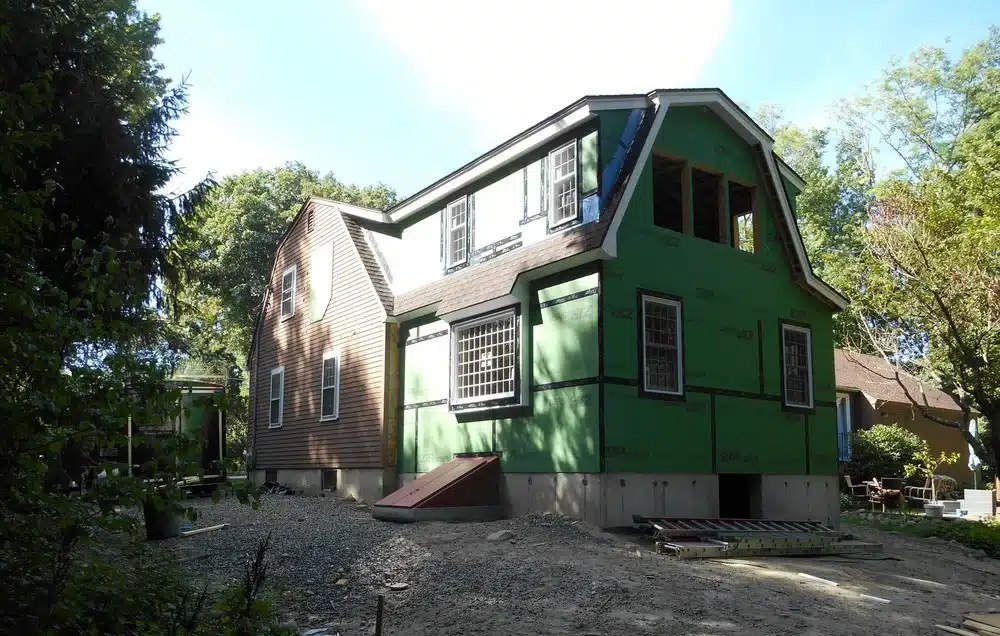
Adding an addition with a basement is one of the most complex — and potentially most rewarding — home improvement projects a Massachusetts homeowner can undertake.
Here is a quick answer to the most common questions:
| Question | Quick Answer |
|---|---|
| Is it feasible? | Yes, but it requires structural engineering, permits, and careful planning |
| What does it cost? | Roughly $60,000 to $600,000+ depending on size, soil, and finishes (based on internet data) |
| Does it add value? | Yes — a finished basement can add significant resale value |
| Can you DIY it? | No — this project requires licensed professionals |
| How long does it take? | Typically 3 to 6 months, sometimes longer |
Many homeowners in towns like Billerica, Andover, and Lexington are surprised to learn just how much goes into building down when you build out. It is not simply a matter of digging a hole. You are dealing with soil conditions, frost lines, existing foundation integrity, waterproofing, drainage, permits, and more — all at the same time.
A properly executed basement addition provides significant usable square footage at a lower cost than purchasing a larger home. However, underestimating the complexity of such a project can lead to significant structural and financial challenges. One common misconception is that a 25×25-foot basement extension can be done for under $6,000. In reality, concrete alone for that size project exceeds $6,000 — before a single shovelful of dirt is moved.
This guide walks you through everything you need to know before breaking ground.
Adding an addition with a basement further reading:
Structural Engineering and Feasibility for a Basement Extension
When we talk about adding an addition with a basement, the first question isn’t “how much will it cost?” but “can it be done safely?” In Middlesex County, the answer depends heavily on what lies beneath your lawn.
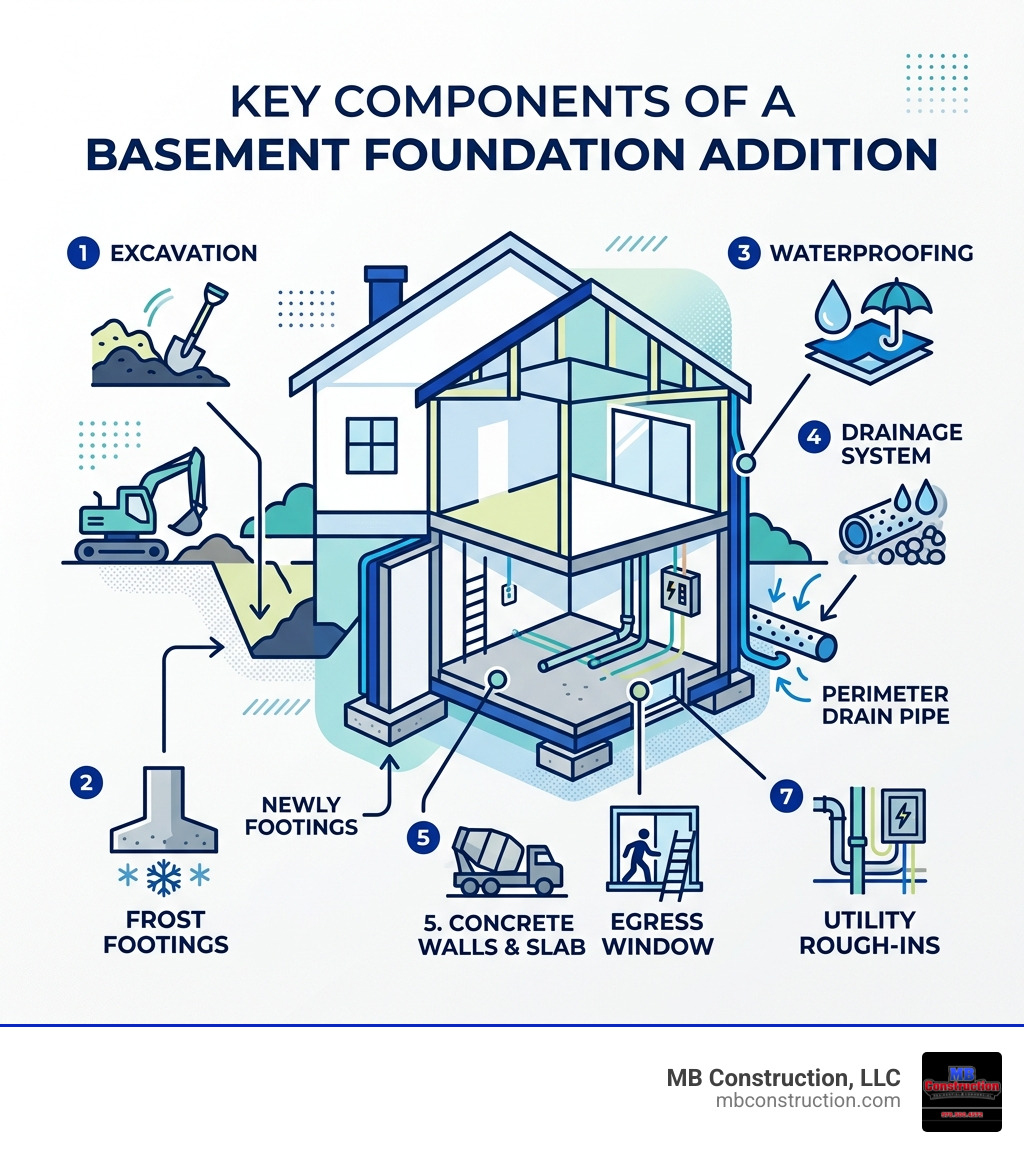
Structural engineering is the backbone of this process. Before we even bring an excavator to your property in Reading or North Andover, a geotechnical analysis is often required. This involves testing the soil to see if it can handle the load of a new foundation and determining where the water table sits. If you are sitting on a high water table or ledge (common in some parts of Eastern MA), the engineering becomes much more specialized.
One of the most critical factors we manage is the frost line. In Massachusetts, foundations must extend several feet deep to get below the frost line. If they don’t, the ground will freeze and expand, leading to “frost heaving” that can literally crack your new addition in half. For more on the basics of expanding your footprint, check our guide on Home Additions.

Challenges of Adding an Addition with a Basement to a Slab Foundation
If your current home in Burlington or Wilmington is built on a slab-on-grade foundation, things get a bit more interesting. You can’t just dig a deep hole right next to a shallow slab without risking a collapse.
When adding an addition with a basement to a slab house, many contractors recommend a minimum 6-foot buffer of undisturbed soil between the existing slab and the new basement excavation. This prevents the soil supporting your current home from sliding into the new hole.
If a buffer isn’t possible due to lot size or design, we have to look at tying the foundations together. This is a high-stakes maneuver. If the existing slab doesn’t have proper frost footings, tying a heavy new basement to it can cause structural movement as the two sections settle at different rates.
Engineering Solutions: Underpinning and Stepped Footings
To safely connect a new basement to an existing structure, we use a few “tricks of the trade”:
- Underpinning: This involves digging beneath your existing foundation in sections and pouring new, deeper concrete “legs” to support the old house at the same depth as the new basement.
- Needle Beams: These are temporary steel beams used to support the weight of the house while we excavate underneath or adjacent to it.
- Compression Plumes: Engineers calculate the “cone” of pressure that a foundation exerts on the soil (usually a 60-90 degree spread). We ensure that the new excavation doesn’t “undermine” this plume.
- Stepped Footings: If the addition is on a slope, we can “step” the concrete footings down to follow the grade, ensuring every part of the foundation is below the frost line and securely anchored.
Cost Analysis: Budgeting for Adding an Addition with a Basement
Let’s talk numbers. We know everyone wants a deal, but underground construction is one place where you truly get what you pay for. Based on internet data averages, a full basement addition is significantly more expensive than a crawl space or a slab, but it provides exponentially more value.
| Foundation Type | Average Cost Range (Based on Internet Data) | Usable Space | Storage Value |
|---|---|---|---|
| Full Basement | $60,000 – $600,000+ | High (Living Space) | Excellent |
| Crawl Space | $15,000 – $150,000 | Low (Storage Only) | Moderate |
| Slab-on-Grade | $10,000 – $100,000 | None | Low |
If you’re considering a larger project like Garage Additions, adding a basement underneath can be a smart move to maximize a small lot in towns like Bedford or Lexington.
Why a 25×25 Basement Addition Costs More Than $6,000
There is a persistent myth in some DIY circles that you can dig out a 25×25-foot space and pour a basement for under $6,000. We’re here to gently burst that bubble.
For a 625-square-foot basement, the concrete alone — including the floor slab, footings, and 8-foot-high walls — will easily exceed $6,000 in material costs. That doesn’t account for the steel rebar, the forms, or the specialized labor to pour it.
Then, consider the excavation. You aren’t just moving dirt; you’re likely removing 150 to 200 cubic yards of soil. In Massachusetts, soil disposal fees can be astronomical, often costing $750 or more per truckload. Add in equipment rentals ($1,500+ per day), professional waterproofing, and drainage systems, and you can see why the starting price is much higher. For a deeper look at what goes into building from the ground up, see Everything You Need to Know About New Home Construction.
Realistic Price Ranges for Foundation Work
When budgeting for adding an addition with a basement in the Greater Boston area, you should prepare for a wide range of costs. Based on internet data, a standard unfinished basement addition typically ranges from $60,000 to $600,000.
Why the massive range?
- The Low End ($60k – $100k): This usually covers a basic, unfinished “shell” in ideal soil conditions with easy site access.
- The Mid Range ($100k – $300k): This includes professional waterproofing, egress windows, basic electrical, and perhaps some plumbing rough-ins.
- The High End ($300k – $600k+): This is for large-scale “luxury” additions that involve jacking up the existing house, dealing with complex ledge/rock excavation, or fully finishing the space with high-end amenities like radiant floor heating and custom bars.
Essential Regulations, Permits, and Site Requirements
You cannot begin excavation in your backyard in Carlisle or Chelmsford without proper municipal authorization. Adding an addition with a basement requires extensive documentation and permitting to ensure safety and compliance.
Zoning laws dictate “setbacks” — how close your new structure can be to your neighbor’s property line. Building codes also require at least one “egress” (emergency exit), which usually means a large window well with a ladder or a direct walk-out door.
Before we start, we have to pull permits for:
- Structural engineering
- Excavation and grading
- Plumbing and electrical
- Building inspections at every phase (footings, foundation, framing)
For more on how these regulations fit into a larger project, check out The Complete Guide to Whole House Renovations.
Managing Drainage and Waterproofing Systems
In New England, the question isn’t if water will try to get into your basement, but when. Proper waterproofing is essential to maintaining a dry, usable living space and preventing structural damage.
A professional system includes:
- Mastic Seals and Membranes: These are applied to the outside of the concrete walls to keep moisture from seeping through.
- French Drains: Perforated pipes buried in gravel at the base of the foundation to redirect water away from the walls.
- Sump Pumps: A pit and pump system that kicks in to remove water if the local water table rises.
- Vapor Barriers: Thick plastic sheeting installed under the concrete floor slab to prevent “wicking” moisture from the ground.
Soil Conditions and Environmental Factors
Soil composition is a critical factor in foundation design and longevity.
- Clay: Common in some MA areas, clay expands when wet and shrinks when dry, putting immense “hydrostatic pressure” on your walls.
- High Water Table: If you live near the coast or a wetland, we may need to use specialized “water-stop” concrete or even raise the grade of the entire addition.
- Compaction: When we put the dirt back (backfilling), it must be compacted in layers. If not, your patio or walkway on top will sink within two years.
Comparing Foundation Types: Full Basement vs. Alternatives
Is a full basement always the right choice? Not necessarily. While adding an addition with a basement provides the most space, it’s also the most invasive.
- Full Basement: Best for long-term value and living space. It stays cool in the summer and can house all your mechanicals (HVAC, water heater).
- Daylight/Walk-out Basement: If your yard slopes, this is the “gold standard.” It allows for full-sized windows and a regular door, making the space feel like a natural extension of the first floor.
- Crawl Space: A happy medium. It gets the addition below the frost line and provides storage and access to pipes, but you can’t stand up in it.
- Slab-on-Grade: The cheapest option, but it offers zero storage and can feel colder underfoot.
If you’re trying to match an existing structure, like when Adding an Attached Garage Successfully, matching the foundation type is often the best aesthetic choice.
Maximizing Value with a Finished Basement Addition
A finished basement is where you see the real return on investment (ROI). While an unfinished basement adds storage, a finished one adds lifestyle.
To maximize value, we recommend:
- HVAC Integration: Don’t just rely on a space heater. Tie the basement into your home’s central air or install a dedicated mini-split system.
- Plumbing: Adding a bathroom or a small wet bar can increase the usability (and resale price) of the space significantly.
- Lighting: Basements can be dark. We use a mix of recessed “can” lights and natural light from egress windows to keep it bright.
For those looking at high-end finishes, our Beginner’s Guide to Luxury Home Construction offers great tips on premium materials.
Selecting Contractors and Obtaining Comparable Bids
This is not a project for a “guy with a truck.” You need a licensed, insured team that understands the specific geology of Middlesex County.
When comparing bids, make sure they are “apples to apples.” Does one bid include soil removal while the other doesn’t? Does one include a 10-year waterproofing warranty? Ask for references specifically for basement additions. A contractor who is great at roofing might be completely out of their depth (pun intended) when it comes to foundation underpinning.
Frequently Asked Questions
Is it possible to extend a basement into the backyard?
Yes! This is often called a “cut-and-cover” project. We excavate the area, build the new foundation, and then “cover” it back up. The biggest hurdles are utility lines (gas, water, sewer) that might be in the way and ensuring the new walls can support the weight of the soil on top.
How long does a basement addition project typically take?
A typical project takes 3 to 6 months. The foundation work itself takes about 4–6 weeks (including excavation, pouring, and curing time), but the framing, finishing, and inspections add significant time. Weather in Massachusetts can also play a huge role — we can’t pour concrete in a blizzard!
Will adding a basement increase my property taxes?
Generally, yes. Your town assessor will look at the new square footage and the “finished” nature of the space. However, the increase in property value almost always outweighs the tax hike. In towns like Andover or Tewksbury, adding a bedroom and a bathroom in a basement can jump your home’s market value by 15-20%.
Conclusion
Adding an addition with a basement is a game-changer for homeowners who love their neighborhood but have outgrown their four walls. Whether you are in Billerica, Wilmington, or North Reading, building down is a sophisticated way to unlock your home’s hidden potential.
At MB Construction, LLC, we pride ourselves on being the local experts in complex home expansions. Based in Billerica, MA, we serve the entire Middlesex County and Greater Boston area with a focus on quality-driven, time-sensitive projects. Our expert craftsmen use only premium materials to ensure your new foundation is as rock-solid as your investment.
From the first geotechnical soil test to the final coat of paint in your new basement suite, we guarantee workmanship that stands the test of time. If you are ready to stop feeling cramped and start building down, we are here to help.
Ready to expand? Explore our Home Additions services or contact us today to discuss your vision for your Andover, Bedford, or Burlington home.