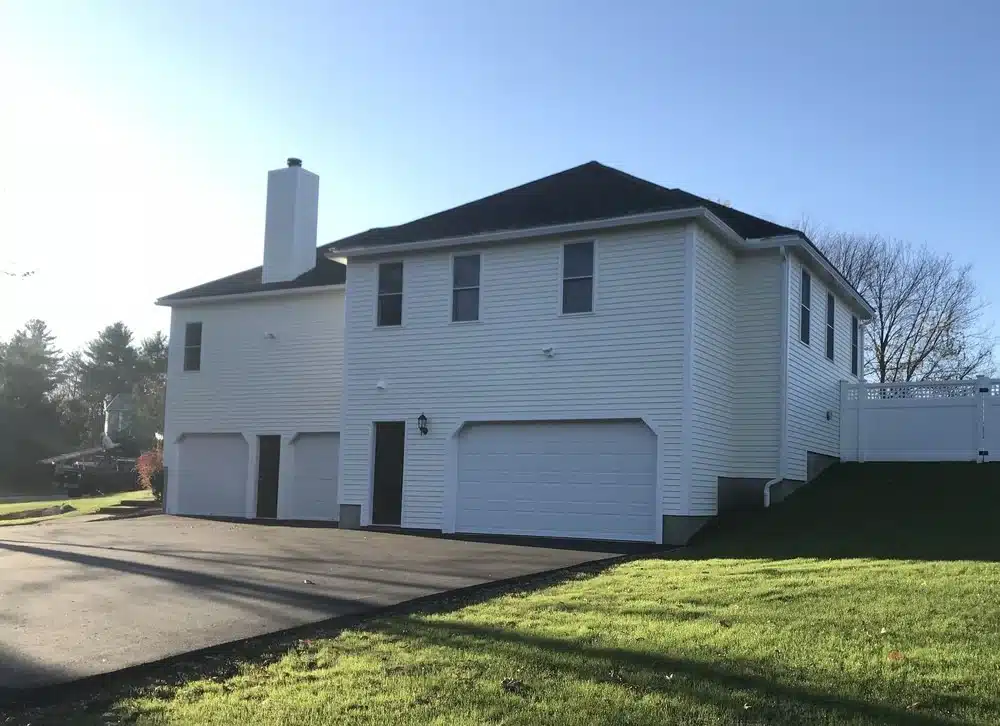
Why 2 Story Garage Additions Are One of the Smartest Investments for Massachusetts Homeowners
2 story garage additions are one of the most practical ways to add living space, boost curb appeal, and increase property value — all without buying a new home.
Here’s a quick look at what’s involved:
| What You Get | Key Details |
|---|---|
| Extra living space | Typically 440–500 sq ft of usable upper-level area |
| Popular uses | Guest suite, home office, ADU, rental unit |
| Typical cost | $600–$650 per sq ft (recommended budget, fall 2024) |
| Project timeline | Most projects take 3–6 months |
| Value added | Increases resale appeal; extra bedroom can add ~15% |
| Permits needed | Yes — required for structural, electrical, and plumbing work |
For homeowners across Middlesex County — from Lexington to Chelmsford to Wilmington — space is always at a premium. Lots are finite. Moving is expensive and stressful. And growing families don’t stop growing.
That’s where a two-story garage addition changes the equation.
What looks like a simple build on the surface is actually a complex project. Floor alignment, structural load, HVAC, plumbing, zoning setbacks — there’s a lot to get right. Done well, it transforms your property. Done poorly, it becomes a costly headache.
This guide walks you through everything: benefits, structural challenges, design options, costs, permits, and what to expect when building in Massachusetts.
The Benefits and ROI of 2 Story Garage Additions
When we talk to homeowners in Billerica or Reading, the conversation usually starts with a need for more space. But 2 story garage additions offer much more than just a few extra square feet. They are a strategic move to increase your home’s equity and long-term functionality.
One of the most significant advantages is the creation of an Accessory Dwelling Unit (ADU). In many Massachusetts towns, zoning laws have evolved to allow these “carriage houses” or “in-law suites.” These spaces are perfect for multi-generational living, allowing aging parents to stay close while maintaining their independence. Alternatively, they can serve as a source of rental income, helping to offset your mortgage.
Beyond the financial return, the versatility of the upper level is unmatched. Popular uses for this new space include:
- A Professional Home Office: Escape the noise of the main house with a dedicated, quiet workspace.
- A Primary Suite Extension: Create the luxury retreat you’ve always wanted.
- A Guest Apartment: Complete with a kitchenette and full bath for visiting friends or family.
- A Fitness or Hobby Studio: Plenty of room for heavy gym equipment or a sprawling art setup.
- A Teen Hangout or Game Room: Keep the noise and the “stuff” contained in a separate wing.
From a real estate perspective, a well-executed addition is highly desirable. While a standard garage adds value by protecting vehicles, adding a second story with finished living space can significantly boost your home’s market price. In fact, adding an extra bedroom through an addition can potentially increase a home’s value by approximately 15%, depending on the local market and the quality of the build.
For more inspiration on how these structures look, you can explore Quick View 2-Car Garage Plans or learn more about our specific approach to Garage Additions.
Structural Considerations for a Garage Second-Story Addition
Building “up” instead of “out” is a great way to save yard space, but it places a massive amount of new weight on your existing structure. At MB Construction, LLC, we emphasize that the “bones” of the project are the most critical part. You can’t just slap a second floor onto a garage built in the 1970s without a professional engineering evaluation.
Foundation and Load-Bearing
The first question we ask is: can the current foundation handle the load? Often, a standard garage slab isn’t thick enough to support a second story. Solutions might include foundation underpinning—strengthening the existing base—or installing interior support columns in the garage area.
Floor Alignment and Joists
If the addition is attached to your home, you likely want a seamless transition between the new room and your existing second floor. This is trickier than it sounds. Most garages are built with lower ceilings than the main house. To avoid a “step-up” or “step-down” (which can feel like an afterthought and hurt resale value), we use techniques like:
- Drop Beams: Lowering the support beams to allow the floor joists to sit at the correct height.
- Subfloor Buildup: Using different thicknesses of flooring material to level the transition.
- Wall Height Adjustments: Modifying the height of the garage walls before the second-floor deck is built.
Attached vs. Detached Structural Needs
| Feature | Attached Addition | Detached Addition |
|---|---|---|
| Foundation | Must tie into the existing house foundation | Entirely new, independent slab and footings |
| Structural Integration | Requires “marrying” two different rooflines | Standalone structural integrity |
| Access | Interior hallway or doorway through a shared wall | Exterior staircase or internal garage stairs |
| Utilities | Can sometimes tap into existing home systems | Usually requires independent HVAC and plumbing |
Whether you are looking at garage additions in Chelmsford MA or elsewhere in Middlesex County, ensuring the floor system is “stiff” is vital. No one wants a bouncy floor in their new home office. We use taller joists or engineered wood products to ensure the span is rock-solid.
Designing Your 2-Car Garage Plans with Lofts or Apartments
Design is where the fun begins, but it’s also where many projects go off the rails aesthetically. A 2 story garage addition should never look like a giant box stuck onto the side of your house. Our goal is always “invisible” integration—making the new structure look like it was part of the original architectural plan.
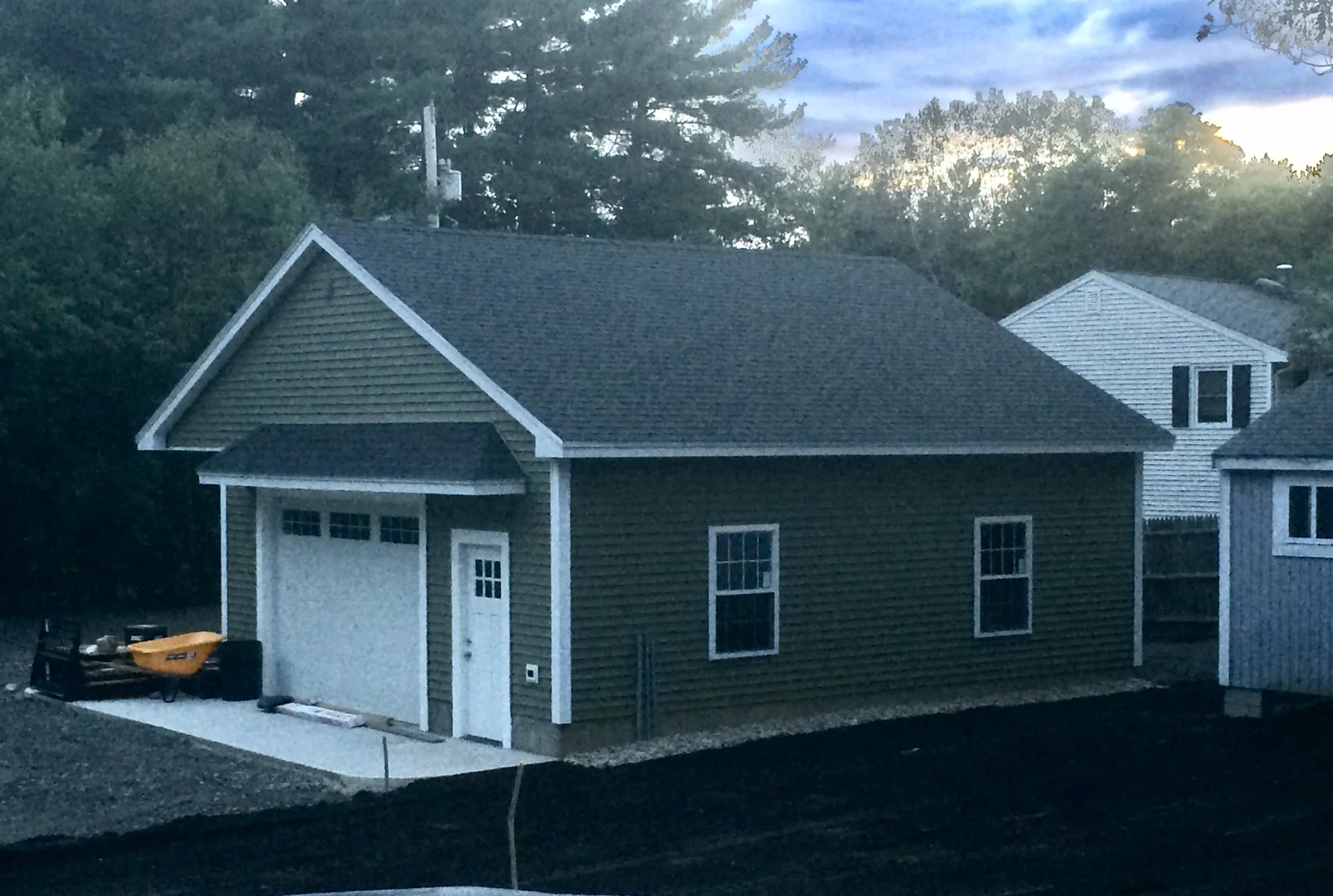
Exterior Aesthetics
To achieve a cohesive look, we carefully match:
- Rooflines: We often extend the existing roof pitch or use dormers to break up the mass of a tall roof.
- Siding and Trim: Even if your original siding is discontinued, we work to find the closest possible match or use the addition as an opportunity for a full-home “facelift.”
- Windows: Matching the style, grid pattern, and casing of your home’s windows is essential for a unified look.
Staircase Placement
Where the stairs go is a major design decision. In a detached garage, an interior staircase takes up vehicle space but keeps you out of the rain. An exterior staircase saves interior room but can be a hassle in a Massachusetts winter. For attached additions, we often look for ways to sacrifice a small closet or a portion of an existing bedroom to create a hallway that leads directly into the new space.
You can see various layouts and how they handle these challenges by viewing Quick View 2-Car Garage Plans.
Maximizing Living Space in 2 Story Garage Additions
A standard two-car garage is typically 20’x20’ or 24’x24’. This provides between 400 and 576 square feet of space upstairs. To make this feel larger, we recommend:
- Dormers: These add headroom and character, turning a cramped attic space into a bright room.
- Skylights: Perfect for bringing in natural light without sacrificing wall space for furniture.
- Open Floor Plans: Avoiding unnecessary interior walls makes the square footage feel expansive.
If you’re planning garage additions in Lexington MA, we focus on these high-end design touches to ensure the space meets the expectations of the local market.
Essential Utilities for 2 Story Garage Additions
Comfort is just as important as construction. The space above a garage is notorious for being “the coldest room in the winter and the hottest in the summer” because it is surrounded by unconditioned space (the garage below and the roof above).
To solve this, we use:
- Spray Foam Insulation: This creates a superior air seal and thermal envelope, which is much more effective than traditional fiberglass in these types of additions.
- Mini-Split HVAC Systems: These high-efficiency heat pumps provide both heating and cooling without the need for bulky ductwork. They allow you to control the temperature of the addition independently from the main house.
- Plumbing Rough-ins: Even if you don’t want a bathroom right away, we strongly recommend “roughing in” the pipes during the build. It is significantly cheaper to do it while the walls are open than to retro-fit it later.
For those considering a garage addition in Billerica MA, we ensure these utility solutions are tailored to our New England climate.
Navigating Costs, Permits, and Timelines in Massachusetts
Let’s talk numbers. Building in Greater Boston and Middlesex County isn’t cheap, but it is an investment in your property’s future.
Budgeting for Your Project
As of late 2024, a realistic budget for a high-quality 2 story garage addition starts around $600–$650 per square foot. While you might see lower estimates for simple “unfinished” shells, a finished space with insulation, HVAC, and quality flooring requires a more robust budget. Factors that drive cost include:
- Structural reinforcements (underpinning or beams).
- Complexity of the roof tie-in.
- Utility connections (plumbing is a major variable).
- Material selections (premium siding, windows, and interior finishes).
Zoning and Permits
In towns like Andover and Tewksbury, the permitting process is rigorous. You can’t skip this step. Most municipalities require:
- Zoning Review: To ensure you aren’t violating “setbacks” (how close you can build to your neighbor’s property line).
- Building Permits: For the structural integrity of the build.
- Electrical and Plumbing Permits: To ensure all systems meet the current Massachusetts code.
If you’re starting garage additions in Andover MA, we handle the heavy lifting of navigating these local regulations to ensure your project is fully compliant.
The Construction Timeline
Most 2 story garage additions take between 3 to 6 months from the time we break ground until the final coat of paint.
- Phase 1 (Month 1): Foundation work and framing. The structure starts to take shape.
- Phase 2 (Month 2): Roofing, siding, and “drying in” the building.
- Phase 3 (Month 3-4): Rough-in of electrical, plumbing, and HVAC, followed by insulation and drywall.
- Phase 4 (Month 5-6): Finish work—flooring, trim, painting, and fixture installation.
Frequently Asked Questions about 2-Story Garages
How much does a 2-story garage addition cost?
As mentioned, you should plan for a budget of $600–$650 per square foot for a finished, high-quality addition. A typical 500 sq ft project often lands in the $300,000 to $325,000 range when all structural, utility, and finish work is included. Costs can vary based on whether the garage is attached or detached and the complexity of the existing home’s structure.
Does a 2-story garage addition increase home value?
Yes, absolutely. Beyond the immediate utility of the space, a finished room above a garage is highly attractive to modern buyers. An extra bedroom can add roughly 15% to your home’s value. If the space is designed as a legal ADU, the potential ROI is even higher due to the possibility of rental income.
Can my existing garage support a second story?
This is the most common question we get. The answer is “maybe.” An engineer must evaluate your current foundation and wall framing. Most standard garages require some level of reinforcement—either through adding support columns, thickening the slab, or “sistering” the wall studs—to safely carry the weight of a second floor.
Conclusion
A 2 story garage addition is more than just a renovation; it’s a transformation of how you live in your home. Whether you need a quiet office in Lexington, a guest suite in Chelmsford, or a rental unit in Wilmington, these additions provide the space you need while staying on the property you love.
At MB Construction, LLC, we pride ourselves on delivering quality-driven, time-sensitive projects. We use premium materials and expert craftsmen to ensure that your new addition isn’t just a room, but a seamless extension of your home. From Billerica to North Andover, we are here to help you navigate the complexities of design, structure, and permitting.
Ready to see what’s possible for your property? Start your garage addition project today and let us help you level up your living space.