What Is Whole House Restoration — and Is It Right for Your Home?
Whole house restoration is the process of returning a home to its original condition while addressing structural, mechanical, and safety issues — all under one coordinated project.
If you’re trying to figure out where to start, here’s the short version:
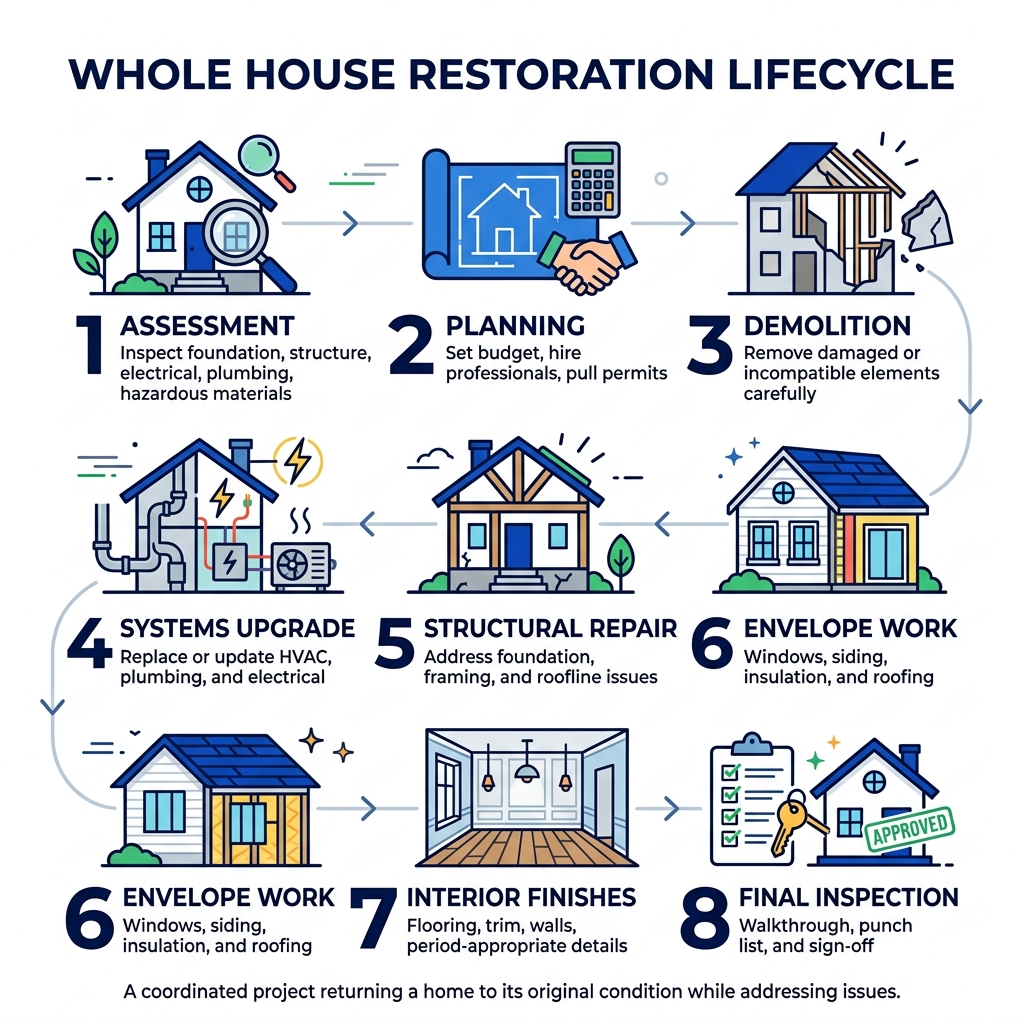
What whole house restoration typically involves:
- Assessment — Inspect foundation, structure, electrical, plumbing, and hazardous materials (lead paint, asbestos)
- Planning — Set a budget, hire professionals, pull permits
- Demolition — Remove damaged or incompatible elements carefully
- Systems upgrade — Replace or update HVAC, plumbing, and electrical
- Structural repair — Address foundation, framing, and roofline issues
- Envelope work — Windows, siding, insulation, and roofing
- Interior finishes — Flooring, trim, walls, and period-appropriate details
- Final inspection — Walkthrough, punch list, and sign-off
For homeowners in towns like Billerica, Lexington, Chelmsford, or anywhere across Middlesex County, MA, old homes are everywhere — and so are the challenges that come with them. Aging Colonials, Victorians, and mid-century ranches all have character worth saving. But they also come with outdated wiring, crumbling foundations, and decades of deferred maintenance.
A whole house restoration is not a simple weekend project. It’s one of the most complex, rewarding, and potentially expensive undertakings a homeowner can take on. Home remodeling expenditures in the U.S. are approaching $450 billion a year — and full-scale restorations represent a major slice of that.
The good news? With the right plan, the right team, and a realistic budget, restoring your home can dramatically improve your quality of life and your property’s value.
This guide walks you through everything — from the first signs your home needs a full restoration, to budgeting, hiring, and getting through the disruption without losing your mind.
Defining Whole House Restoration: How It Differs from Remodeling
When we talk about improving a home, the terms “restoration,” “remodel,” and “renovation” are often used interchangeably. However, in professional construction, they mean very different things. Understanding these differences is the first step in planning your project.
| Feature | Restoration | Remodeling | Renovation |
|---|---|---|---|
| Primary Goal | Return to original state/period | Change the use or layout | Update and repair |
| Historical Accuracy | High priority | Low priority | Moderate priority |
| Structural Changes | Only to repair/reinforce | Often involves moving walls | Minimal to moderate |
| Materials | Period-appropriate/Salvaged | Modern/Trend-focused | Durable/Modern equivalents |
A whole house restoration focuses on heritage preservation. It’s about honoring the architectural symmetry and original intent of the builder. If you own a 19th-century Victorian in Andover or a classic Colonial in Carlisle, a restoration ensures that the “soul” of the house remains intact while the “bones” are brought up to modern safety standards.
Remodeling, on the other hand, might involve turning a bedroom into a master suite or moving the kitchen to the other side of the house. While we certainly perform these tasks as a Home Remodeling Contractor, a true restoration project prioritizes structural integrity and historical accuracy above all else. We use premium materials and expert craftsmen to ensure that new work blends seamlessly with the old, maintaining the property’s unique patina.
Essential Steps in the Whole House Restoration Journey
Starting a whole house restoration can feel like trying to eat an elephant—you have to do it one bite at a time. The process is linear but complex, requiring a “reverse order” mindset. You don’t want to install beautiful new wallpaper only to realize you need to tear open the wall to fix a leaky pipe.
- The Planning Phase: This is where we define the vision. We look at Our Projects to see how similar homes in Greater Boston were handled. This stage involves architects, designers, and structural engineers.
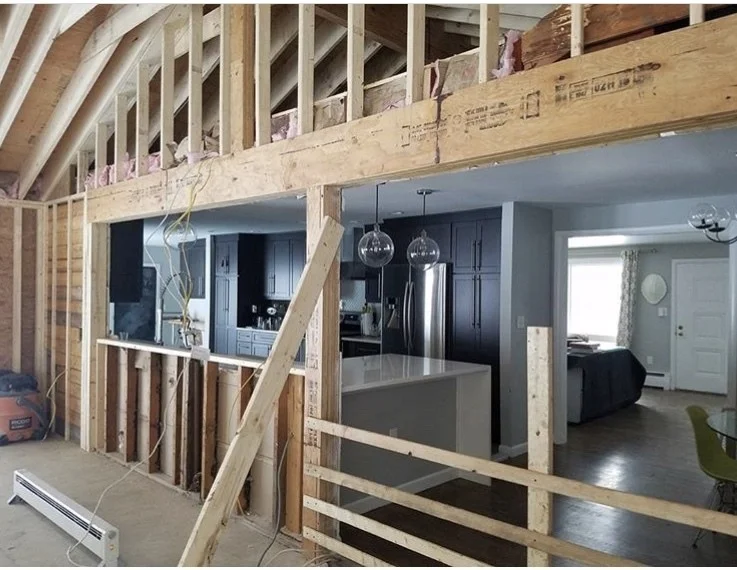
- Demolition and Discovery: This is the “messy middle.” We carefully remove layers of old linoleum, dropped ceilings, and non-original additions. This often reveals the “Rosetta Stone” of the house—ghost lines on the floor or original woodwork hidden behind drywall.
- Mechanical Systems: Before the walls are closed, we update the “vitals.” This includes all-new electrical, plumbing, and HVAC systems.
- The Building Envelope: We ensure the house is watertight. This means repairing the roof, siding, and windows. In places like Reading or North Andover, where winters are harsh, this step is critical for energy efficiency.
- Interior Finishes: Finally, the fun part. We install the trim, paint, flooring, and fixtures that bring the historic character back to life.
Identifying Key Signs Your Home Needs a Whole House Restoration
Not every old house needs a full-scale restoration, but many in Middlesex County are reaching a “tipping point.” Here are the red flags we look for:
- Foundation Issues: Large cracks in the basement or doors that no longer shut properly are signs of settling or structural decay.
- Safety Hazards: If your home was built before 1978, there is a high probability of lead-based paint. Homes from the 1920s through the 1970s often contain asbestos in insulation, floor tiles, or “octopus” furnace ducts.
- Outdated Systems: Knob-and-tube wiring or ungrounded electrical systems are fire hazards. Similarly, galvanized steel pipes that have corroded over 80 years can lead to catastrophic water damage.
- Sagging Rooflines: A “swayback” roof often indicates that the original rafters have been compromised by water, fire, or age.
Balancing Modern Systems with Historic Character in a Whole House Restoration
A challenge in a whole house restoration is making an 18th or 19th-century home function like a 21st-century one. We want the comfort of central air and smart tech without seeing unsightly plastic vents or bulky wires.
In many Kitchen Remodeling projects within a restoration, we use paneled appliances. This allows your refrigerator and dishwasher to look like the surrounding period-appropriate cabinetry. For heating and cooling, we often recommend high-velocity mini-duct systems or air-to-water heat pumps. These systems are much easier to hide in the small cavities of historic walls than traditional bulky ductwork.
If your home is under a preservation easement, we work closely with local historical commissions in towns like Lexington or Bedford to ensure every update meets their strict conservation standards. This might involve sourcing antique floorboards to match originals or using faux-painting techniques to blend new woodwork with 100-year-old finishes.
Budgeting and Timelines for a Full-Scale Project
Let’s talk numbers. A whole house restoration is an investment. While a basic renovation might cost between $15 and $40 per square foot, a high-end restoration can easily exceed $200 per square foot.
Estimating the Cost of Your Whole House Restoration
The average cost of a whole-home project is roughly $48,600, but for the historic gems found in Eastern MA, that number is often higher due to the specialized labor required. Here is a general breakdown of what to expect:
- Kitchens: $14,600 – $40,000+
- Bathrooms: $6,700 – $28,000+
- Living/Dining Areas: $5,000 – $15,000
- Structural/Mechanical: 20-30% of the total budget
When you Request Estimate from us, we help you navigate these tiers. We also look at the ROI (Return on Investment). Some projects, like garage door replacements or upgrading to energy-efficient HVAC, can return over 95% of their cost upon resale.
For those looking at Remodeling Services, it’s important to remember the “hidden” costs. We always recommend a 10-20% contingency fund. In an old house, you never know what’s behind a wall until you open it—it could be a beautiful original fireplace, or it could be a colony of termites and a rotted sill plate.
Managing the Restoration Timeline and Common Delays
Patience is a virtue, especially in restoration. A basic project might take 3-4 months, but a comprehensive, high-end restoration of a historic townhouse or farmhouse can take 8-12 months or longer.
Common timeline killers include:
- Permit Approvals: In historic districts, getting the green light from the zoning board can take weeks.
- Material Lead Times: Custom-milled trim or period-correct windows don’t sit on a shelf at the local hardware store.
- Scope Changes: Deciding to add a bathroom mid-project is the fastest way to add two months to your schedule.
For a fascinating look at how long and complex these projects can be, read about How an 1890 Townhouse Was Brought Back From Near-Ruin. It serves as a great reminder that while the process is long, the result is a piece of living history.
Planning for Success: Professionals, Permits, and Preparation
You wouldn’t ask a general practitioner to perform heart surgery; don’t ask a “jack-of-all-trades” to restore your 1920s bungalow. You need a team that understands the nuances of older structures.
Before you sign a contract, check out these 10 Questions to Ask Before Hiring a Custom Home Builder Near Me. At MB Construction, LLC, we pride ourselves on being a design-build firm. This means the architect and the builder are on the same team from day one, which reduces miscommunications and keeps the project on track.
Surviving the Disruption of a Major Restoration
Living through a whole house restoration is like camping in your own home—if the campsite was filled with sawdust and the sound of jackhammers.
- Dust Management: We use heavy-duty plastic sheeting and HEPA air scrubbers, but dust is persistent. Cover your furniture and consider moving sensitive items off-site.
- Noise and Pets: The loud bang of a nail gun can be terrifying for pets. We recommend relocating furry family members during the heavy demolition and framing phases.
- Communication: Establish a daily or weekly “check-in” with your project manager. This keeps everyone on the same page regarding the schedule and any “surprises” the house has revealed.
For inspiration on the “light at the end of the tunnel,” check out The Restoration of a late Victorian Home – OldHouseGuy Blog. It documents the grueling but rewarding journey of stripping away decades of “modern” updates to find the beauty underneath.
Frequently Asked Questions about Whole House Restoration
Is it cheaper to restore a house or build from scratch?
Generally, it is cheaper to restore than to build new. When you restore, you are leveraging existing foundations, framing, and masonry. However, if the home has severe structural failure or extensive environmental hazards (like massive mold or chemical contamination), the costs can sometimes level out. Most homeowners choose restoration for the character and “soul” that a new build simply cannot replicate.
How long does a typical whole house restoration take?
For a standard 2,000-square-foot home in Middlesex County:
- Basic Restoration: 3–5 months
- Mid-Range: 6–9 months
- Extensive/Historic: 10–14 months
What are the most common mistakes to avoid during restoration?
The biggest mistake is rushing the planning phase. Ordering materials before the design is finalized leads to waste and delays. Another common error is over-improving for the neighborhood, though in high-value areas like Lexington or Burlington, this is less of a concern. Finally, ignoring the “bones” to focus on “jewelry” (like expensive light fixtures) is a recipe for disaster. Always fix the roof and the plumbing before you buy the Italian marble.
Conclusion
A whole house restoration is more than just a construction project; it’s an act of stewardship. Whether you are reviving a fire-damaged landmark in Westford or modernizing a mid-century ranch in Wilmington, you are preserving a piece of the Massachusetts landscape.
At MB Construction, LLC, we are quality-driven and time-sensitive. Based in Billerica, we serve the entire Middlesex County area with a commitment to premium materials and guaranteed workmanship. We understand that your home is your most valuable asset, and we treat every restoration with the respect it deserves.
If you find that your family is outgrowing your current space during the restoration process, we also specialize in Home Additions that blend perfectly with your home’s original architecture. Our expert craftsmen are ready to help you turn your historic house into a forever home.
Ready to start your journey? Whether you’re in Andover, Reading, or Tewksbury, we’re here to guide you through every step of the process. Let’s bring the beauty back to your home together.