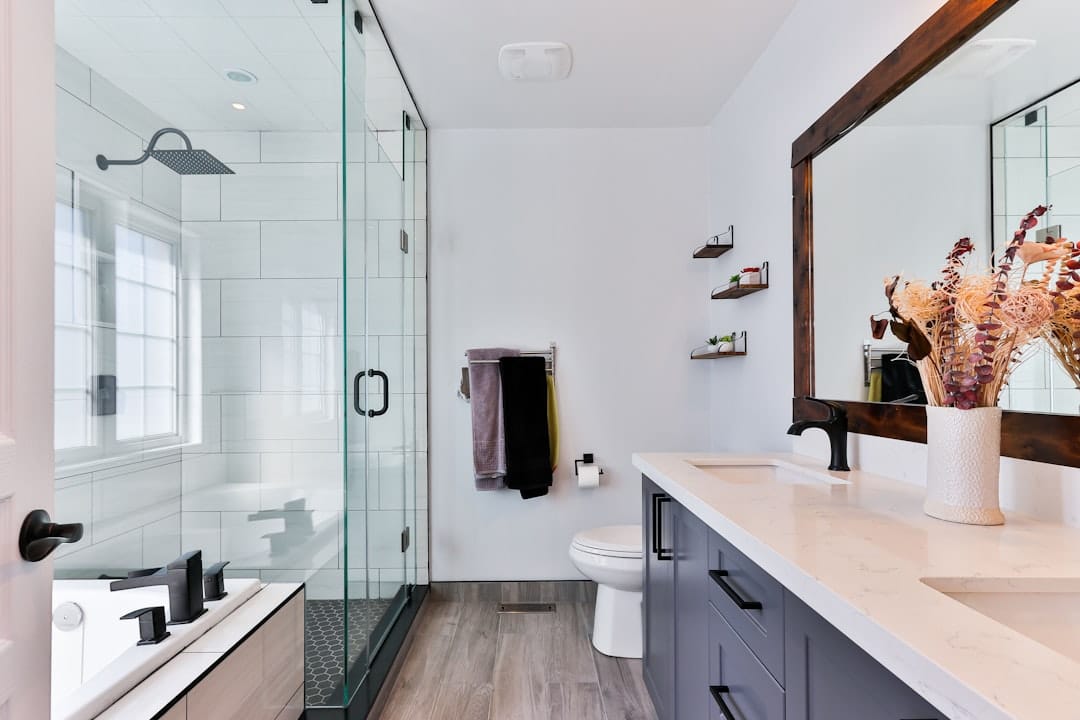
Budget Bathroom Renovation Costs in 2026
A budget bathroom renovation is one of the most searched home improvement topics — and for good reason. It can dramatically improve your daily life and add real resale value, without the price tag of a full luxury remodel.
Quick answer for homeowners in Middlesex County and Greater Boston, MA:
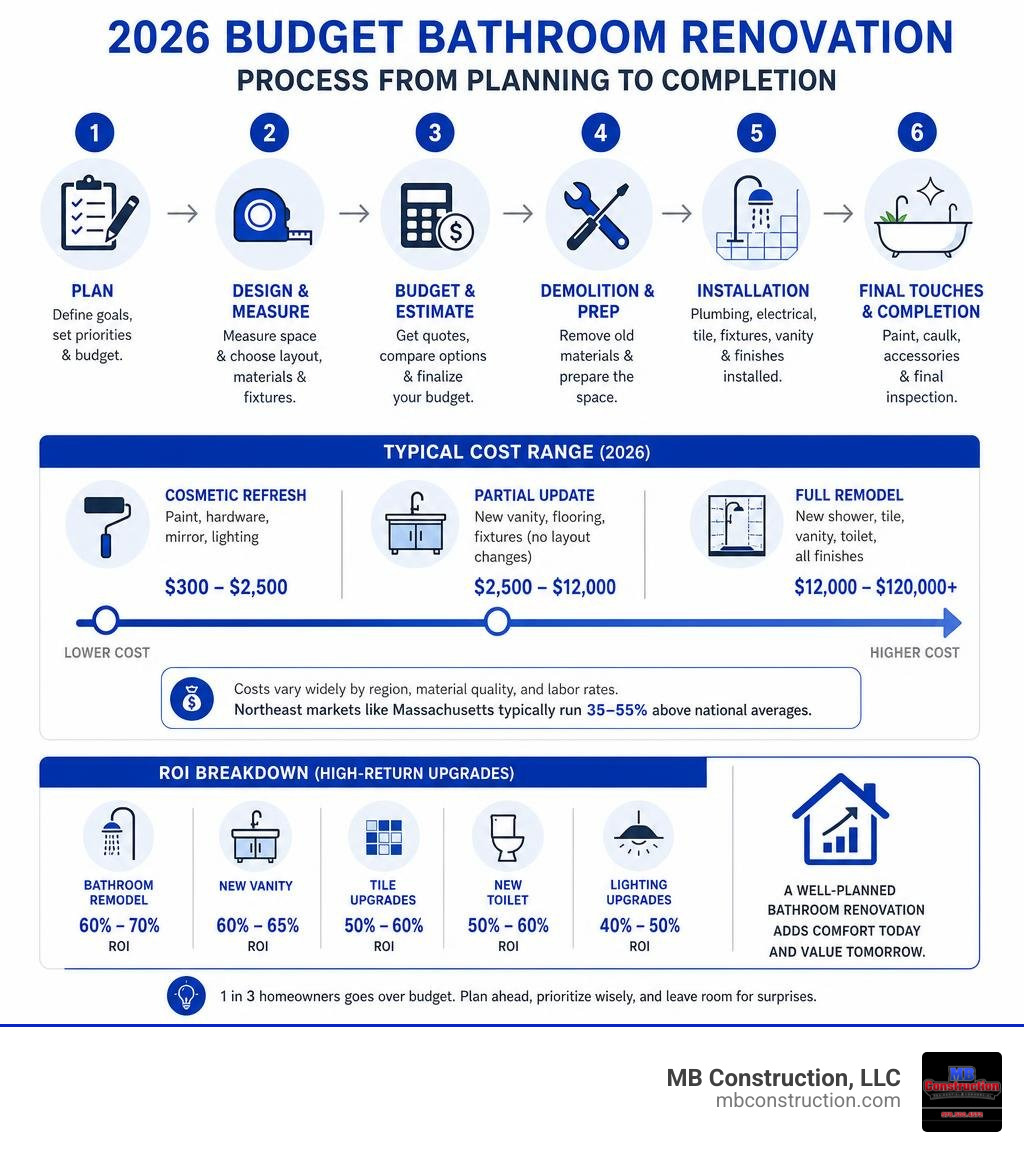
| Renovation Tier | Typical Scope | Average Cost Range (Based on Internet Data) |
|---|---|---|
| Cosmetic refresh | Paint, hardware, mirror, lighting | $300 – $3,000 |
| Partial update | New vanity, flooring, fixtures (no layout changes) | $2,500 – $25,000 |
| Full remodel | New shower, tile, vanity, toilet, all finishes | $12,000 – $125,000+ |
Note: Costs vary widely by region, material quality, and labor rates. Northeast markets like Massachusetts typically run 35-55% above national averages.
But here is where most homeowners run into trouble: they start with a number in their head — say, $10,000 — and discover midway through that the floor has water damage, or moving one drain line adds thousands of dollars overnight.
One in three homeowners goes over budget on bathroom remodels. That statistic is not meant to scare you. It is meant to help you plan smarter.
This guide walks you through everything: realistic costs, the highest-return upgrades, what you can safely DIY, and the mistakes that quietly drain budgets before a single tile is laid.
Whether you are in Andover, Bedford, Billerica, Burlington, Carlisle, Chelmsford, Eastern, Greater Boston, Lexington, Middlesex County, North Andover, North Reading, Reading, Tewksbury, or Wilmington, MA, the principles are the same — and so are the pitfalls.
Basic budget bathroom renovation glossary:
Setting a Realistic Budget for Your Budget Bathroom Renovation
When diving into a budget bathroom renovation, setting a realistic financial foundation is the difference between a successful, stress-free update and a half-finished headache. Many homeowners begin with an arbitrary figure in mind without understanding what local market forces and material costs actually dictate.
In Massachusetts, particularly in towns like Billerica, Bedford, and Lexington, remodeling costs reflect high demand for skilled labor and strict New England building codes. According to average internet data, a standard small bathroom remodel typically averages around $12,132. However, depending on your choices, the scale of the project, and whether you run into structural surprises, actual costs can span a wide range from $3,000 on the low cosmetic end to over $125,000 for high-end, custom-engineered primary suites.

To avoid breaking the bank, we recommend aligning your budget with your home’s overall market value. A good rule of thumb is to invest between 5% and 10% of your home’s value into a full bathroom remodel. If your home in Wilmington or Reading is valued at $600,000, a budget of $30,000 to $60,000 is appropriate to avoid over-improving or under-valuing your property.
To see how these numbers scale for smaller spaces, check out our guide on the Cost of Remodeling a Small Bathroom.
| Renovation Level | Average Materials Cost (Based on Internet Data) | Average Labor Cost (Based on Internet Data) | Total Average Project Range (Based on Internet Data) |
|---|---|---|---|
| Low-End (DIY/Cosmetic) | $800 – $8,000 | $0 (Self-Labor) | $800 – $80,000 |
| Mid-Range (Professional) | $4,500 – $45,000 | $5,500 – $55,000 | $10,000 – $125,000+ |
| High-End (Custom/Luxury) | $15,000 – $150,000 | $18,000 – $180,000 | $33,000 – $330,000+ |
Understanding the Cost Breakdown of a Budget Bathroom Renovation
Where does your hard-earned money actually go during a remodel? In a standard bathroom project, labor is the single largest expense, typically accounting for 40% to 65% of the total budget. In smaller spaces (such as a 5×7 guest bath), labor can represent up to 50% to 60% of the overall cost because tradespeople charge minimum call-out fees to cover travel, setup, and overhead regardless of the room’s square footage.
The remaining budget is allocated to materials, permits, and finishes. Here is a typical percentage breakdown for a mid-range project:
- Wet Area (Shower/Tub): 35% – 45%
- Vanity, Sink, and Countertop: 15% – 20%
- Flooring: 8% – 12%
- Lighting and Ventilation: 6% – 10%
- Permits, Demolition, and Contingency: 15% – 20%
The most critical safety net you can build into this breakdown is a robust contingency fund. One in three homeowners exceeds their initial budget, most commonly due to hidden water damage, subfloor rot, or outdated galvanized plumbing discovered behind the walls. We highly recommend setting aside a non-negotiable 15% to 20% contingency buffer to handle these surprises without stalling your project.
For a deeper dive into current pricing trends and real-world project costs, you can consult this small bathroom remodel cost resource.
Financing Options for Your Renovation
If you don’t want to drain your liquid savings to fund your budget bathroom renovation, several smart financing paths exist. Many homeowners in Middlesex County leverage their home equity through a Home Equity Line of Credit (HELOC) or a home equity loan, which often provide lower interest rates and potential tax advantages.
For smaller, cosmetic-focused updates, personal home improvement loans or low-interest credit card promotions can bridge the gap. When planning how to fund your home upgrades without financial strain, review our practical guide on Financing Your Addition Without Breaking the Piggy Bank to discover the best strategy for your household.
Cost-Effective, High-ROI Bathroom Upgrades and Material Choices
When working with a $20,000 budget, you are in the “sweet spot” of home remodeling. This budget is large enough to execute a complete visual and functional transformation using durable, modern materials, without entering the realm of diminishing returns typical of high-end luxury builds.
To get the most out of your investment, you should focus on updates that maximize your return on investment (ROI). On average, a mid-range bathroom remodel in the Northeast returns approximately 73.7% of its cost at resale, whereas upscale, highly personalized renovations recover only about 36%. Buyers in towns like Carlisle and North Andover appreciate clean, functional, and moisture-resistant spaces over hyper-customized luxury features that may not match their personal style.

Maximizing Value with a Tub-to-Shower Conversion
If you are remodeling a primary bathroom, the single highest-ROI upgrade you can make is a tub-to-walk-in-shower conversion. Modern homebuyers overwhelmingly prefer spacious walk-in showers over traditional tub-shower combos by a 70-30 margin. A professionally installed walk-in shower delivers an impressive 70% to 85% ROI.
To keep this conversion budget-friendly:
- Preserve the Layout: Keep the shower drain and supply lines in their exact existing locations.
- Choose Semi-Frameless Glass: Upgrading to a semi-frameless glass enclosure ($1,200 to $12,000 based on internet data) offers a sleek, high-end look at a fraction of the cost of fully frameless custom glass, which can reach $25,000 or more based on internet data.
- Use Large-Format Tile: Opt for 12×24 inch porcelain tiles. They require fewer grout lines, which reduces installation labor costs, makes the shower feel larger, and simplifies weekly cleaning.
Note: If your home only has one bathroom, keep the bathtub. Families with young children require at least one tub, and removing it entirely can hurt your home’s marketability.
Smart Material Selections for a Budget Bathroom Renovation
Balancing cost, durability, and resale value comes down to smart material sourcing. You do not need to buy premium, custom-fabricated materials to achieve a high-end look.
- Flooring: While luxury vinyl plank (LVP) is highly waterproof and cost-effective, porcelain tile remains the gold standard for resale value in Massachusetts. Large-format porcelain tile ($3 to $30 per square foot based on internet data) offers unmatched durability and a premium feel.
- Vanities: Avoid custom cabinetry. Instead, choose high-quality prefab vanities that include integrated quartz or engineered stone countertops and undermount sinks. Buying these components as a bundled package can save you $1,200 to $15,000 compared to purchasing the cabinet, countertop, and sink separately, based on internet data.
- Fixtures: Stick to reputable, widely available fixture lines in classic finishes like brushed nickel, polished chrome, or matte black.
For inspiration on how to execute a high-impact, budget-conscious update without sacrificing style, read this small bathroom renovation case study.
Plumbing Layout Decisions That Can Save Thousands
The absolute golden rule of a budget bathroom renovation is simple: do not move the plumbing lines.
The moment you decide to move a toilet, relocate a shower drain, or shift a sink to an adjacent wall, your budget will take a major hit. Moving a single plumbing fixture in an older New England home can add $2,000 to $20,000 to your invoice, based on internet data. This cost stems from the labor required to cut through floor joists, reroute vent stacks, and run new drain lines to code.
Instead of changing the physical footprint, you can achieve a massive visual transformation by working within the existing layout and using clever design strategies:
- Color Drenching: Paint the walls, trim, and even the ceiling in a single, cohesive paint color. This technique eliminates visual boundaries, making a small 5×7 bathroom feel significantly taller and more spacious.
- Upgraded Lighting: Outdated, yellow-toned strip lighting can make any bathroom feel dingy. Swapping old fixtures for modern LED vanity lights and adding a recessed light in the shower area instantly brightens the space.
- Refinishing Over Replacing: If your cast-iron bathtub or shower tray is structurally sound but cosmetically worn, do not tear it out. A professional tub reglazing service costs $300 to $3,000 based on internet data, whereas a full tub replacement can run $2,000 to $20,000 based on internet data once you factor in demolition, disposal, plumbing, and wall repairs.
- Hardware Refresh: Swap out old, mismatched cabinet pulls, towel bars, and faucet trims. Opting for cohesive, modern finishes like brushed brass or polished chrome acts as the “jewelry” of the room, pulling the entire design together.
To see just how much you can accomplish by focusing on smart cosmetic updates rather than full demolition, take a look at this creative budget bathroom makeover case study.
DIY and Professional Bathroom Renovation Tasks
A great way to keep your budget bathroom renovation on track is to know when to roll up your sleeves and when to call in the professionals. Attempting to DIY complex tasks without the proper training can lead to costly mistakes, code violations, and water damage that can ruin your home’s structure.
To help you plan, we have broken down which renovation tasks are generally safe for handy homeowners and which should be left to licensed professionals:
Safe DIY Tasks
- Demolition: Tearing out old drywall, removing non-structural vanities, and pulling up old flooring can save you $1,000 to $10,000 in professional labor, based on internet data. Just be sure to shut off the water valves and electrical breakers before you start.
- Painting: Applying a fresh coat of high-quality, moisture-resistant semi-gloss paint to walls, trim, and ceilings is a highly accessible DIY task.
- Hardware Replacement: Swapping out cabinet knobs, towel hooks, mirrors, and toilet paper holders requires only basic hand tools.
- Installing Floating Shelves: Great for adding extra storage space above the toilet without eating into your floor plan.
Professional-Only Tasks
- Plumbing Work: Any task involving main water lines, shower valves, or drain relocations must be handled by a licensed plumber to prevent catastrophic leaks.
- Electrical Work: Bathrooms are wet environments. Installing new lighting circuits, exhaust fans, or GFCI outlets requires a licensed electrician to ensure your home meets local Massachusetts electrical codes.
- Wet-Area Waterproofing: Installing a tile shower looks beautiful, but it requires a flawless waterproof membrane system underneath. If the pan or walls are not sealed correctly, water will slowly rot your subfloor, leading to thousands of dollars in structural repairs.
When managing your project, a clear construction schedule is essential. A typical small bathroom remodel takes 10 to 18 days of active construction, but shipping delays for custom glass or fixtures can easily push that timeline out.
To keep your sanity intact throughout the process, review our guide on How to Plan Your Entire Home Renovations Without Losing Your Mind.
Frequently Asked Questions About Bathroom Renovations
What is a realistic budget range for a small bathroom remodel in 2026?
Based on average internet data, a realistic planning range for a small bathroom (35 to 50 square feet) is $5,500 to $60,000. However, depending on the scope of work and local labor rates, projects can span a wide range from $3,000 for a basic DIY cosmetic refresh to over $125,000 for high-end, professionally engineered custom remodels.
How long does a typical small bathroom remodel take?
A full, professional mid-range remodel of a small bathroom typically takes between 10 and 18 days of active construction. If you are doing a simple cosmetic refresh (paint, hardware, mirror swap), it can easily be completed over a single weekend. Always plan for at least two weeks without access to the bathroom during a full remodel.
What tasks are safe to DIY and which require a professional?
Homeowners can safely handle cosmetic demolition, interior painting, hanging mirrors, and replacing cabinet hardware. However, you should always hire licensed professionals for plumbing modifications, electrical wiring, and wet-area shower waterproofing to ensure safety, code compliance, and protection against water damage.
Final Recommendations
A successful budget bathroom renovation is entirely achievable when you plan carefully, prioritize high-ROI upgrades, and respect the limits of your plumbing layout. By keeping your existing layout, choosing durable materials like large-format porcelain tile, and building a realistic contingency fund, you can enjoy a beautiful, modern space that adds lasting value to your home.
At MB Construction, LLC, based in Billerica, MA, we specialize in delivering quality-driven, time-sensitive residential projects across Andover, Bedford, Billerica, Burlington, Carlisle, Chelmsford, Eastern, Greater Boston, Lexington, Middlesex County, North Andover, North Reading, Reading, Tewksbury, and Wilmington, MA. Our expert craftsmen are dedicated to providing guaranteed workmanship using premium materials.
Ready to plan your next home upgrade? Contact us today to explore our professional remodeling services and let us help you bring your vision to life.