
What Is a Custom Home Remodel — And Is It Right for You?
A custom home remodel is a personalized renovation process where your home is redesigned and rebuilt to match your specific needs, lifestyle, and aesthetic — not a generic template.
Here’s a quick overview of what that means in practice:
- Custom vs. standard renovation: A standard renovation updates finishes (paint, fixtures, flooring). A custom remodel can reconfigure layouts, add square footage, replace systems, and use premium materials chosen by you.
- Scope: Projects range from a single kitchen or bathroom transformation to a whole-home reconfiguration.
- Timeline: Typically 6–20 months depending on project size and complexity.
- Cost: Highly variable. Average whole-home remodel costs range from $15 to over $100 per square foot based on internet data, with large luxury projects running significantly higher.
- ROI: Homeowners typically recover 60–80% of their remodeling investment at resale, depending on scope and location.
For homeowners in towns like Andover, Lexington, Billerica, or anywhere across Middlesex County, MA, the decision to remodel — rather than move — is one of the most significant investments you’ll make. The good news: over 70% of homeowners report greater satisfaction and improved functionality after completing a custom remodel.
But the process can feel overwhelming. Permits, contractors, design decisions, timelines, budgets — there are a lot of moving parts. This guide walks you through all of it, clearly and honestly, so you can move forward with confidence.
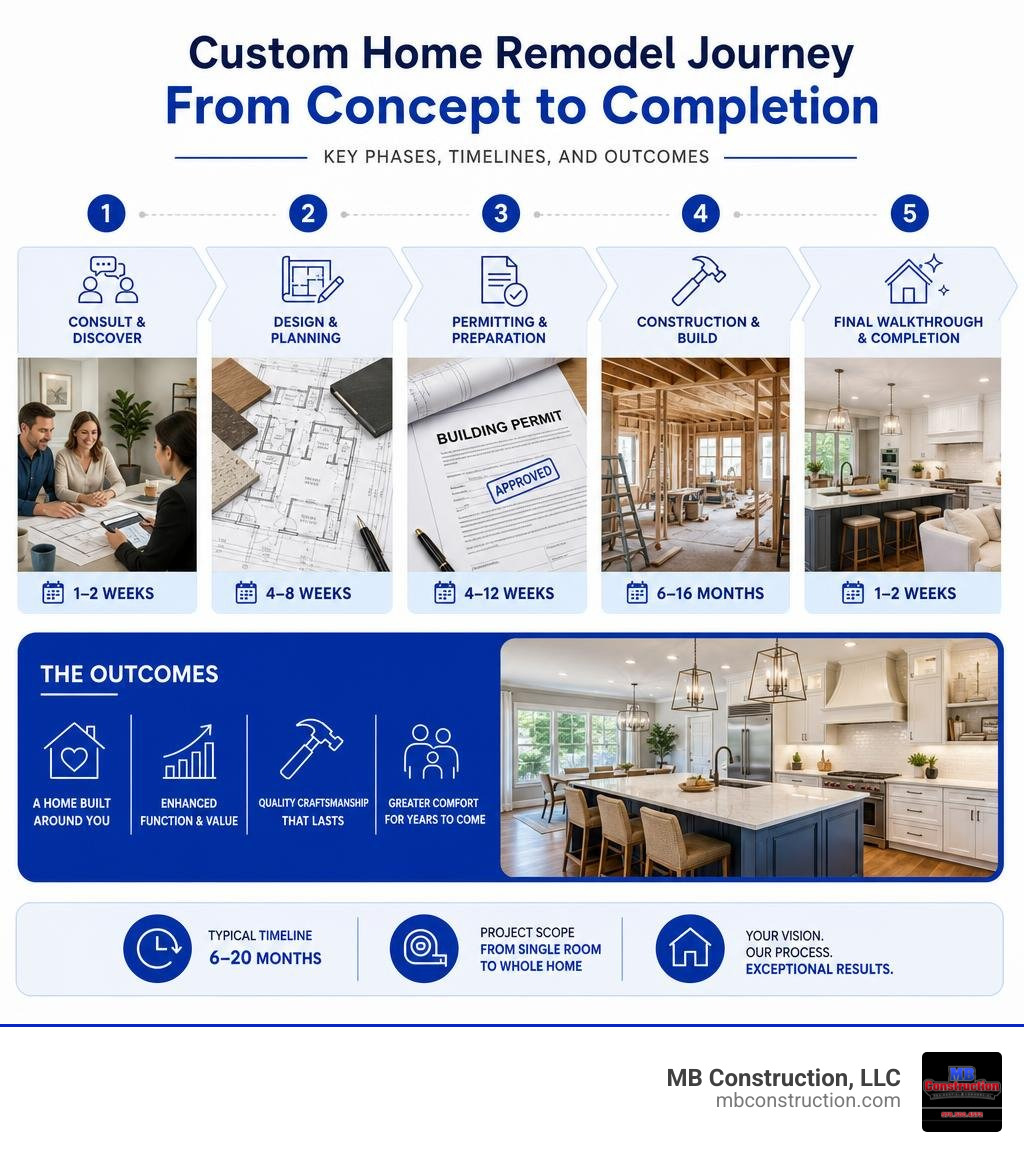
Relevant articles related to custom home remodel:
- alpha construction and remodeling
- construction and remodeling
- global construction and remodeling
Understanding the Scope of a Custom Home Remodel
When we talk about a custom home remodel, we are talking about a top-to-bottom transformation. Unlike a simple cosmetic update, a custom remodel involves a deep dive into how you use your living space. It often requires custom design plans, structural changes, footprint expansion, and the installation of luxury finishes to optimize every square inch of your home.
Whether you want to open up a cramped mid-century layout in Bedford or add a second-story addition to a classic colonial in Reading, understanding the scope is the first step toward turning your blueprint into reality.
Standard Renovation vs. Custom Remodeling
It is easy to confuse a standard renovation with a custom remodel, but they serve very different purposes. A standard renovation is primarily cosmetic. It focuses on updating existing features without changing the structural layout of the house. Think of it as a facelift: replacing old countertops, installing new luxury vinyl plank flooring, or putting on a fresh coat of paint.
A custom home remodel, on the other hand, is a structural and functional reinvention. We look at the bones of the home. This process can include moving load-bearing walls, rerouting plumbing and electrical systems, expanding the home’s footprint with additions, and creating personalized layouts tailored to your family’s daily routines.
| Feature | Standard Renovation | Custom Home Remodel |
|---|---|---|
| Primary Focus | Cosmetic updates and surface-level refreshes | Structural alterations, custom layouts, and personalization |
| Layout Changes | Keeps the existing floor plan intact | Reconfigures walls, rooms, and overall flow |
| Material Quality | Standard builder-grade or mid-range finishes | Premium, custom-sourced materials and custom cabinetry |
| Complexity | Low to moderate; rarely requires major structural engineering | High; requires architectural design, engineering, and detailed permits |
| Value Addition | Quick aesthetic boost; standard market return | Long-term equity growth; tailored high-end appeal |
Popular Custom Remodeling Projects
Every homeowner has different priorities, but we consistently see a few key areas that drive the most impact. According to industry statistics, kitchen and bathroom remodels remain the most popular projects, with roughly 60% of homeowners prioritizing these spaces for renovation.
- Kitchen Transformations: The kitchen is the heart of the home. A custom kitchen remodel often involves removing walls to create an open-concept flow into the dining or living area. Homeowners frequently request massive waterfall islands, custom-milled cabinetry, and integrated high-end appliances to elevate both style and utility.
- Spa-Like Bathrooms: Reimagining a primary bath into a private oasis is another highly sought-after project. This includes curbless walk-in showers, freestanding soaking tubs, custom fluted vanities, and smart heated flooring.
- Home Additions: For growing families in areas like Tewksbury or Wilmington, sometimes the only way to get more space is to build out or up. Additions can range from three-season porches and mudrooms to complete second-story expansions.
- Whole-Home Reconfigurations: This involves taking an older house down to the studs to update its entire layout, plumbing, electrical systems, and insulation. It is the ultimate way to get a “new” house without leaving the neighborhood you love.
If you are planning to upgrade your most-visited spaces, you can find inspiration in our guide to stunning renovations for your most used rooms.
The Design-Build Advantage for Homeowners
Historically, remodeling a home required hiring an independent architect to draw up plans, and then bidding those plans out to various general contractors. This traditional method often leads to a disconnect between the design vision and the actual construction budget.

To solve this, many modern homeowners choose a design-build approach. This model integrates architectural design, interior design, and construction services under one roof, providing a single point of responsibility throughout the entire project. To explore how this unified approach can transform your entire property, read the complete guide to whole house renovations.
Streamlining the Custom Home Remodel Process
The design-build model streamlines the custom remodeling experience by keeping designers and builders on the same page from day one.
- Pre-Construction Collaboration: Designers work side-by-side with estimators and project managers. This ensures that the beautiful concepts drawn on paper actually align with your real-world budget.
- Efficient Material Procurement: Long-lead items — such as custom cabinetry (which can take 10 to 14 weeks) or imported European tile — are identified and ordered early in the design phase to prevent construction delays.
- Single Point of Contact: Instead of playing telephone between an architect and a contractor when a structural surprise is uncovered behind a wall, you work with one cohesive team that manages the solution internally.
- Budget Enforcement: Because the building team is involved during the design development phase, we can proactively flag high-cost design elements and suggest more cost-effective alternatives before any permits are pulled.
This integrated approach takes the friction out of the process, which is why we highly recommend reading the alpha guide to stress free home construction and remodeling to learn more about setting your project up for success.
Preserving Character in Older Massachusetts Homes
One of the greatest challenges of remodeling in historic Middlesex County communities like Carlisle, Lexington, or North Reading is balancing modern luxury with historic charm. Many homes in our service area were built in the 19th or early 20th centuries, featuring beautiful timber framing, original moldings, and unique architectural details.
A successful custom remodel should respect and preserve this character rather than erase it. This requires expert craftsmanship and thoughtful design choices, such as:
- Sourcing period-correct millwork to seamlessly blend new additions with existing structures.
- Restoring original features, like exposed wooden beams or brick fireplaces, and making them focal points of an open-concept space.
- Integrating modern utilities, energy-efficient insulation, and updated wiring behind the walls without disrupting the historic exterior facade.
To learn more about the delicate balance of updating a historic property, check out our guide on navigating the whole house restoration process.
Planning, Timelines, and Permitting Regulations
A successful custom home remodel relies on meticulous planning and scheduling. In construction, surprises cost both time and money. By addressing long-lead orders and local town regulations before the first hammer swings, we keep projects moving forward smoothly.
If you are looking to see what other homeowners are doing in your immediate area, you can browse best 15 new & custom home builders in Billerica, MA on Houzz to get a sense of local architectural styles.
Typical Project Timelines and Phases
A whole-home custom remodel is a major undertaking that typically spans several months. While every home is unique, the process generally follows a structured timeline.
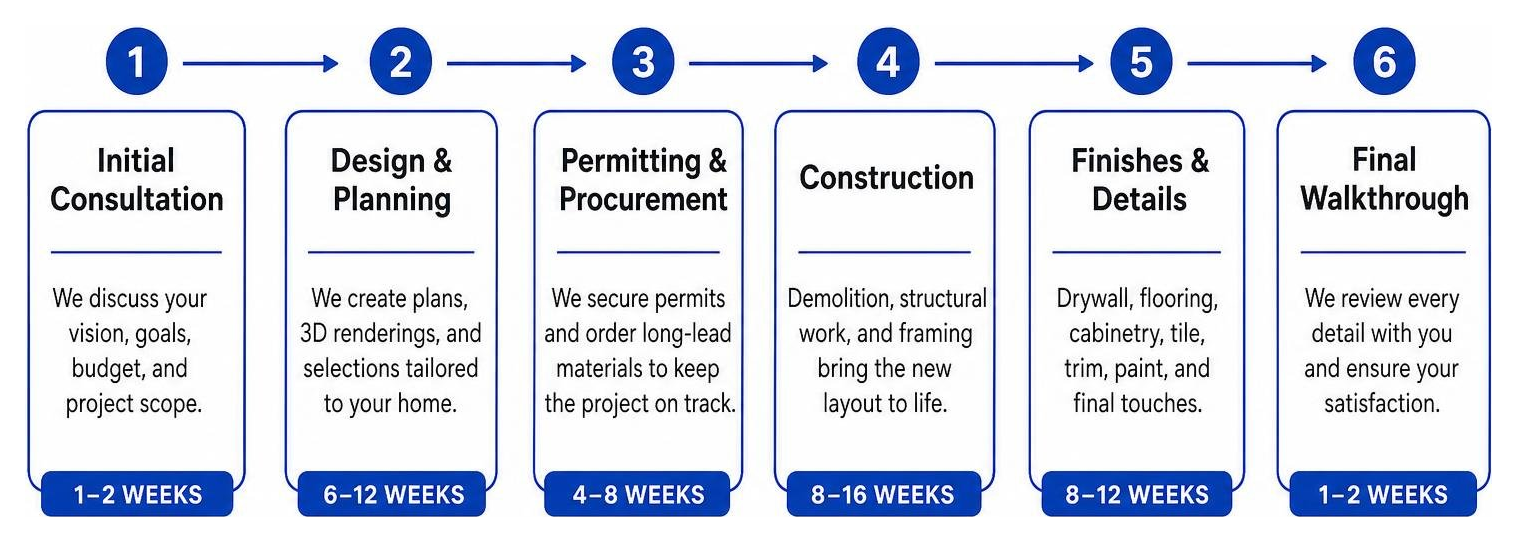
- Phase 1: Discover & Design (8–14 weeks): We discuss your goals, take detailed measurements, create 3D renderings, and make all material selections.
- Phase 2: Permitting & Procurement (4–8 weeks): We submit plans to the local building department and place orders for all long-lead materials like windows, doors, and custom cabinets.
- Phase 3: Demolition & Structural Work (4–8 weeks): We open up walls, install structural steel beams if load-bearing walls are removed, and frame out any new additions.
- Phase 4: Rough-Ins (4–6 weeks): Plumbing, electrical, HVAC, and smart home wiring are installed and inspected.
- Phase 5: Finishes & Details (8–12 weeks): Drywall, plastering, flooring, tile, cabinetry, trim, and paint are meticulously applied.
- Phase 6: Final Walkthrough & Handover (1–2 weeks): We complete the final punch list items and hand back your fully transformed home.
To make sure you don’t lose your peace of mind during this multi-month journey, read our practical guide on how to plan your entire home renovations without losing your mind.
Navigating Local Permits and Building Codes
Navigating the local regulatory landscape in Massachusetts requires local expertise. Each municipality in Middlesex County — whether it is Chelmsford, Burlington, or Andover — has its own specific building department, zoning bylaws, and inspection rhythms.
For instance, if you are planning a project in Chelmsford, you will need to coordinate closely with local inspectors to ensure compliance with the Massachusetts State Building Code and local zoning restrictions. You can check out the best 15 home remodelers in Chelmsford, MA on Houzz to see how local professionals navigate these requirements.
Similarly, if you are looking to build in Burlington, you must comply with town-specific setbacks, lot coverage limits, and environmental regulations. Working with a contractor who understands these local nuances, such as those listed under custom home builders & remodeling contractors in Burlington, MA, is essential to prevent costly delays in permit approval.
Financial Planning and Investment Returns
A custom home remodel is a significant financial commitment, but when planned correctly, it is also a powerful investment in your family’s quality of life and your home’s long-term value.
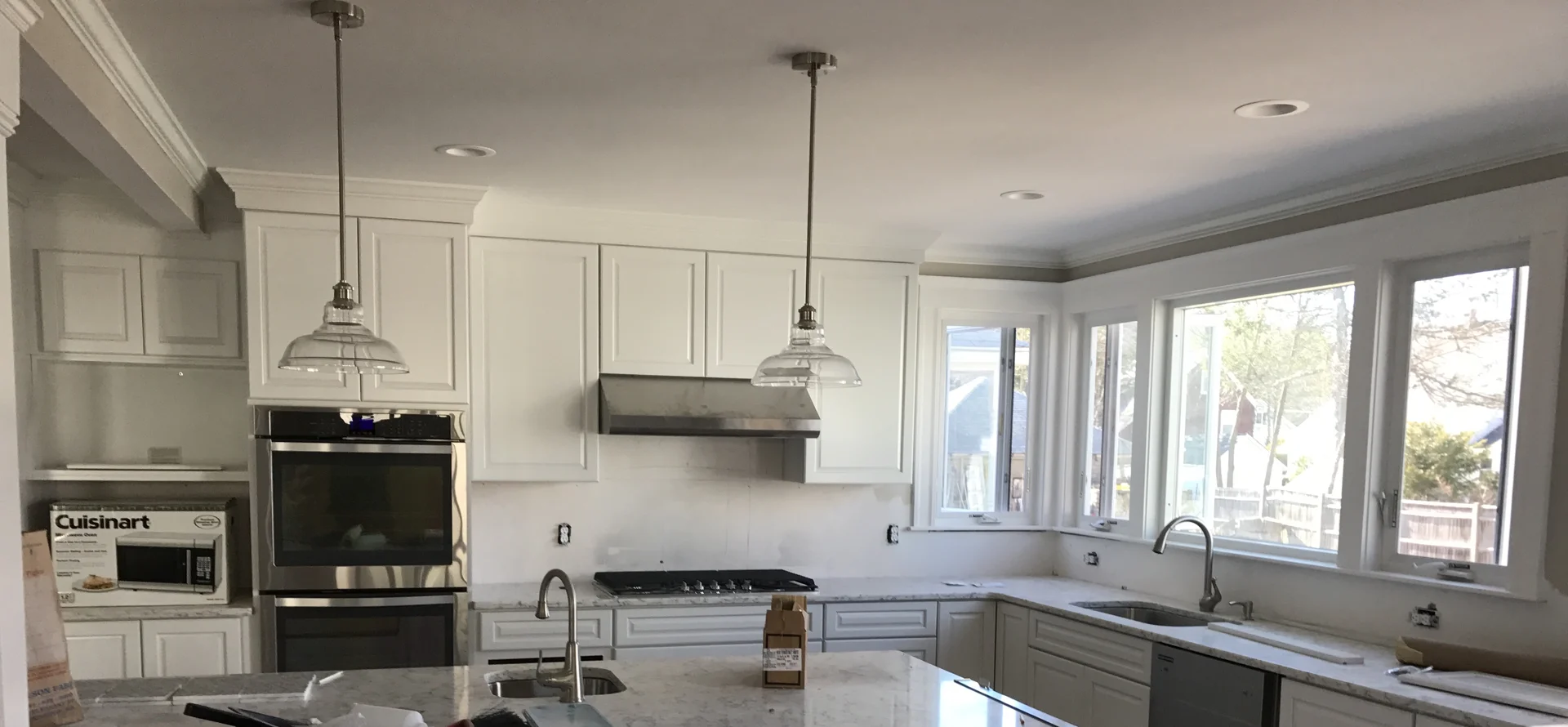
Understanding where your money goes and how to manage your budget is key to a stress-free experience. For a deeper look at what to expect when investing in high-end projects, read our article on luxury home renovation 101: what to expect when you’re expecting excellence.
Budget Factors for Your Custom Home Remodel
The total cost of your remodel depends on several key variables, including the square footage of the space, the structural complexity of the design, and the tier of materials you select.
When listing service prices, it is important to note that these are average costs based on internet data. To give you a realistic idea of the financial scope, a custom remodel can range widely depending on whether you are updating a single room or transforming an entire estate:
- Minor to Mid-Range Kitchen Remodel: Average costs range from $35,000 to over $350,000 based on internet data.
- Primary Suite or Luxury Bathroom Remodel: Average costs range from $25,000 to over $250,000 based on internet data.
- Whole-Home Custom Remodel: Average costs range from $150,000 to over $1,500,000 based on internet data, depending on the age of the home and structural modifications.
By ensuring a wide range of prices in your planning, with the high end representing premium, structural, and luxury finishes, you can avoid unexpected financial surprises during the construction phase.
Resale Value and Return on Investment
While you should design your custom remodel to suit your personal lifestyle, it is always wise to consider the resale potential. Historically, homeowners who complete a major custom remodel recover an average of 60% to 80% of their investment upon resale.
Certain projects yield higher returns than others. For example, opening up a compartmentalized floor plan to create a modern kitchen-living-dining flow is highly attractive to buyers in Greater Boston. Additionally, upgrading old plumbing, electrical panels, and heating systems not only adds functional value but also reassures future buyers that the home is structurally sound and efficient.
Frequently Asked Questions About Custom Remodeling
To help you prepare for your upcoming project, we have compiled answers to some of the most common questions homeowners ask during the planning stages.
Should I live in my home during a major remodel?
For minor, single-room renovations, it is often possible to remain in the home. However, for a major, whole-home custom home remodel, we strongly recommend planning to move out temporarily.
Living on-site during a major construction project means dealing with daily dust, noise, utility shutoffs, and safety hazards. If you do choose to stay, make sure your contractor has a strict dust mitigation plan in place, using negative air pressure machines and heavy-duty plastic barriers to protect your living quarters. For tips on maintaining a clean and organized home during construction, refer to the clean freaks guide to full house renovation designs.
How do I choose the right remodeling contractor?
Choosing the right partner is the single most important decision you will make. You should look for a licensed, fully insured contractor with a robust local portfolio and excellent client references.
Make sure they have extensive experience working in your specific town, as they will already be familiar with local building officials and zoning bylaws. To learn more about what to look for, explore our dedicated remodeling services page.
What questions should I ask during an initial consultation?
When you meet with a remodeling company for the first time, come prepared with a list of targeted questions to evaluate their professionalism and compatibility:
- Do you have active licenses and liability insurance in Massachusetts?
- Can you provide examples of similar custom remodels you have completed in Middlesex County?
- What is your typical communication protocol? Will I have a dedicated on-site project manager?
- How do you handle unexpected structural issues or change orders?
- Do you offer a warranty on your workmanship, and if so, what does it cover?
Conclusion
Embarking on a custom home remodel is a journey that turns your personal vision into a beautifully crafted reality. At MB Construction, LLC, we are committed to delivering quality-driven, time-sensitive projects using premium materials and expert craftsmen, all backed by our guaranteed workmanship.
We proudly serve homeowners throughout Middlesex County and Greater Boston, including:
- Andover, MA
- Bedford, MA
- Billerica, MA
- Burlington, MA
- Carlisle, MA
- Chelmsford, MA
- Lexington, MA
- North Andover, MA
- North Reading, MA
- Reading, MA
- Tewksbury, MA
- Wilmington, MA
If you are ready to take the first step toward transforming your house into your dream home, we invite you to learn more about our home remodeling contractor services and schedule your personalized design consultation with our team today.
