
What You Need to Know Before Adding a Second Story Master Suite
Adding a second story master suite is one of the most significant home improvement projects a homeowner can undertake — and one of the most rewarding.
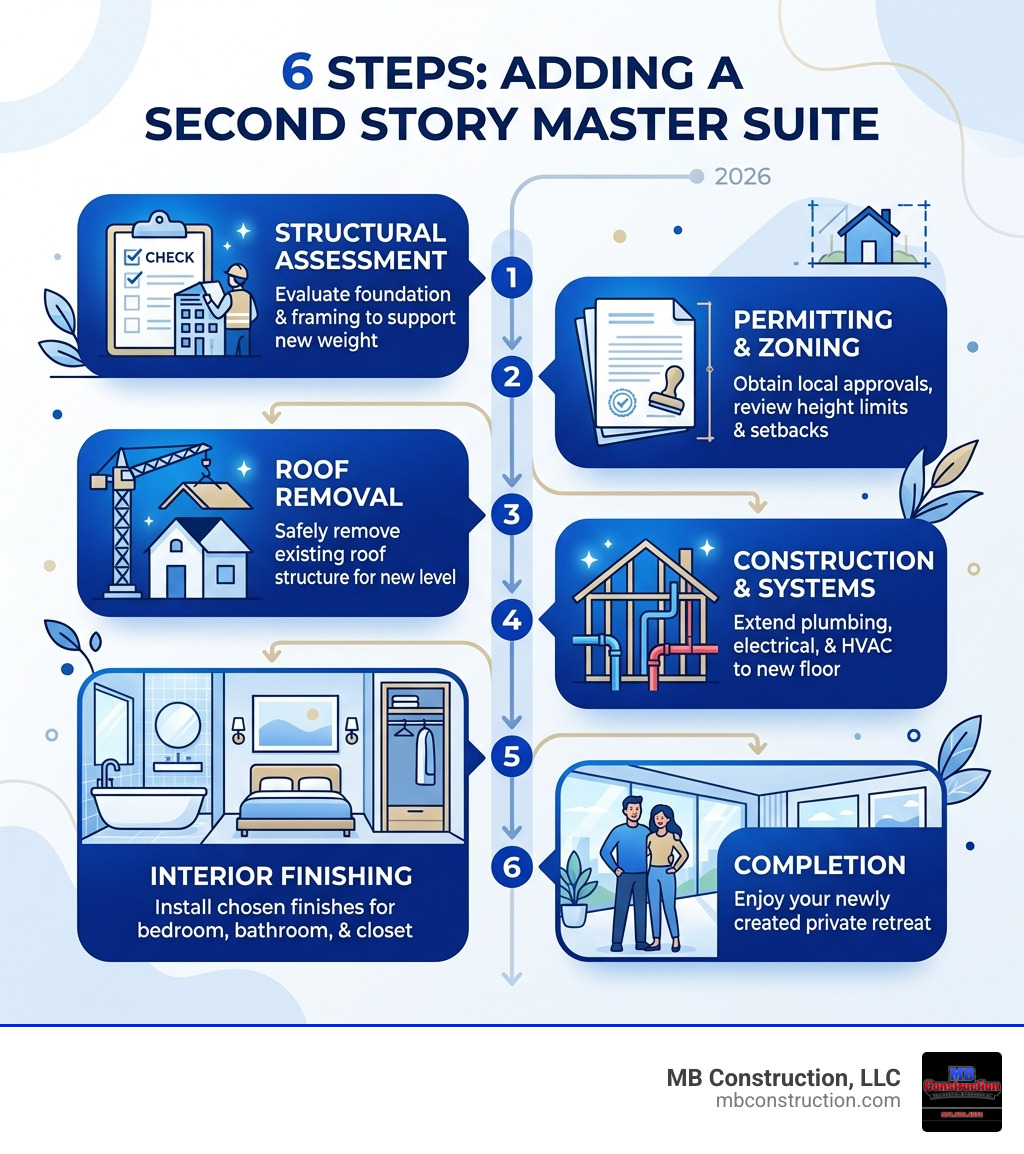
Here is a quick overview of what the process involves:
- Structural assessment — A licensed engineer evaluates your foundation and first-floor framing to confirm they can support the added weight.
- Permitting and zoning — Local building permits, height restrictions, and setback rules must be reviewed and approved before work begins.
- Roof removal and replacement — The existing roof is partially or fully removed to frame the new upper level.
- Construction and systems work — Framing, plumbing, electrical, and HVAC are extended to serve the new floor.
- Interior finishing — The suite is completed with your chosen bedroom, bathroom, and closet finishes.
- Timeline — Most projects take 8 to 12 months from planning through completion.
- Cost — Based on average internet data, costs typically range from $175,000 to $400,000+, depending on size, finishes, and your home’s existing condition.
For homeowners in Billerica, Lexington, Andover, and across Middlesex County, MA, a second story master suite is a practical way to gain significant square footage without shrinking your backyard. It creates a private retreat above the everyday activity of your household — and it can meaningfully increase your home’s resale value.
But it is also a complex project. It touches nearly every system in your home. Done right, it can transform how you live. Done without proper planning, it can become a costly headache.
This guide walks you through everything: the benefits, the structural requirements, the real costs, design ideas, and the key questions to ask before you break ground.
The Strategic Benefits of Adding a Second Story Master Suite
When we talk to homeowners in Greater Boston about expanding their living space, the debate often comes down to “up vs. out.” While ground-level extensions are popular, adding a second story master suite offers strategic advantages that a footprint expansion simply cannot match.
The most immediate benefit is the preservation of your outdoor space. In towns like Reading and Burlington, where lot sizes can be restrictive, building outward often means sacrificing a deck, a garden, or the kids’ play area. By building upward, we double the square footage of that portion of the home while leaving your yard untouched.
Furthermore, vertical expansion allows us to establish clear boundaries between “public” and “private” zones. The first floor remains the hub for entertaining, cooking, and daily chaos, while the new second story becomes a dedicated sanctuary. This physical separation is a psychological game-changer for many families.
From a real estate perspective, Middlesex County trends in 2026 show that homes with clearly defined primary retreats command higher prices. Adding a second story can nearly double the size of a traditional ranch-style home, significantly impacting its market value. If you are looking for more information on general expansion, our guide on Home Additions covers the broad spectrum of how these projects enhance property utility.
Enhancing Privacy and Lifestyle with a Second Story Master Suite
A second-story suite isn’t just another bedroom; it is an adult retreat. By moving the primary bedroom upstairs, you gain a level of noise reduction that is impossible on the main floor. You no longer have to worry about the sound of the dishwasher running or late-night foot traffic in the kitchen.
We often recommend “split floor plans” for families with older children or those who host frequent guests. This layout places the master suite on its own level, providing maximum privacy. For those who want to take luxury a step further, you might even consider Top-Tier Sunroom Designs for Your Second Floor to create a sun-drenched sitting area or a private morning balcony attached to your suite. This elevated vantage point often reveals scenic views of the neighborhood or backyard that were previously hidden from the ground floor.
Structural Requirements and Engineering for Vertical Additions
You cannot simply “stick” a new floor onto an existing house. Adding a second story master suite requires a rigorous engineering phase. Before we even pull a permit, we must determine if your home’s current skeleton can support the weight of a new story, furniture, and inhabitants.
This process usually starts with a foundation assessment. While many homes in Lexington or Carlisle have robust foundations, others — particularly those on slabs — may require underpinning or reinforcement. We also look at the load-bearing walls on the first floor. In many cases, we need to add structural beams or even basement columns to ensure the load is transferred safely to the earth.
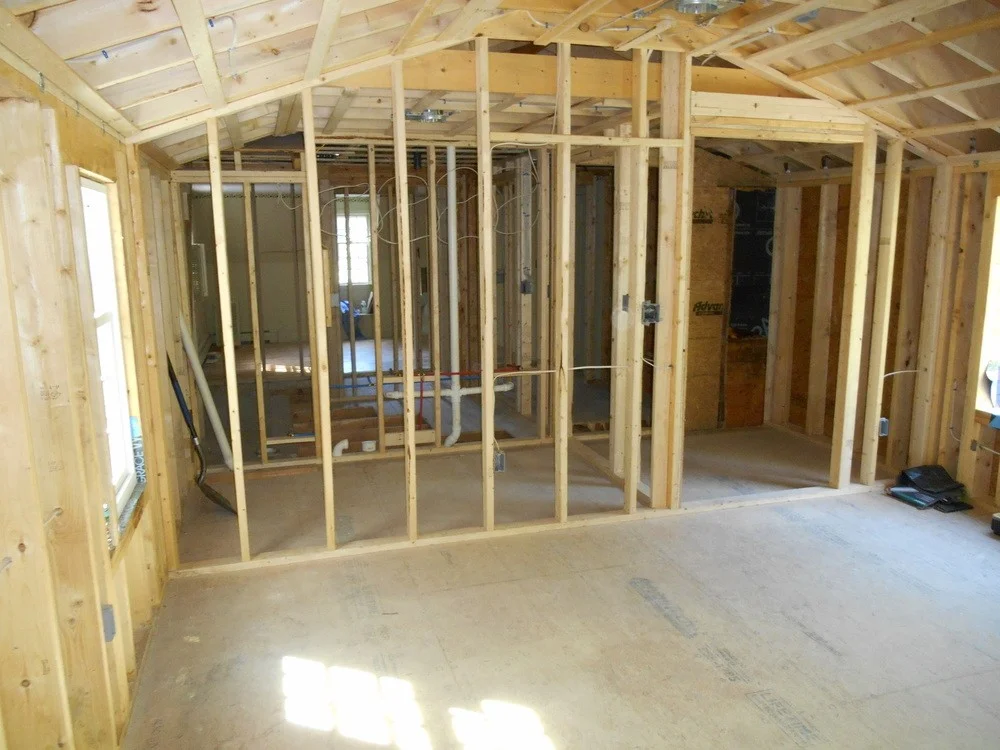
The roof is another major consideration. A second-story addition involves the partial or total removal of your existing roof. This is a critical phase where the home is exposed to the elements, requiring expert timing and protection. We also have to plan the “vertical highway” for your home’s systems. This includes:
- HVAC Zoning: Your current furnace or AC may not be powerful enough to push air to a new second floor. We often install a separate, dedicated zoned system for the master suite to ensure perfect temperature control.
- Plumbing Extension: Routing new drain and supply lines for a luxury ensuite requires careful planning to minimize disruption to the first-floor ceilings.
- Electrical Upgrades: Most second-story additions require a panel upgrade to handle the additional circuits for lighting, heated floors, and modern amenities.
For those specifically in the Lexington area, you can learn more about our local expertise in 2nd and 3rd Floor Additions in Lexington.
Essential Considerations for Adding a Second Story Master Suite
Beyond the physical structure, we have to navigate the legal landscape of Middlesex County. Every town, from Billerica to North Andover, has its own set of zoning regulations.
- Height Restrictions: Some neighborhoods have strict limits on how high a residential building can be. We ensure your design fits within these “envelopes.”
- Property Setbacks: Even though you are building up, some towns have “daylight plane” restrictions that affect how close your second story can be to the property line.
- Building Codes: Massachusetts has specific energy efficiency requirements (such as the Stretch Code in many local towns) that dictate insulation levels and window ratings for new additions.
Investment and Cost Breakdown for Master Suite Additions
Let’s talk about the numbers. Based on average internet data, a second-story master suite is a significant investment. While a basic bedroom addition might start lower, a full-scale luxury suite with a high-end bathroom and walk-in closet involves complex structural work that drives the price.
| Feature | Ground-Level Addition (Avg) | Second-Story Addition (Avg) |
|---|---|---|
| Foundation Work | High (New Excavation) | Moderate (Reinforcement) |
| Roofing | New Roof Area | Roof Removal & Replacement |
| Structural Engineering | Standard | Complex |
| Average Cost Range | $150,000 – $350,000 | $175,000 – $450,000+ |
| High-End Luxury Range | $800,000+ | $1,750,000+ |
Note: These are average costs based on internet data. Actual project costs in 2026 vary based on material choices and site conditions.
The wide range in pricing, which can reach upwards of $1,750,000 for ultra-luxury custom builds, is influenced by the quality of finishes and the complexity of the structural retrofitting. For instance, Breaking Down the Average Cost of Home Addition in Massachusetts provides a more localized look at these expenses. If you are considering a smaller footprint, you might find our 300 Sq Ft Addition Cost: Complete Guide helpful for comparison.
According to research from A House in the Hills, structural reinforcement alone can account for 20-30% of the total budget. However, the Return on Investment (ROI) is often strong, with homeowners typically recouping 50-60% of the project cost in immediate home value.
Design and Layout Ideas for the Ultimate Primary Retreat
This is the fun part. When adding a second story master suite, you are working with a blank canvas. We encourage our clients in towns like Andover and Wilmington to think beyond just “a bed and a bath.”

A modern master suite should function as a self-contained sanctuary. Popular design features for 2026 include:
- The Spa-Like Ensuite: Think zero-threshold walk-in showers with rainfall heads, freestanding soaking tubs, and heated stone floors. Using vertical tile patterns can help emphasize the height if you opt for cathedral ceilings.
- Custom Walk-In Closets: A “boutique-style” closet with built-in shelving, center islands, and dedicated lighting makes the morning routine feel like a luxury experience.
- The Morning Bar: Adding a small kitchenette area with a built-in coffee maker and a small fridge means you can enjoy your first cup of coffee without leaving your retreat.
- Universal Design: Even if you aren’t planning to age in place yet, incorporating wider doorways (36 inches) and blocking in the walls for future grab bars is a smart way to “future-proof” your investment.
For those with unique home styles, such as split-levels, the design process is even more specialized. You can find inspiration in Adding A Master Suite Addition to a Split-level Home. Additionally, if your lot is particularly tight, we often explore The Dream Suite: Adding a Bedroom Over Your Garage as a viable way to expand vertically.
Frequently Asked Questions about Second Story Additions
Can I stay in my home during construction?
In most cases, the answer is no. Adding a second story master suite is a major “surgical” procedure for your home. Because the roof is removed, the house is temporarily open to the elements. Even with the best tarping and protection, the noise, dust, and potential for utility interruptions (plumbing and electrical) make living in the home difficult and often unsafe.
We recommend planning for temporary housing for at least the framing and “dried-in” phases of the project. This ensures your family stays comfortable and the craftsmen can work efficiently without the constraints of an occupied space.
How long does the construction process take?
In 2026, a typical second-story addition takes 8 to 12 months. This timeline includes:
- Design and Engineering: 1-2 months.
- Permitting: 1-3 months (depending on the town’s building department).
- Construction: 5-7 months.
Factors like weather and material lead times can influence this, but we pride ourselves on being time-sensitive and sticking to our projected schedules. For a deeper dive into what to expect this year, see the Master Suite Additions in Greater Boston: The 2026 Homeowner’s Guide.
Is a second-story addition better than a ground-level extension?
It depends on your goals. A second-story addition is better if:
- You have a small lot and want to preserve your yard.
- You want the best possible views and maximum privacy.
- Your neighborhood already features two-story homes (maintaining architectural “harmony”).
A ground-level extension might be better if you have a massive lot and are primarily concerned with “aging in place” without ever using stairs. However, for most homeowners in the Billerica and Greater Boston area, building up is the most efficient way to add significant value and space.
Conclusion
Adding a second story master suite is more than just a home renovation; it’s a lifestyle upgrade that transforms your house into a sanctuary. Whether you are looking to create a private retreat away from the kids or you need to double your square footage without losing your backyard, building upward is a strategic and high-value move.
At MB Construction, LLC, we specialize in these complex, transformative projects. Based in Billerica, MA, we bring expert craftsmanship and a quality-driven approach to every addition we build. We serve homeowners across Middlesex County, including Andover, Bedford, Burlington, Carlisle, Chelmsford, Lexington, Reading, and the Greater Boston area.
Our team understands the unique architectural styles of Eastern Massachusetts and the rigorous building codes required for vertical expansion. From the initial structural assessment to the final interior finishes, we provide guaranteed workmanship and a commitment to time-sensitive delivery.
Ready to see how a second-story suite could look on your home? Explore our work on Master Bedroom Additions in Andover or Start Your Home Addition Project with us today. Let’s build the retreat you’ve been dreaming of.
