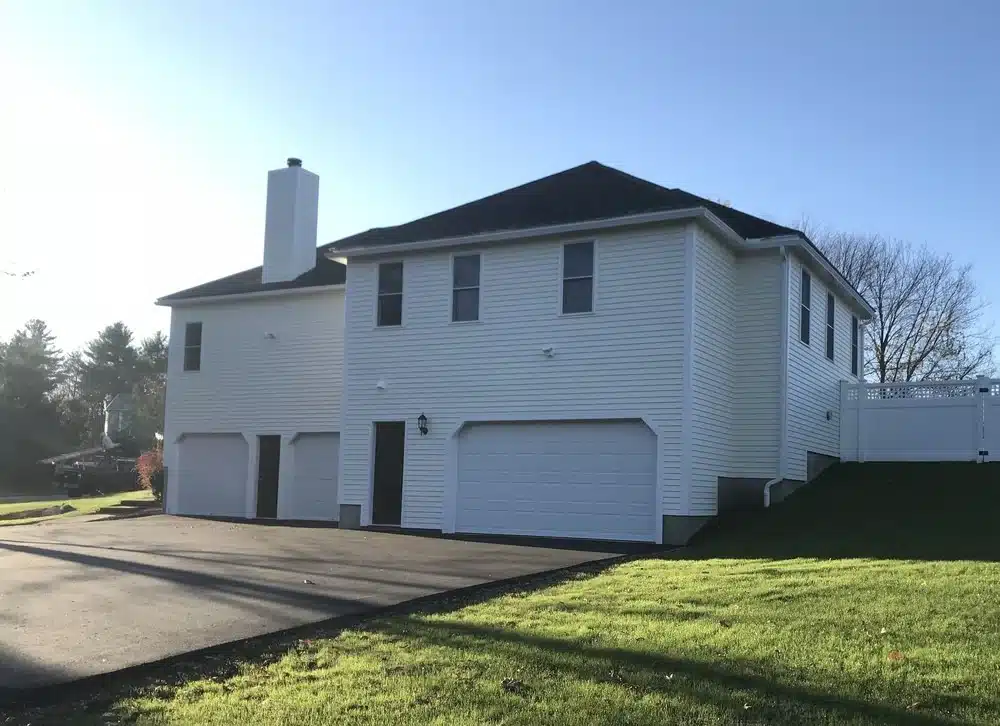
What It Actually Costs to Add Space to Your Home
If you want to calculate home addition cost for your Massachusetts home, here’s the short answer:
| Addition Type | Typical Cost Range (per sq ft)* |
|---|---|
| Basic bedroom | $80 – $200 |
| Bathroom | $200 – $450 |
| Kitchen expansion | $150 – $500 |
| Sunroom | $100 – $250 |
| Second-story addition | $200 – $500+ |
| Garage | $50 – $150 |
| ADU / In-law suite | $200 – $600+ |
Simple formula to estimate your total cost:
- Decide your square footage
- Pick the cost range that matches your addition type and finish level
- Multiply square footage × cost per square foot
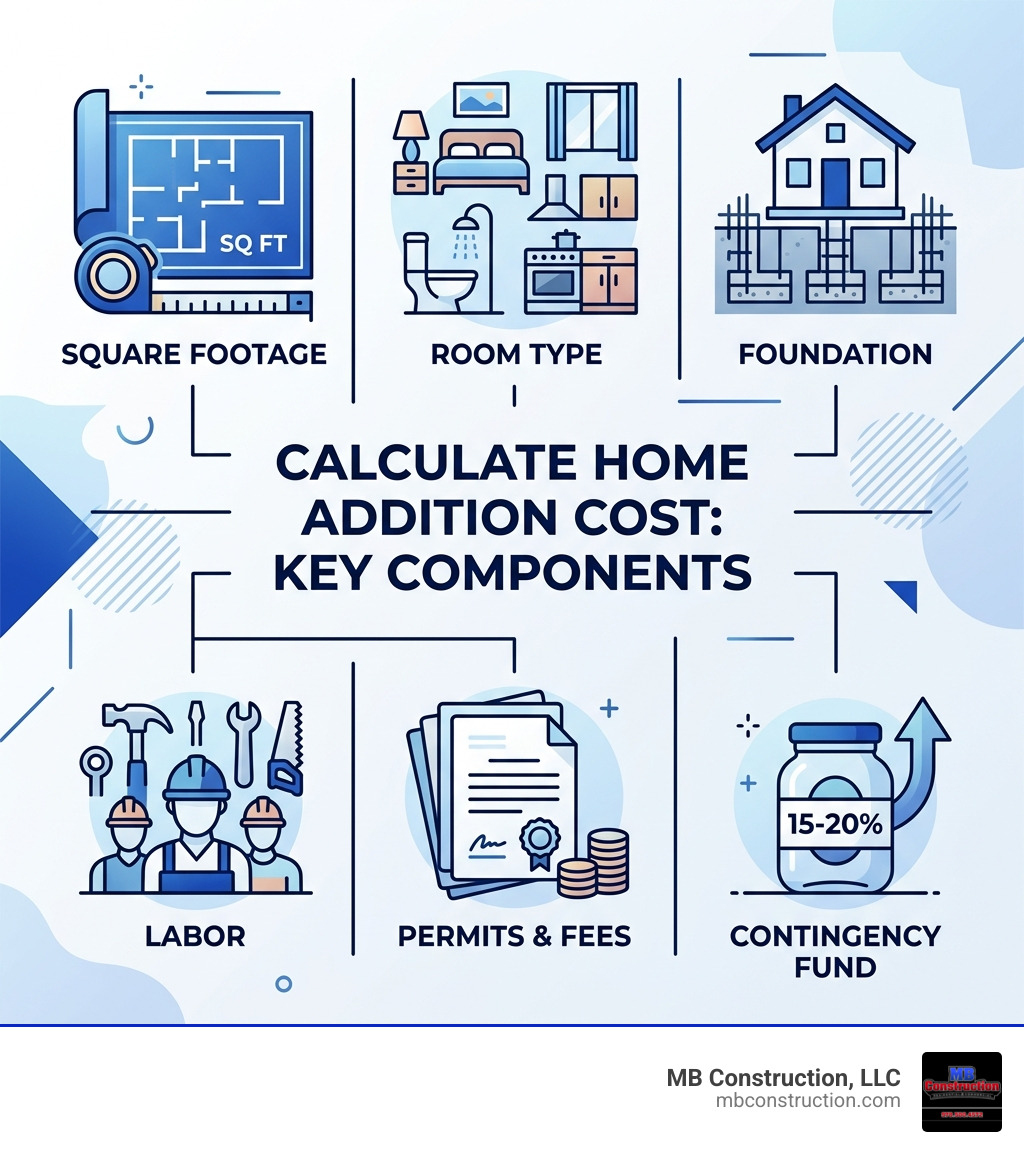
- Add 15-20% as a contingency buffer
- Add fixed costs: permits ($500-$2,000+), design fees (8-12% of total), and site prep ($1,500-$5,000)
Costs above are averages based on internet data and vary by location, finish level, and project complexity. Northeast and Greater Boston projects typically run at the higher end of these ranges.
Home additions are one of the biggest financial decisions a homeowner can make. In towns like Billerica, Lexington, and across Middlesex County, projects routinely run well into six figures — yet many homeowners start the process with only a vague idea of what they’ll spend.
The challenge is that no two additions are alike. A simple bedroom bump-out and a full second-story addition are both “home additions,” but they can differ in cost by hundreds of thousands of dollars. Foundation type, room function, local labor rates, and finish quality all move the number significantly.
This guide walks you through exactly how to size up your budget — before you ever talk to a contractor.
Average Cost Per Square Foot to Calculate Home Addition Cost
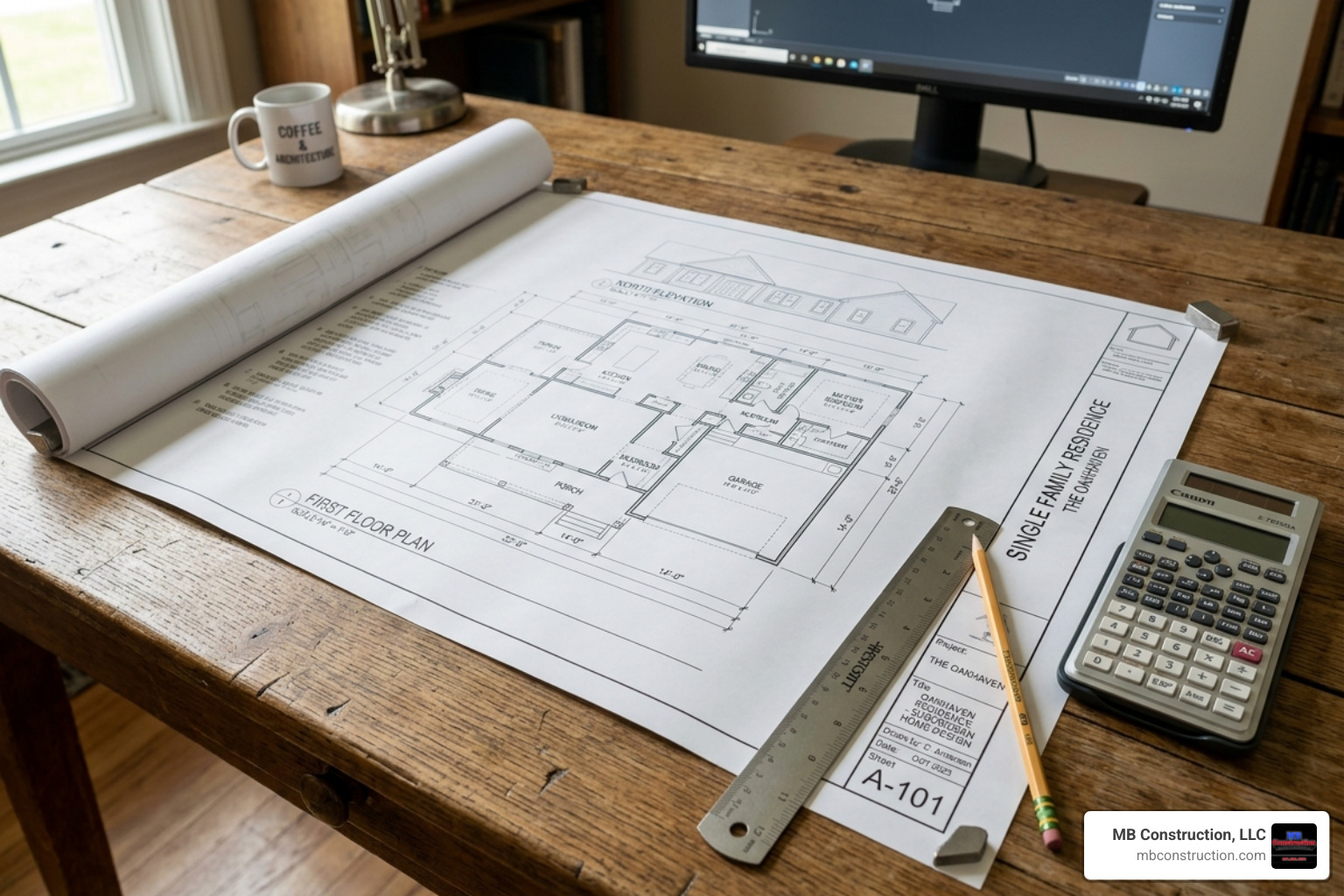
When we look at the math behind a home expansion in 2026, the first number most people reach for is the cost per square foot. Based on recent internet data averages, most homeowners in the Northeast can expect to spend between $150 and $450 per square foot. However, to truly calculate home addition cost with any accuracy, we have to look at the “finish level” and the complexity of the build.
A “standard” build might use vinyl flooring and mid-range windows, keeping costs closer to the $200 mark. A “luxury” build featuring marble countertops, custom hardwood floors, and high-efficiency HVAC systems can easily push that number toward $600 per square foot.
It is also important to understand breaking down the average cost of home addition in massachusetts. In our region, labor often accounts for 40% to 60% of the total budget. Because we live in an area with a high cost of living, our local master electricians, plumbers, and carpenters command rates that reflect their expertise and the local economy.
For those considering a smaller footprint, such as a 300-square-foot expansion, the price per square foot often increases. This is due to “mobilization costs”—the fixed price of getting heavy machinery, permits, and specialized crews to your site. You can find more details in our 300 sq ft addition cost complete guide. According to How Much Does a Home Addition Cost in 2026?, the national average project cost ranges from $55,000 to $95,000, but in high-demand areas like Middlesex County, we frequently see ranges from $45,000 to over $750,000 depending on the scope.
Using a Calculator to Calculate Home Addition Cost
To get a baseline estimate, many of our clients start with a Home Addition Cost Calculator (Per Sq Ft & Total Cost) – Free Tool. These tools are excellent for “ballparking,” but they require accurate inputs to be useful.
When you use a calculator, you should be ready to input:
- Project Type: Is it a “wet” room (kitchen/bath) or a “dry” room (bedroom/office)?
- Foundation: Are you pouring a new slab, building a crawl space, or a full basement?
- ZIP Code: This adjusts for local labor premiums.
- Finish Level: Economy, Standard, or Premium.
While these tools provide a great starting point, we always recommend budgeting for your bay state build with a human expert who understands the specific soil conditions and zoning quirks of towns like Carlisle or Wilmington.
Regional Pricing for Greater Boston and Middlesex County
Location is perhaps the most significant variable when you calculate home addition cost. Building an addition in Billerica or Tewksbury involves different logistical challenges than a project in the heart of Boston. According to How Much Does a Home Addition Cost in Boston, MA? – Angie’s List, Greater Boston remains one of the most expensive markets in the country.
In towns like Lexington and Bedford, architectural standards are high, and permit fees can be more substantial than in other parts of the state. Furthermore, the New England climate requires us to account for deep frost lines. We must dig foundations at least four feet deep to prevent shifting during our harsh winters, a cost that homeowners in warmer climates simply don’t have to face.
Cost Breakdown by Addition Type and Room Function
The function of the room is the “multiplier” in your math. A square foot of a bedroom is significantly cheaper than a square foot of a kitchen.
| Room Type | Avg. Project Cost (Internet Data)* | Range (Low to High-End)* |
|---|---|---|
| Bathroom | $35,000 | $15,000 – $350,000 |
| Kitchen | $55,000 | $25,000 – $550,000 |
| Master Suite | $75,000 | $35,000 – $750,000 |
| Sunroom | $25,000 | $10,000 – $250,000 |
| Basic Bedroom | $40,000 | $15,000 – $400,000 |
Costs based on internet data averages. High-end custom projects in Middlesex County often exceed these averages.
Kitchens and bathrooms are the most expensive because they require “wet” trades—plumbing and electrical—along with expensive fixtures, tiling, and cabinetry. If you are curious about how much does adding a bathroom to your garage actually cost, you aren’t just paying for the toilet and sink; you are paying to trench new sewer lines and extend hot water runs, which can add $5,000 to $15,000 to a standard room build.
Similarly, an in-law suite is essentially a “micro-home.” It needs its own climate control, often a kitchenette, and a full accessible bathroom. You can read more about budgeting for the best what an in law addition really costs to see how these multi-functional spaces are priced.
Ground-Level vs. Second-Story Structural Math
One of the most common questions we hear is: “Is it cheaper to build up or build out?”
Building Out (Ground-Level): This requires excavation, pouring a new foundation, and roofing. While it’s often more straightforward, it “eats” your yard space and may conflict with local setback requirements in towns like Reading or North Reading.
Building Up (Second-Story): Building a second story avoids foundation costs but requires a structural engineer to verify that your existing first-floor walls and foundation can support the new weight. According to internet data, second-story additions often cost between $200 and $500 per square foot because we have to remove the existing roof, reinforce the structure, and often replace the HVAC system to handle the new volume. For those considering adding space above an existing structure, we have a guide on how much to build up your garage for extra living space.
Garage and Accessory Dwelling Unit (ADU) Expenses
Garages are generally the most affordable type of addition because they are “unfinished” space. However, if you plan to live in it later, the math changes. A basic detached garage might cost $50 to $150 per square foot, but converting that into a livable ADU pushes the price into the $200-$400 range. You can explore how much does a new garage addition really cost to compare attached vs. detached options.
Key Factors That Influence Your Total Project Budget

Beyond square footage, several “hidden” factors will impact your ability to calculate home addition cost accurately.
- Site Preparation: Before we even swing a hammer, we may need to clear trees, grade the land, or deal with Middlesex County’s notorious rocky soil. Site prep typically costs between $1,500 and $5,000.
- Permits and Fees: In Massachusetts, permit fees are often based on the estimated value of the project. You should budget $500 to $3,000 for building, electrical, and plumbing permits.
- HVAC and Utilities: Your current furnace or AC might not be powerful enough to heat an extra 500 square feet. Upgrading your electrical panel or extending ductwork can add $3,000 to $10,000 to the bill.
- Contractor Fees: General contractors typically charge 10% to 20% of the total project cost to manage the dozens of moving parts, schedules, and inspections.
- The Contingency Fund: We always tell our clients in Billerica and Burlington to keep a 15-20% “just in case” fund. When you open up the walls of an older New England home, you might find outdated wiring or structural issues that need immediate attention.
According to How Much Does a Home Addition Cost in 2025?, these “soft costs” and infrastructure updates often make up a significant portion of the final invoice.
Financial Planning and Return on Investment
Is an addition worth it? From a lifestyle perspective, the answer is usually “yes.” Financially, it’s a bit more nuanced.
Return on Investment (ROI): Data shows that homeowners can typically recoup 60% to 80% of their home addition costs at resale. Kitchens and bathrooms offer the highest ROI, while sunrooms and second-story additions tend to be lower (around 40-50%). However, adding a bedroom to a two-bedroom home in a family-heavy area like North Andover can significantly increase marketability.
Financing Options: Most of our clients use one of the following to fund their projects:
- HELOC (Home Equity Line of Credit): Great for ongoing projects where you need to draw cash in phases.
- Home Equity Loan: A lump-sum loan with a fixed interest rate.
- Cash-Out Refinance: Replacing your current mortgage with a larger one and taking the difference in cash.
- Personal Loans: Best for smaller additions or “bump-outs” under $50,000.
To see how these financing options play into your specific situation, you can use the Home Addition Cost Calculator — Estimate by Type, Size & ZIP | HowMuchStuff.
Frequently Asked Questions about How to Calculate Home Addition Cost
Is it cheaper to build up or build out in Massachusetts?
It depends on your specific property. Building “out” is generally less expensive per square foot because it requires less structural reinforcement of the existing house. However, if your lot is small or has strict setback requirements (common in Billerica zoning), building “up” might be your only choice. Building up requires a structural engineer and often a full roof replacement, which adds to the cost.
How much does a 400-square-foot addition cost in 2026?
Based on internet data averages, a 400-square-foot addition (like a 20×20 family room) typically costs between $50,000 and $100,000. However, for a high-end master suite with a luxury bath in Middlesex County, the range can easily span from $120,000 to $500,000+.
Does a home addition increase property taxes?
Yes. When we pull a permit and complete the work, the town will reassess your home’s value. Your taxes will likely increase based on the new square footage and the improved quality of the home. In Middlesex County, this increase is usually proportional to the value the addition adds to the property.
Conclusion
At MB Construction, LLC, we know that the math has to work before the construction can start. Whether you are in Billerica, Lexington, or anywhere in Middlesex County, we are committed to providing quality-driven, time-sensitive projects. Our expert craftsmen use premium materials to ensure that your new space doesn’t just look great—it adds lasting value to your home.
We specialize in navigating the complex building codes of Greater Boston and the surrounding towns, providing guaranteed workmanship on every project. If you’re ready to move from “ballpark math” to a professional estimate, we’re here to help you build the home of your dreams.
Ready to start your project? Visit us at https://mbconstruction.com/home-additions/ to learn more about our process and schedule a consultation.