
How Much Does It Cost to Add a New Bathroom to a House in 2026?
Adding a new bathroom to a house cost anywhere from $5,000 to $75,000 or more, depending on size, location, materials, and labor. Based on internet data averages, most homeowners spend around $35,000, though projects in the Greater Boston area and Middlesex County towns like Lexington and Andover can run higher due to regional labor rates.
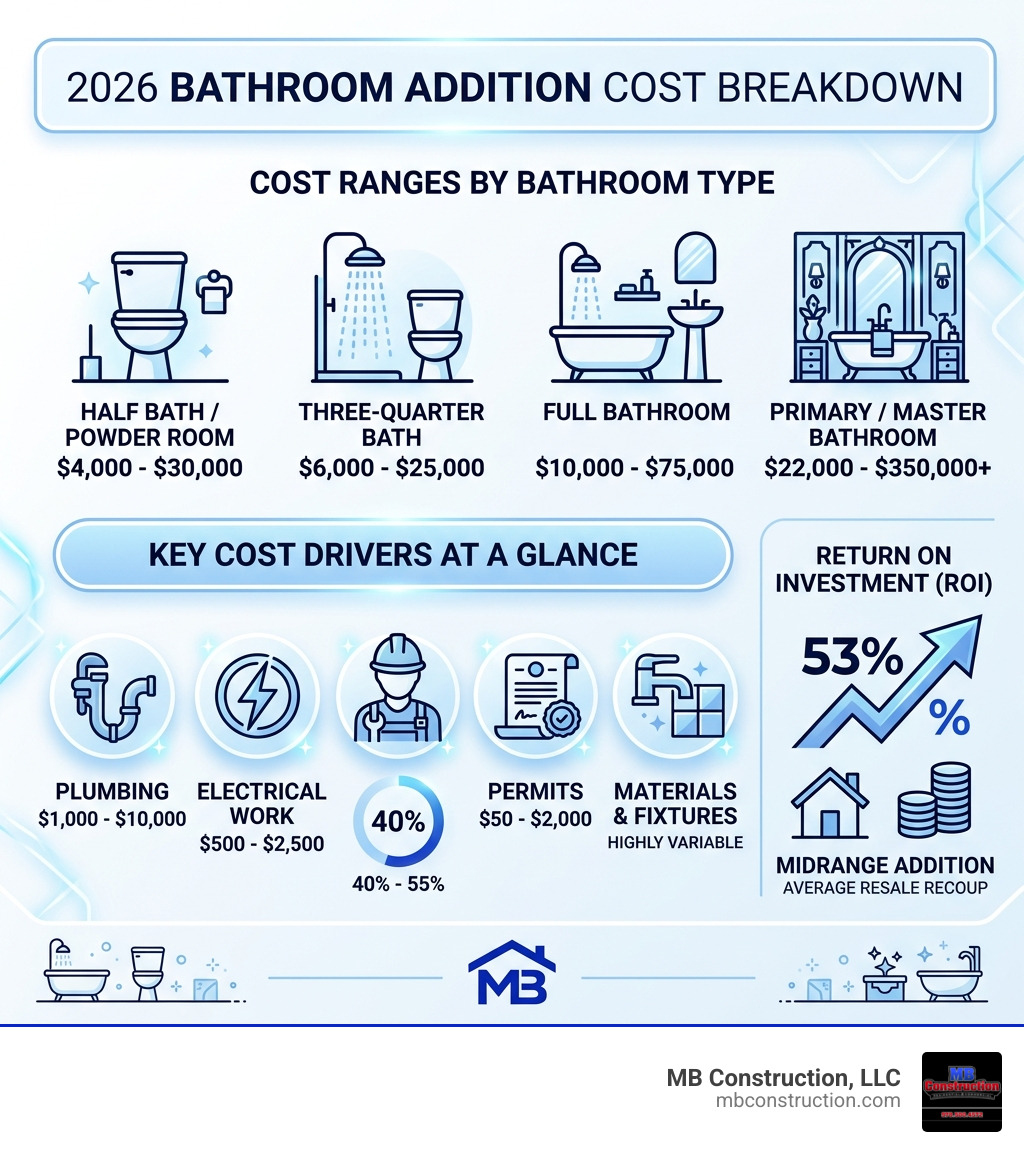
Here is a quick summary of average costs by bathroom type:
| Bathroom Type | Average Cost Range (Internet Data) |
|---|---|
| Half bath / Powder room | $4,000 – $30,000 |
| Three-quarter bath | $6,000 – $25,000 |
| Full bathroom | $10,000 – $75,000 |
| Primary / Master bathroom | $22,000 – $350,000+ |
Key cost drivers at a glance:
- Plumbing — $1,000 to $10,000 depending on distance from existing lines
- Electrical work — $500 to $2,500
- Labor — typically 40% to 55% of the total project cost
- Permits — $50 to $2,000 depending on your municipality
- Materials and fixtures — highly variable based on finish level
If you have been sharing one bathroom among a growing family, you already know the pain. As one homeowner put it in a 2026 survey: “I wish I had known how quickly costs can add up and how important it is to plan for delays.”
Adding a bathroom is one of the bigger home improvement decisions you can make — not just for daily comfort, but for your home’s long-term value. A midrange addition can recoup around 53% of its cost at resale, and for homes in competitive Massachusetts markets, the payoff in convenience and appeal can be significant.
This guide walks you through everything you need to budget for — from plumbing rough-in to permits to finishes — so you can plan your project with confidence.
Adding a new bathroom to a house cost glossary:
Factors Influencing the Adding a New Bathroom to a House Cost
When we sit down with homeowners in Billerica or Reading to discuss a new bathroom, the first question is always about the bottom line. However, the adding a new bathroom to a house cost isn’t a single flat fee. It’s a combination of several complex moving parts.
The most significant portion of your budget—roughly 40% to 55%—will go toward skilled labor. This includes licensed plumbers, electricians, and carpenters. In 2026, labor rates in Eastern Massachusetts remain competitive but reflect the high demand for expert craftsmen.
Plumbing is often the most expensive technical component. According to How Much Does It Cost to Add a Bathroom in 2026? | Fixr.com, plumbing work for a new bathroom can range from $1,000 to $10,000. If we have to cut into a concrete slab in a basement or run lines across the house to reach the main stack, those costs will naturally sit at the higher end of the spectrum. Electrical wiring is another factor, requiring dedicated circuits for outlets, lighting, and exhaust fans to meet modern safety codes.
Structural modifications also play a role. If we are removing a load-bearing wall to expand a closet or building a completely new “bump-out” addition, the framing and foundation work will significantly increase the total investment. For those looking to understand the full scope of what goes into a professional build, you can find more info about remodeling services on our dedicated service page.

How Location Impacts the Adding a New Bathroom to a House Cost
Where you decide to put your new “throne room” is the biggest logistical hurdle. Strategic placement can save you thousands of dollars.
- Basement Bathrooms: These are popular in towns like Chelmsford and Tewksbury. However, they can be pricier if the plumbing requires a sewage ejector pump or if we need to trench through a concrete foundation.
- Attic Conversions: Adding a bath to a finished attic often involves complex venting requirements and ensuring the floor joists can handle the weight of a filled bathtub.
- Closet Transformations: This is often the most cost-effective “conversion” method. If the closet shares a wall with an existing bathroom, we can “wet-wall” the plumbing, which keeps costs down.
- Laundry Rooms: Converting or splitting a laundry room is a smart move because the water supply and drainage lines are already present.
- Garage Additions: Converting part of a garage usually requires significant insulation and climate control work, as garages aren’t typically built to living-space standards.
Material Selections and the Adding a New Bathroom to a House Cost
Once the “guts” of the bathroom (the plumbing and electrical) are handled, your choice of finishes will dictate the final price.
For a high-end look in Lexington or North Andover, many homeowners opt for porcelain tile or natural stone, which offers durability and a timeless aesthetic. Quartz countertops have become the gold standard for vanities due to their non-porous nature and resistance to staining. Custom cabinetry allows for better storage in tight spaces but comes at a premium compared to off-the-shelf units.
If you are on a tighter budget, prefabricated units (like one-piece shower stalls) can save on both material costs and labor time. However, for a primary suite meant to increase home value, custom tile work and luxury fixtures are usually the preferred choice.
Average Expenses by Bathroom Type and Size
Size matters, but so does functionality. A tiny powder room requires fewer materials than a sprawling primary bath, but the “cost per square foot” is often higher for smaller rooms because the expensive items (toilet, sink, plumbing) are still required regardless of the room’s footprint.
Based on internet data, here is how the square footage typically breaks down for additions:
Cost Breakdown by Bathroom Type
- Half Bath / Powder Room (20–30 sq. ft.): Usually just a toilet and a sink. These are perfect for guests and can often fit into a repurposed closet. Cost: $4,000 – $30,000.
- Three-Quarter Bath (35–50 sq. ft.): This includes a toilet, sink, and a shower (but no tub). These are excellent for basement guest suites or near a home gym. Cost: $6,000 – $25,000.
- Full Bathroom (50–80 sq. ft.): The standard family bathroom with a toilet, sink, and tub/shower combo. According to How Much Does It Cost to Add a Bathroom? [2025 Data] | Angi, these average around $35,000 for a standard build.
- Primary Suite (100+ sq. ft.): The ultimate luxury. Think double vanities, soaking tubs, walk-in steam showers, and high-end finishes. Costs for these can range from $22,000 to $350,000+ depending on the level of opulence.
- Wet Room: A modern trend where the entire bathroom is waterproofed and the shower is curbless. These require specialized “tanking” (waterproofing) and floor grading, which can add $4,000 – $15,000 to a standard bathroom cost.
Square Footage and Conversion Estimates
There is a big difference between converting existing space and building a brand-new addition.
- Conversion Costs: Repurposing an existing room or closet generally costs between $200 and $250 per square foot. You are saving on roofing, siding, and foundation work.
- New Additions: Building a “bump-out” or a new wing costs between $400 and $550 per square foot.
While the internet data average for a total project is around $35,000, we have seen custom luxury additions in the Middlesex County area exceed $100,000 when high-end tech and custom masonry are involved.
Return on Investment and Property Value in Massachusetts
Is adding a new bathroom to a house cost worth it? In Eastern Massachusetts, the answer is almost always yes. The regional market is tight, and homes with a higher bathroom-to-bedroom ratio sell faster and for more money.
A midrange bathroom addition typically yields a 55% ROI. This means if you spend $35,000, you could see a value increase of roughly $19,250 in your home’s equity. However, the “lifestyle ROI”—the end of morning arguments over the shower—is often priceless. For a deeper look at local costs, check out our guide on Breaking Down The Average Cost Of Home Addition In Massachusetts.
Local Market Trends in Eastern Massachusetts
In towns like Andover, Lexington, and North Reading, buyers expect at least two full bathrooms. If you own a three-bedroom home with only one bathroom, adding a second one is one of the smartest financial moves you can make. In the Greater Boston area, where space is at a premium, even a small half-bath added under a staircase can significantly boost property appreciation.
Long-Term Benefits of Additional Bathrooms
Beyond the resale value, consider your family’s future:
- Multigenerational Living: Many families in Wilmington and Burlington are adding bathrooms to accommodate aging parents or adult children moving back home.
- Aging-in-Place: Installing a bathroom with a walk-in shower and grab bars ensures you can stay in your home longer as you age.
- Utility Efficiency: New bathrooms use modern, low-flow toilets and faucets, which can actually reduce your water bill compared to older fixtures.
- Maintenance Reduction: New plumbing and moisture-resistant materials mean fewer repairs and less mold risk than struggling with a 50-year-old bathroom.
Frequently Asked Questions
Do I need a permit for a bathroom addition?
Absolutely. In Massachusetts, you will need several permits. This usually includes a general building permit, a plumbing permit, and an electrical permit. These ensure that the work meets the strict Massachusetts State Building Code. Inspections will happen at various stages—like the “rough-in” phase—to ensure everything is safe and up to code before we close up the walls.
How long does it take to add a new bathroom?
A typical bathroom addition takes between 5 and 12 weeks. The design phase and permitting can take 2-4 weeks, followed by 3-8 weeks of actual construction. Lead times for custom materials (like specialty vanities or imported tile) can sometimes extend this timeline, so we always recommend making your selections early.
Is it cheaper to convert a closet or build an addition?
Converting a closet is significantly cheaper. By staying within the existing footprint of your home, you avoid the high costs of foundation work, new roofing, and exterior siding. A closet conversion can often be done for $5,000 to $15,000, whereas a new structural addition will likely start at $30,000 and go up from there.
Conclusion
Adding a new bathroom to a house cost is a significant investment, but it’s one that pays dividends in both daily comfort and long-term home value. Whether you are looking for a simple powder room in Tewksbury or a spa-like primary retreat in Carlisle, the key is careful planning and expert execution.
At MB Construction, LLC, based in Billerica, MA, we pride ourselves on quality-driven, time-sensitive projects. Our expert craftsmen use premium materials to ensure your new bathroom isn’t just beautiful, but built to last with guaranteed workmanship. We serve homeowners across Middlesex County, Bedford, Burlington, and the Greater Boston area.
Ready to stop the morning bathroom rush? Start your home addition project today and let us help you build the perfect porcelain throne.
