
How Much Does It Cost to Add a Bedroom? (2026 Pricing Overview)
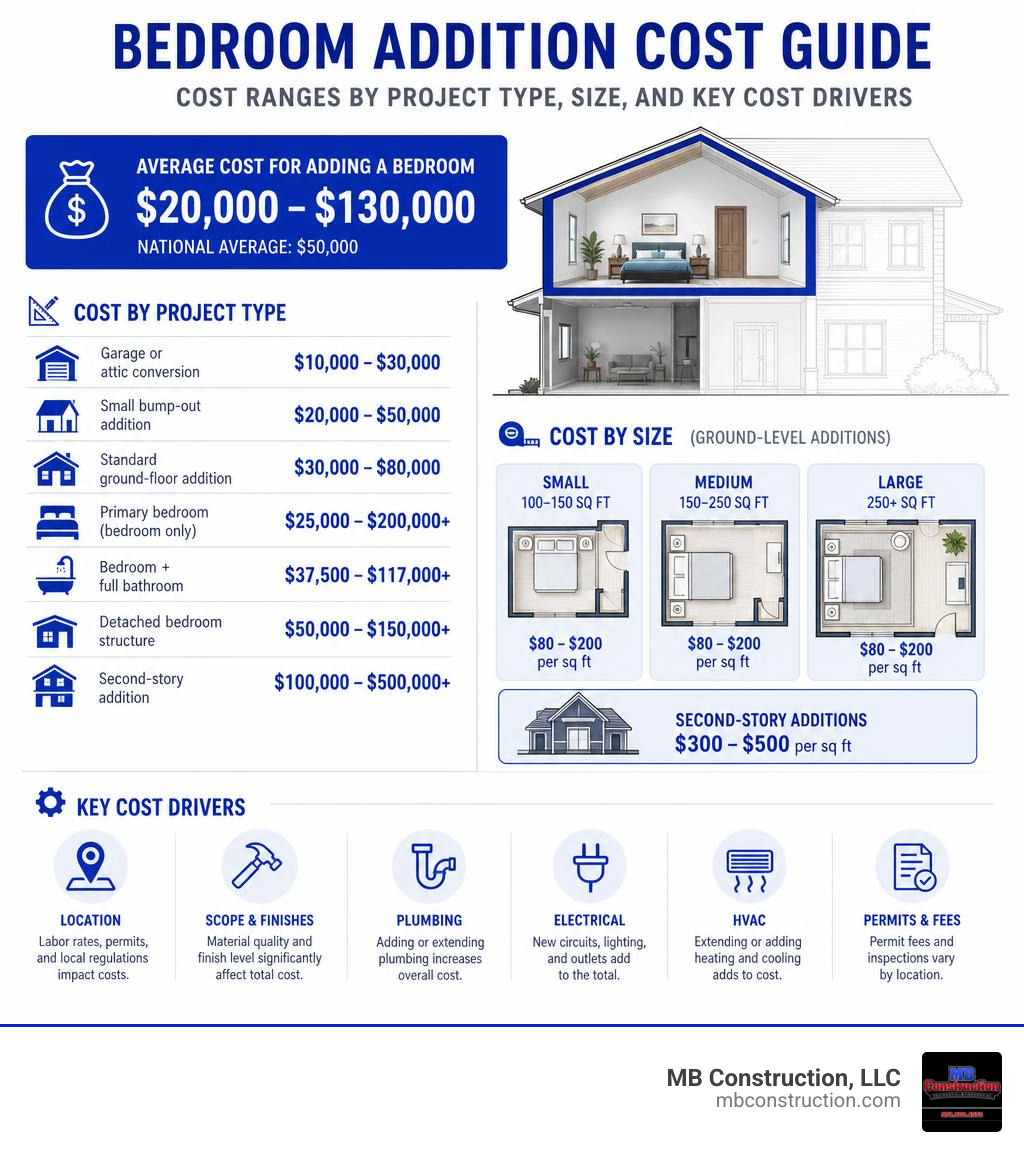
The average cost for adding a bedroom is around $50,000, based on internet cost data, with a wide range of prices spanning from $10,000 to $500,000+ depending on size, location, build method, and finish level.
Here’s a quick-reference summary:
| Project Type | Typical Cost Range |
|---|---|
| Garage or attic conversion | $10,000 – $30,000 |
| Small bump-out addition | $20,000 – $50,000 |
| Standard ground-floor addition | $30,000 – $80,000 |
| Primary bedroom (bedroom only) | $25,000 – $200,000+ |
| Bedroom + full bathroom | $37,500 – $117,000+ |
| Detached bedroom structure | $50,000 – $150,000+ |
| Second-story addition | $100,000 – $500,000+ |
Cost per square foot typically runs $80–$200 for a ground-level build-out and $300–$500 for a second-story addition.
If you’re a homeowner in Andover, Billerica, Burlington, Lexington, or anywhere in Middlesex County, expect costs to trend toward the higher end of these ranges. Greater Boston labor rates, older home conditions, and local permit requirements all push totals up compared to the national average.
The sections below break down every cost component — framing, mechanical systems, permits, labor, and more — so you can build a realistic budget before you talk to a contractor.
What Is the Average Cost for Adding a Bedroom in 2026?
Based on internet cost data, the national average cost for adding a bedroom in 2026 is about $50,000, with a wide range of prices spanning from $10,000 to $500,000+ depending on the project scope.
That broad range exists because “adding a bedroom” can mean very different things:
- Finishing existing space
- Converting a garage, attic, or basement
- Building a small bump-out
- Adding a full ground-floor room
- Building over a garage
- Adding a second story
- Creating a detached structure
- Building a bedroom plus bathroom suite
A bedroom is usually considered a “dry room,” meaning it does not require plumbing. That makes it less expensive than a bathroom, kitchen, laundry room, or in-law suite. Still, a legal bedroom must meet code requirements for egress, ceiling height, electrical, heating, insulation, and smoke/carbon monoxide detection.
For a broader look at addition budgeting, see our House Addition Cost Complete Guide.
Average Cost for Adding a Bedroom by Project Type
Here are common bedroom addition types and average cost ranges based on internet data:
| Bedroom Addition Type | Average Cost Range |
|---|---|
| Garage conversion | $10,000 – $30,000 |
| Attic or basement conversion | $15,000 – $75,000+ |
| Small bump-out bedroom | $20,000 – $50,000 |
| Standard ground-floor bedroom | $30,000 – $80,000 |
| Second-story bedroom | $100,000 – $500,000+ |
| Detached bedroom structure | $50,000 – $150,000+ |
| Primary bedroom suite | $100,000 – $500,000+ |
Conversions are often the least expensive because the foundation, roof, and exterior shell already exist. New construction costs more because we have to build the structure from the ground up, tie it into the existing home, and make the exterior look like it was always there.
A detached bedroom structure can also become expensive quickly because it may need its own foundation, insulation, electrical service, heating and cooling, walkway access, and zoning approval.
Average Cost for Adding a Bedroom in Massachusetts and Greater Boston
In Massachusetts, especially in Billerica, Andover, Bedford, Burlington, Carlisle, Chelmsford, Lexington, Reading, Wilmington, Tewksbury, North Andover, North Reading, and Greater Boston communities, bedroom addition costs often land above national averages.
Why? A few reasons:
- Labor rates are higher in Eastern MA and Middlesex County.
- Many homes are older and may need structural, electrical, or insulation upgrades.
- Local zoning rules can affect setbacks, lot coverage, height, and drainage.
- Permit review can vary by town.
- Winter conditions can add scheduling and weather-protection challenges.
- Matching existing siding, roofing, windows, and trim can be more difficult on older homes.
Average costs based on internet data may be helpful for early planning, but local pricing matters. A bedroom addition that prices one way nationally may cost more in Lexington or Andover because of labor availability, code requirements, site access, and finish expectations.
For more regional detail, read Breaking Down the Average Cost of Home Addition in Massachusetts.
Bedroom Addition Cost per Square Foot
Most bedroom additions cost $100 to $500 per square foot, based on internet cost data. The range depends heavily on whether you are building out, building up, or creating a higher-end suite.
| Build Type | Typical Cost per Square Foot |
|---|---|
| Ground-level build-out | $80 – $200 |
| Standard bedroom addition | $100 – $300 |
| Second-story addition | $300 – $500 |
| Primary suite | $250 – $400+ |
| High-complexity custom addition | $500+ |
A simple rectangular ground-floor bedroom is usually the most cost-effective. A second-story bedroom costs more because it may require structural reinforcement, stair changes, roof removal, temporary weather protection, and more engineering.
Also, square-foot pricing can be a little sneaky. Smaller additions often cost more per square foot because fixed costs, such as permits, design, mobilization, demolition, and inspections, are spread across fewer square feet. In other words, a tiny addition is not always tiny-priced. Construction math likes to keep us humble.
To estimate your project more accurately, use the approach in Math for Homeowners: Calculate Your Addition Cost Like a Pro.
Bedroom Addition Cost by Size and Scope
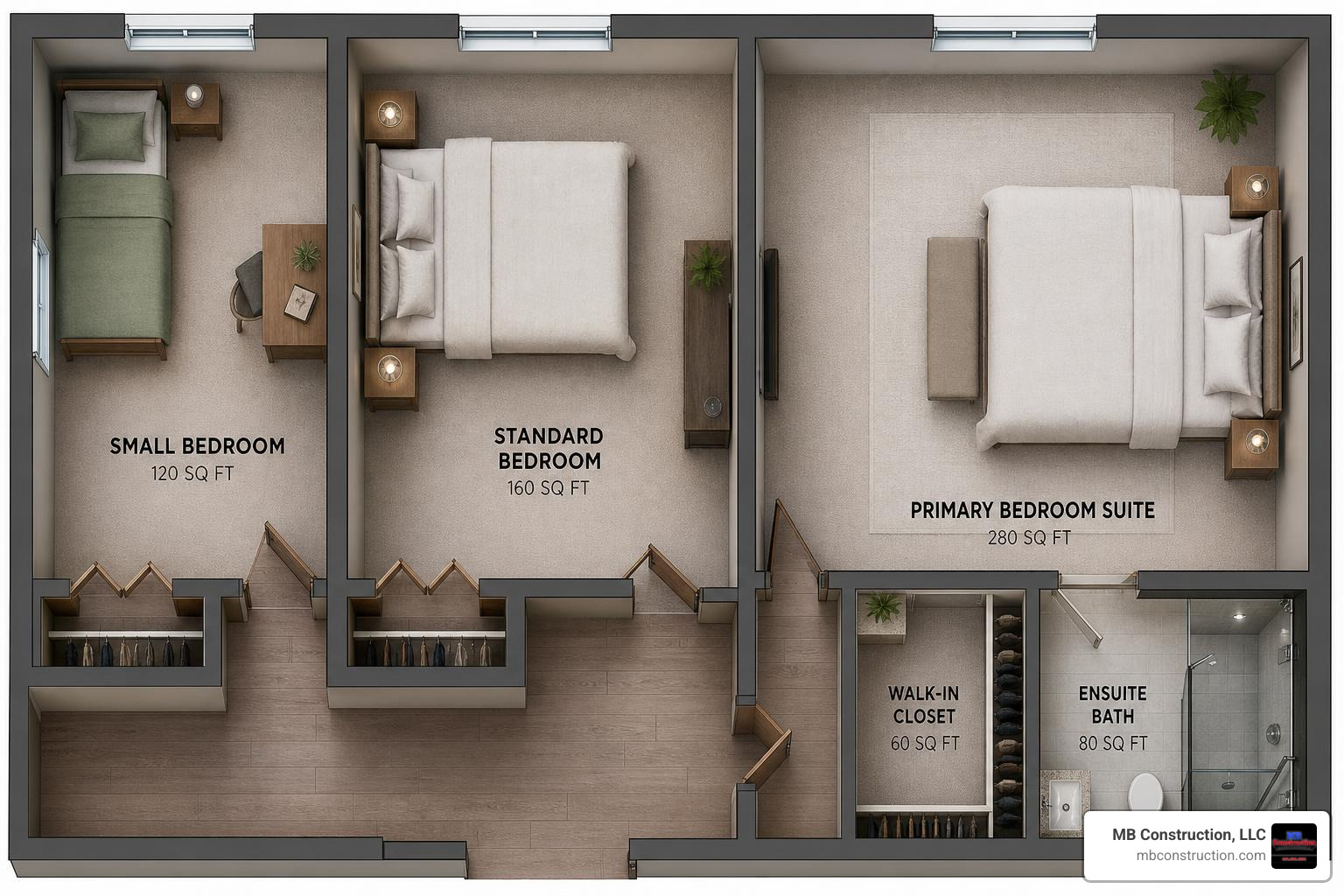
Size is one of the biggest cost drivers, but it is not the only one. A small bedroom with complicated structural work can cost more than a larger room with a simple footprint.
Legal bedrooms also need to meet code requirements, including proper egress, adequate ceiling height, heating, electrical outlets, smoke alarms, and in many cases a closet for marketability, even where local code may not strictly require one.
| Bedroom Size/Scope | Typical Size | Average Cost Range Based on Internet Data |
|---|---|---|
| Small bedroom | 100 – 150 sq ft | $10,000 – $75,000 |
| Standard bedroom | 150 – 250 sq ft | $15,000 – $125,000 |
| Primary bedroom only | 250 – 400+ sq ft | $25,000 – $200,000+ |
| Bedroom plus bathroom | 250 – 600+ sq ft | $37,500 – $500,000+ |
Small Bedroom Addition Costs
A small bedroom is usually around 100 to 150 square feet, such as a 10×10 or 10×12 room. Based on internet cost data, small bedroom additions commonly range from $10,000 to $75,000.
This type of space works well as:
- A child’s bedroom
- A guest room
- A small home office that can function as a bedroom
- A first-floor sleeping space for aging-in-place planning
Costs stay lower when the layout is simple, the addition is on the first floor, plumbing is not involved, and HVAC can be extended without major system upgrades.
Standard Bedroom Addition Costs
A standard bedroom is usually 150 to 250 square feet, such as a 12×12 or 12×15 room. Based on internet cost data, this type of bedroom addition often costs $15,000 to $125,000.
This budget may include:
- Foundation or structural modifications
- Exterior framing
- Roofing and siding tie-ins
- Insulation and drywall
- Closet framing
- Electrical outlets and lighting
- Heating and cooling extension
- Flooring, trim, and paint
- Windows and interior doors
A standard bedroom is often the sweet spot for value because it adds useful square footage without the plumbing costs of a bathroom or suite. If you are planning something around 300 square feet, our 300 Sq Ft Addition Cost Complete Guide can help you compare costs.
Primary Bedroom or Primary Suite Addition Costs
A primary bedroom addition is usually 250 to 400+ square feet. If it includes only the bedroom and closet space, average costs based on internet data may range from $25,000 to $200,000+. A full primary suite with bathroom, walk-in closet, custom finishes, and structural complexity can reach $100,000 to $500,000+.
Primary suites cost more because they often include:
- Larger footprint
- Walk-in closet
- Sitting area
- Larger windows
- Higher-end flooring and trim
- Bathroom plumbing, if included
- Custom tile, fixtures, and lighting
- Structural work for second-story or over-garage layouts
For more planning ideas, see The Ranch House Upgrade: Adding a Master Suite to Your Home and Level Up Your Home by Adding a Second Story Master Suite.
What Goes Into the Average Cost for Adding a Bedroom?
The final price is not just “wood plus windows.” A bedroom addition includes structure, exterior integration, interior finishes, mechanical systems, labor, permits, overhead, and contingency.
Typical budget categories include:
- Foundation and excavation
- Framing and sheathing
- Roofing and siding
- Windows and doors
- Insulation and drywall
- Electrical
- HVAC
- Flooring
- Trim and paint
- Permits and inspections
- Design and engineering
- General contractor coordination
- Cleanup and site restoration
Structural Shell and Exterior Costs

The structural shell is where a large portion of the budget goes. This includes excavation, foundation, framing, sheathing, roofing, exterior trim, siding, gutters, and weatherproofing.
Average costs based on internet data include:
| Component | Typical Cost Range |
|---|---|
| Site preparation | $1,500 – $5,000 |
| Demolition/prep | $1,000 – $5,000 |
| Simple slab foundation example | $5,000 – $12,000 for about 200 sq ft |
| Framing and drywall combined | $16 – $60 per sq ft |
| Roofing | $2 – $6 per sq ft |
| Exterior matching | Varies widely by material and home age |
Exterior matching is a major factor in Massachusetts homes. Older siding, custom trim, discontinued shingles, and unusual rooflines can make “just match what is there” more complicated than it sounds.
Interior Finish Costs
Interior finishes turn the shell into a bedroom you actually want to sleep in, rather than a very expensive shed attached to your house.
Common interior costs based on internet data include:
| Interior Item | Typical Cost Range |
|---|---|
| Insulation | $1 – $7.50 per sq ft |
| Flooring | $3 – $20 per sq ft |
| Windows | $350 – $1,500+ each |
| Interior doors | Around $800 each on average, with wide installed ranges from $150 to $8,000+ |
| Electrical | $3 – $10 per sq ft |
| Drywall, paint, trim | Varies by finish level |
Finish quality makes a big difference. Builder-grade carpet, simple trim, and standard lighting cost far less than hardwood floors, custom millwork, specialty lighting, and premium windows.
Mechanical System Costs
Mechanical systems include electrical, heating, cooling, ventilation, and sometimes plumbing.
For a bedroom-only addition, electrical and HVAC are the biggest mechanical costs. Based on internet data:
- Electrical work may cost $3 to $10 per square foot.
- Electrician rates often range from $50 to $130 per hour.
- HVAC duct extensions may cost $35 to $55 per linear foot.
- HVAC upgrades can range from a small extension to several thousand dollars if capacity is limited.
- Electrical panel upgrades may be needed in older homes.
- Plumbing is usually only required if a bathroom is added.
In Greater Boston and Middlesex County, older homes may reveal surprises: undersized electrical panels, aging wiring, limited insulation, or heating systems that cannot comfortably serve new square footage.
Labor, Contractor, and Professional Fees
Labor is one of the largest parts of the budget. Based on internet cost data, professional labor often represents 40% to 60% of the total project cost.
Typical professional costs may include:
| Professional | Average Cost Range Based on Internet Data |
|---|---|
| General contractor | 10% – 25% of project budget |
| Architect | $2,400 – $14,000 |
| Structural engineer | $70 – $250 per hour, or project-based fees |
| Electrician | $50 – $130 per hour |
| Plumber, if bath is added | $45 – $200 per hour |
| Interior designer | $100 – $500 per hour |
| Landscaper/site repair | $50 – $100 per hour |
At MB Construction, LLC, we focus on quality-driven, time-sensitive construction using premium materials and expert craftsmen. A bedroom addition has too many moving parts for guesswork, and guaranteed workmanship matters when you are cutting into an existing home.
For more budgeting detail, see Breaking Down the Average Price of Home Additions Without Breaking the Bank.
Additional Costs Homeowners Should Budget For
The most stressful costs are usually the ones homeowners did not know to expect. We recommend budgeting a 10% to 20% contingency reserve, especially for older homes.
Additional costs may include:
- Permits and inspections
- Design and engineering
- Demolition
- Site prep
- Temporary dust and weather protection
- Utility upgrades
- Landscaping repair
- Driveway or access protection
- Insurance adjustments
- Warranty coverage
- Property tax reassessment
- Finish upgrades
- Change orders
Permits, Zoning, and Local Building Requirements
Most bedroom additions require building permits. Depending on the town and scope, permits may involve building, electrical, HVAC, plumbing, zoning, conservation, or structural review.
Average permit costs based on internet data commonly range from $250 to $2,000, while larger or more complex urban-area projects may reach $500 to $5,000+.
In Massachusetts communities like Billerica, Bedford, Burlington, Lexington, Chelmsford, Carlisle, Reading, and Andover, requirements vary by municipality. Common issues include:
- Setbacks
- Lot coverage
- Height limits
- Wetlands or conservation review
- Egress window requirements
- Smoke and carbon monoxide alarm updates
- Energy code compliance
- Structural calculations
- Inspection scheduling
Skipping permits is not worth it. It can create resale issues, insurance problems, fines, and required rework.
Demolition, Site Prep, and Utility Upgrades
Demolition and prep costs often range from $1,000 to $5,000, based on internet data. Site restoration may add another $1,500 to $5,000.
These costs can include:
- Removing siding or exterior walls
- Tree or shrub removal
- Grading and drainage
- Temporary access
- Driveway protection
- Foundation excavation
- Utility relocation
- Electrical panel upgrades
- HVAC capacity upgrades
- Exterior patching and material matching
Older homes can also reveal hidden problems once walls are opened. That is why a contingency fund is not optional. It is the financial version of bringing an umbrella in New England.
Bedroom Addition vs. Bedroom and Bathroom Costs
A bedroom-only addition is usually much less expensive than adding a bedroom and bathroom. Plumbing, waterproofing, tile, fixtures, ventilation, and inspections all increase the budget.
Based on internet cost data:
| Project | Typical Cost Range |
|---|---|
| Bedroom-only addition | $20,000 – $130,000 |
| Full bathroom addition | $35,000 – $90,000 |
| Bedroom plus bathroom | $37,500 – $117,000+ |
| Luxury bathroom portion | $15,000 – $30,000+ |
| Complex bedroom-and-bath suite | $100,000 – $500,000+ |
Wet rooms cost more than dry rooms because plumbing adds labor, inspections, fixtures, waterproofing, and risk. If you are considering a bedroom over a garage with a bathroom, read The Dream Suite: Adding a Bedroom Over Your Garage.
Value, Timeline, DIY Options, and Ways to Reduce Bedroom Addition Costs
A bedroom addition is not just a construction project. It affects daily comfort, resale value, household flexibility, and how long your home continues to fit your life.
Return on Investment for a Bedroom Addition
Bedroom additions often return 50% to 75% of project cost in resale value, based on internet data. Bedroom-specific ROI is often reported around 50% to 63%, while primary suite additions may return around 60%.
The best ROI usually happens when the addition solves a clear market problem, such as:
- Bringing a two-bedroom home up to three bedrooms
- Adding a first-floor bedroom
- Creating a more functional family layout
- Improving primary bedroom comfort
- Making the home competitive with nearby properties
The key is not to overbuild for the neighborhood. A luxury suite can be wonderful, but if it pushes the home far beyond local comparable sales, the financial return may be lower. For whole-home planning, see The Complete Guide to Whole House Renovations.
Typical Bedroom Addition Timeline
Most bedroom additions take 3 to 7 months from planning through completion. Complex additions can take 6 to 12 months, especially if they involve structural redesign, second-story work, conservation review, or a bedroom-and-bath suite.
A typical timeline looks like this:
| Phase | Typical Duration |
|---|---|
| Planning | 1 – 4 months |
| Design | 2 – 6 weeks |
| Permitting | 2 – 8 weeks |
| Site prep/foundation | 1 – 3 weeks |
| Framing/structural work | 2 – 4 weeks |
| Rough electrical/HVAC | 2 – 4 weeks |
| Interior finishes | 3 – 6 weeks |
| Final inspection | 1 – 2 weeks |
Weather, material lead times, inspection schedules, and change orders can all affect timing.
DIY vs. Hiring a Professional Contractor
There are smart DIY opportunities, but a bedroom addition is not a good place to “wing it and hope the house stays house-shaped.”
Homeowners may be able to handle:
- Painting
- Simple trim work
- Flooring, in some cases
- Closet shelving
- Cleanup
- Basic finish selections
Professionals should handle:
- Structural framing
- Foundation work
- Roof tie-ins
- Electrical
- HVAC
- Plumbing, if included
- Permits and inspections
- Load-bearing wall changes
- Waterproofing and exterior envelope work
Hiring a professional contractor gives you coordination, accountability, insurance protection, code compliance, and warranty support. DIY mistakes in structural or mechanical work can cost more to fix than hiring the right team from the start.
Practical Ways to Lower Bedroom Addition Costs
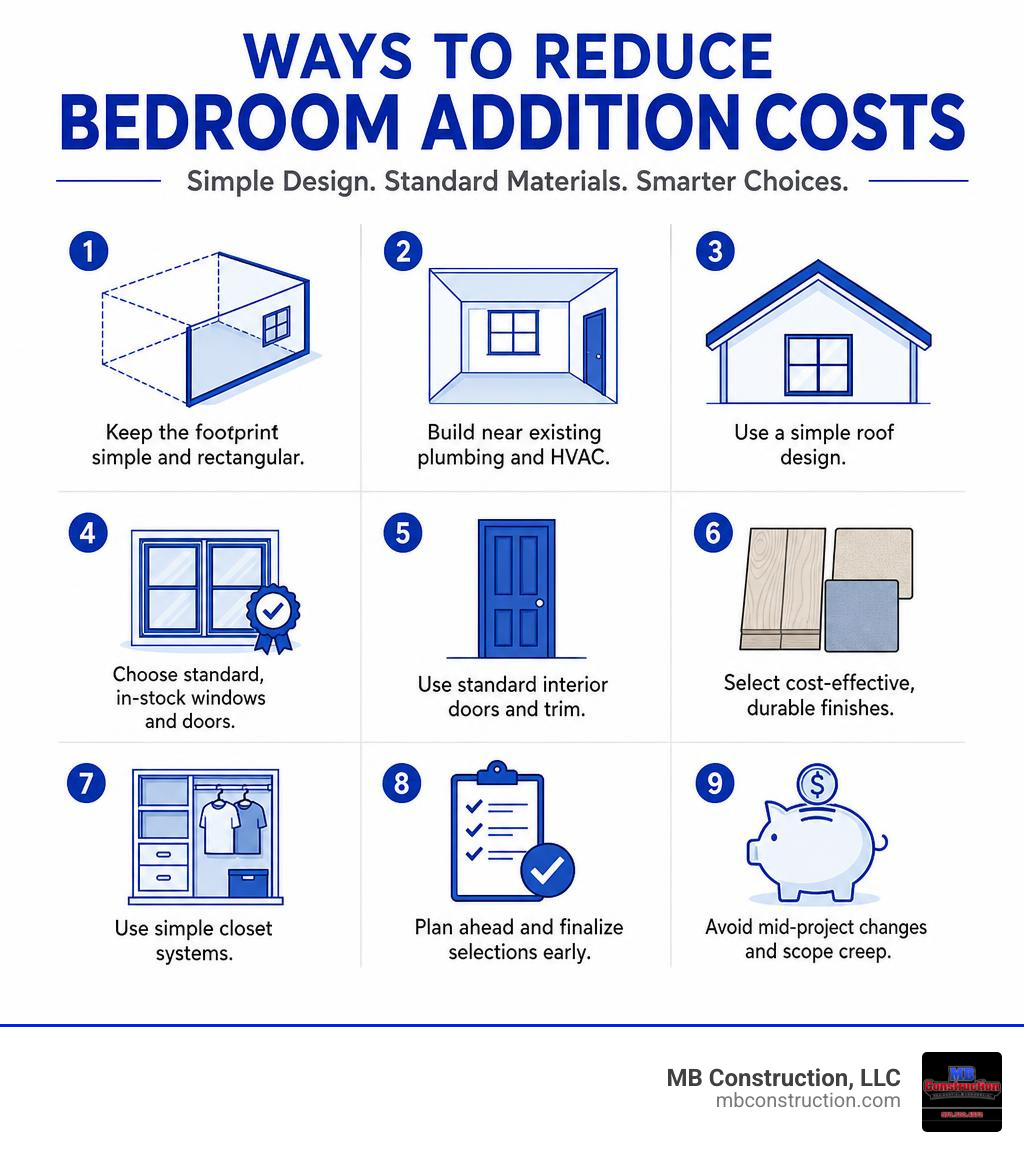
You can reduce costs without cutting corners. The goal is value engineering, not “build it cheap and regret it later.”
Cost-saving strategies include:
- Keep the footprint simple and rectangular.
- Use a standard roofline when possible.
- Build out instead of building up if your lot allows it.
- Convert existing space, such as a garage or attic, when practical.
- Avoid adding plumbing unless you truly need a bathroom.
- Choose mid-range materials instead of luxury finishes everywhere.
- Use standard window and door sizes.
- Finalize plans before construction starts.
- Get detailed bids and compare scopes, not just bottom-line prices.
- Order long-lead materials early.
- Schedule during slower construction seasons when possible.
- Do safe finish tasks yourself, such as painting.
- Phase nonessential upgrades.
- Keep a 10% to 20% contingency.
- Avoid frequent change orders.
If you are considering financing, read Financing Your Addition Without Breaking the Piggy Bank.
Frequently Asked Questions About Bedroom Addition Costs
What is the average cost for adding a bedroom in 2026?
The average cost for adding a bedroom in 2026 is about $50,000, based on internet cost data, with a wide range of prices spanning from $10,000 to $500,000+ depending on size, location, build method, structural complexity, finish level, permits, and whether you add a bathroom.
How much does a bedroom addition cost per square foot?
Bedroom additions typically cost $100 to $500 per square foot, based on internet cost data.
More specifically:
- Ground-floor build-out: $80 to $200 per sq ft
- Standard bedroom addition: $100 to $300 per sq ft
- Second-story addition: $300 to $500 per sq ft
- Primary suite: $250 to $400+ per sq ft
In Massachusetts and Greater Boston, costs often trend higher because of labor rates, permitting, older housing conditions, and finish expectations.
Is it cheaper to convert existing space or build a new bedroom addition?
Yes, converting existing space is usually cheaper. Based on internet cost data, garage, attic, or basement conversions can cost 40% to 60% less than building new square footage because the foundation, roof, and exterior walls may already exist.
However, conversions still need to meet bedroom requirements. You may need:
- Egress windows or doors
- Insulation upgrades
- Heating and cooling
- Electrical updates
- Ceiling height corrections
- Moisture control
- Fire separation, especially for garages
- Permit approvals
A conversion is not automatically simple, but when the structure is suitable, it can be one of the most cost-effective ways to add a bedroom.
Conclusion
A bedroom addition can cost anywhere from a modest conversion to a major custom build, but a realistic 2026 starting point is this: based on internet cost data, the average cost for adding a bedroom is about $50,000, with a wide range of prices spanning from $10,000 to $500,000+ depending on scope.
For homeowners in Andover, Bedford, Billerica, Burlington, Carlisle, Chelmsford, Eastern MA, Greater Boston, Lexington, Middlesex County, North Andover, North Reading, Reading, Tewksbury, and Wilmington, local conditions matter. Labor rates, older homes, town permitting, winter weather, and structural surprises can all affect the final number.
At MB Construction, LLC, we build home additions with premium materials, expert craftsmen, time-sensitive project management, and guaranteed workmanship. If you are ready to turn “we need one more bedroom” into a clear plan and budget, we can help.
