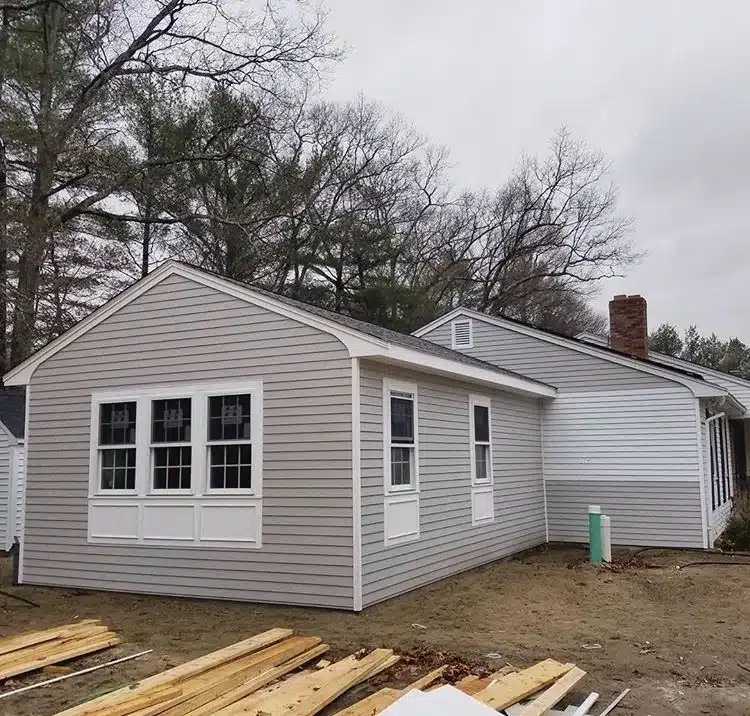
Why So Many Homeowners Are Adding On to Their Split Level Home
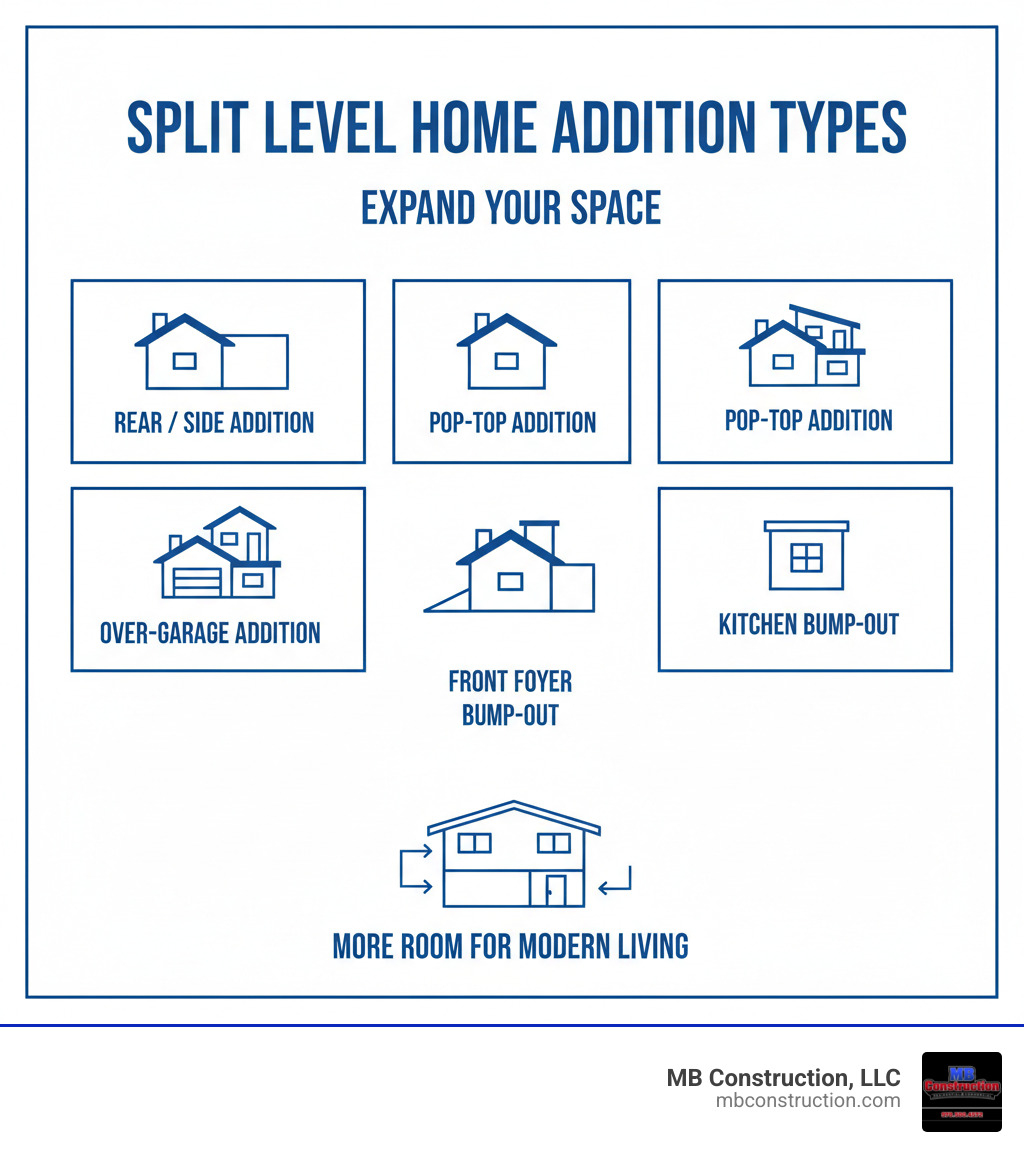
Planning an addition on a split level home is one of the most popular renovation decisions homeowners make — and for good reason. Here are the most common addition types to consider:
- Rear or side addition — expands living space without touching the front facade
- Second-story pop-top — adds a full upper level, often over the garage
- Over-garage addition — creates a private master suite or home office above the existing garage
- Kitchen bump-out — opens up the cramped, compartmentalized feel common in split-level layouts
- Front foyer bump-out — transforms a tight entry landing into a real mudroom or foyer
Split-level homes were one of the most popular architectural styles built across the country from the 1950s through the 1970s. You’ll find them throughout suburban Massachusetts — in towns like Billerica, Wilmington, Reading, and across Middlesex County.
Their design was practical for the era. Staggered floor levels let builders fit more square footage on smaller lots while minimizing excavation costs. But that same staggered layout is exactly why many families today feel squeezed.
Bedrooms tend to run small. Kitchens feel closed off. The entry is often just a narrow landing where shoes, bags, and strollers compete for space. And the multi-level flow — while offering useful separation between living zones — can make the home feel choppy and dark.
The good news? These problems are fixable. A well-planned addition doesn’t just add square footage. It can completely change how your home feels to live in.
Whether your family is growing, you’re planning to age in place, or you simply want a home that works better for modern life, an addition on a split level home is one of the most effective investments you can make.
Basic addition on a split level home vocab:
Popular Configurations for an Addition on a Split Level Home
When we look at the unique architecture of a split-level house, we see a “staggered” layout that offers several distinct paths for expansion. Because these homes often sit on generous suburban lots in areas like Bedford, MA or Tewksbury, MA, there is frequently room to grow horizontally.
Rear additions are perhaps the most common choice. By extending the back of the house, we can create a large, open-concept family room or an expanded dining area that flows directly onto a new deck. This type of expansion is ideal because it doesn’t disrupt the home’s street-side curb appeal while providing a massive boost to interior livability.
Side expansions are another excellent way to Add On to Your Split Level Home: Here’s How. If your lot has extra width, a side addition can accommodate a new mudroom, a larger laundry area, or even a Garage Addition. For families in Greater Boston looking to accommodate multi-generational living, these side wings often serve as the perfect foundation for Master Bedroom Additions or Family Room Additions.
Second-Story Pop-Tops and Over-Garage Additions
If your lot size is limited by setbacks or you simply want to preserve your backyard, vertical expansion is the way to go. This is often referred to as a “pop-top.” In a split-level, this usually involves adding 2nd and 3rd Floor Additions over the lower portion of the house—typically the section containing the garage or the lower-level family room.
Building over the garage is a classic strategy for creating a luxurious master suite. However, this requires a rigorous structural assessment. We must ensure the existing garage foundation and framing can handle the weight of a new living story. If the foundation is sufficient, this “over-garage” addition can provide the high ceilings and spacious walk-in closets that original 1960s split-levels notoriously lack.
Kitchen Extensions and Open-Concept Layouts
Many homeowners come to us because their kitchen feels like a dark, isolated box. In the original blueprints of many split-levels, the kitchen is walled off from the living and dining areas.
A Home Addition focused on the kitchen often involves a “bump-out”—a small extension of 5 to 10 feet. While it sounds modest, this extra space allows for the removal of load-bearing walls, replaced by engineered beams. This creates a seamless flow between levels and lets natural light from the front of the house reach the back. According to A Guide to Adding an Addition On A Split Level Home, focusing on flow and light can make an addition feel twice its actual size.
Structural and Planning Considerations for Your Project
Adding onto a split-level isn’t quite the same as adding onto a standard ranch or two-story colonial. The staggered floor heights mean that “leveling up” requires precise engineering. Before we swing a hammer, several planning steps are mandatory.
First, we must look at zoning laws and setbacks. In towns like Billerica and Lexington, there are strict rules about how close you can build to your property line. We also have to consider height limits, especially if we are planning a second-story pop-top. As a Home Remodeling Contractor, we handle the heavy lifting of navigating these local Middlesex County regulations.
Structural Engineering for an Addition on a Split Level Home
The structural integrity of an addition on a split level home relies on how the new “wing” ties into the old structure. Key considerations include:
- Load Transfer: If we are removing walls to create an open concept, we must install structural steel or LVL beams to carry the weight of the upper floors.
- Staircase Relocation: Sometimes, the best way to fix a choppy layout is to move the stairs. This is a complex task that requires careful engineering to ensure the new stairs meet modern safety codes.
- Roof Tie-ins: Matching the new roofline to the existing one is an art form. You want the addition to look like it was always there, not like a box glued to the side of the house.
- HVAC Rebalancing: Adding square footage means your furnace and AC have more work to do. We often recommend zoned systems to keep all levels comfortable. Split Level Home Additions Options, Costs, and Planning suggests that proper insulation and ductwork are vital for preventing the “hot upstairs, cold downstairs” syndrome common in these homes.
Navigating Local Zoning and Permits in Massachusetts
In Eastern Massachusetts, every town has its own flavor of building codes. For example, if you are building an addition in Andover or North Reading, you must adhere to specific energy efficiency standards (often referred to as the “Stretch Code”).
If your goal is to create a space for a parent or relative, you’ll need to follow the 2025 Massachusetts ADU (Accessory Dwelling Unit) regulations. These allow for units up to 900 square feet in many cases. We specialize in Planning Your In-Law Unit Construction Without the Stress, ensuring your project meets all Billerica or Greater Boston safety and occupancy permits.
Estimating the Cost of a Split Level Addition in Massachusetts
Understanding the investment required for an addition on a split level home is the first step in any successful project. While every home is different, we can look at average costs based on internet data for the Massachusetts region.
When Breaking Down the Average Cost of Home Addition in Massachusetts, we see that costs are driven by three main factors: foundation work, utility extensions, and the “tie-in” complexity.
| Addition Type | Average Cost Range (Internet Data) | Key Cost Drivers |
|---|---|---|
| Front Foyer Bump-out | $35,000 – $150,000 | Foundation, entry door, custom trim |
| Kitchen Bump-out | $85,000 – $450,000 | Plumbing, cabinetry, load-bearing beams |
| Master Suite (Over Garage) | $120,000 – $650,000 | Structural reinforcement, HVAC, luxury bath |
| Two-Level Rear Addition | $180,000 – $1,800,000+ | Excavation, roofing, full interior finish |
Note: These are average costs based on general internet data and can vary significantly based on material choices and site conditions.
Budgeting for an Addition on a Split Level Home
Why is the price range so wide? It’s because an addition on a split level home involves more than just framing walls. If you Stop Feeling Cramped with These Smart Additions to Your Home, you have to account for:
- Excavation and Foundation: A ground-level addition requires digging footings below the frost line (usually 4 feet in MA).
- Roofline Complexity: Tying into a staggered roof is more labor-intensive than a flat connection.
- Utility Travel: If you are adding a bathroom to the far side of the house, the cost of running plumbing and electrical lines increases.
- Structural Engineering: Because split-levels have unique load paths, custom engineering is often required to ensure safety.
Modernizing Your Home and Increasing Market Value
Beyond just adding space, an addition is an opportunity to modernize an “ugly duckling” exterior. Many split-levels from the 1960s have dated siding and small windows. By incorporating Craftsman-style details, vertical board-and-batten siding, or larger windows, we can dramatically improve your home’s curb appeal.
Inside, we often recommend In-Law Suite Additions for families looking toward the future. These spaces provide privacy and accessibility, which are key “aging-in-place” features. If you are wondering How to Build an In-Law Suite Without Losing Your Mind, the secret is early planning and choosing a contractor who understands the specific needs of multi-generational households.
A well-executed addition typically increases resale value significantly. In the current Massachusetts market, homes that offer open kitchens and master suites sell much faster than original, compartmentalized split-levels.
Frequently Asked Questions
Are split-level homes harder to sell?
In their original state, they can be. Some buyers are deterred by the “stair-heavy” layout and small foyers. However, a modernized split-level with an open-concept addition is highly marketable. By addressing the common “pain points” like the cramped entry and dark kitchen, you turn a dated house into a high-demand modern home.
Can you add a second floor to a split-level garage?
Yes, this is a very popular option. However, it requires a structural engineer to verify that the garage’s foundation and wall studs can support the additional weight. Often, we need to add “underpinning” to the foundation or beef up the framing, but the result is a beautiful, private wing of the house.
Do I need to move out during construction?
For small bump-outs or garage additions, many of our clients in Wilmington and Reading choose to stay in their homes. However, for major “pop-top” additions where the roof is removed, we usually recommend vacating for a few weeks. This protects your family from dust, noise, and utility disruptions.
Conclusion
At MB Construction, LLC, based in Billerica, MA, we understand that your home is your most significant investment. We specialize in quality-driven, time-sensitive home additions across Middlesex County and the Greater Boston area. Our expert craftsmen use only premium materials to ensure that your addition on a split level home is seamless, beautiful, and built to last.
Whether you are in Andover, Lexington, or Chelmsford, we provide guaranteed workmanship on every project. Ready to transform your living space? Explore our Home Additions services today and let us help you expand your horizons.