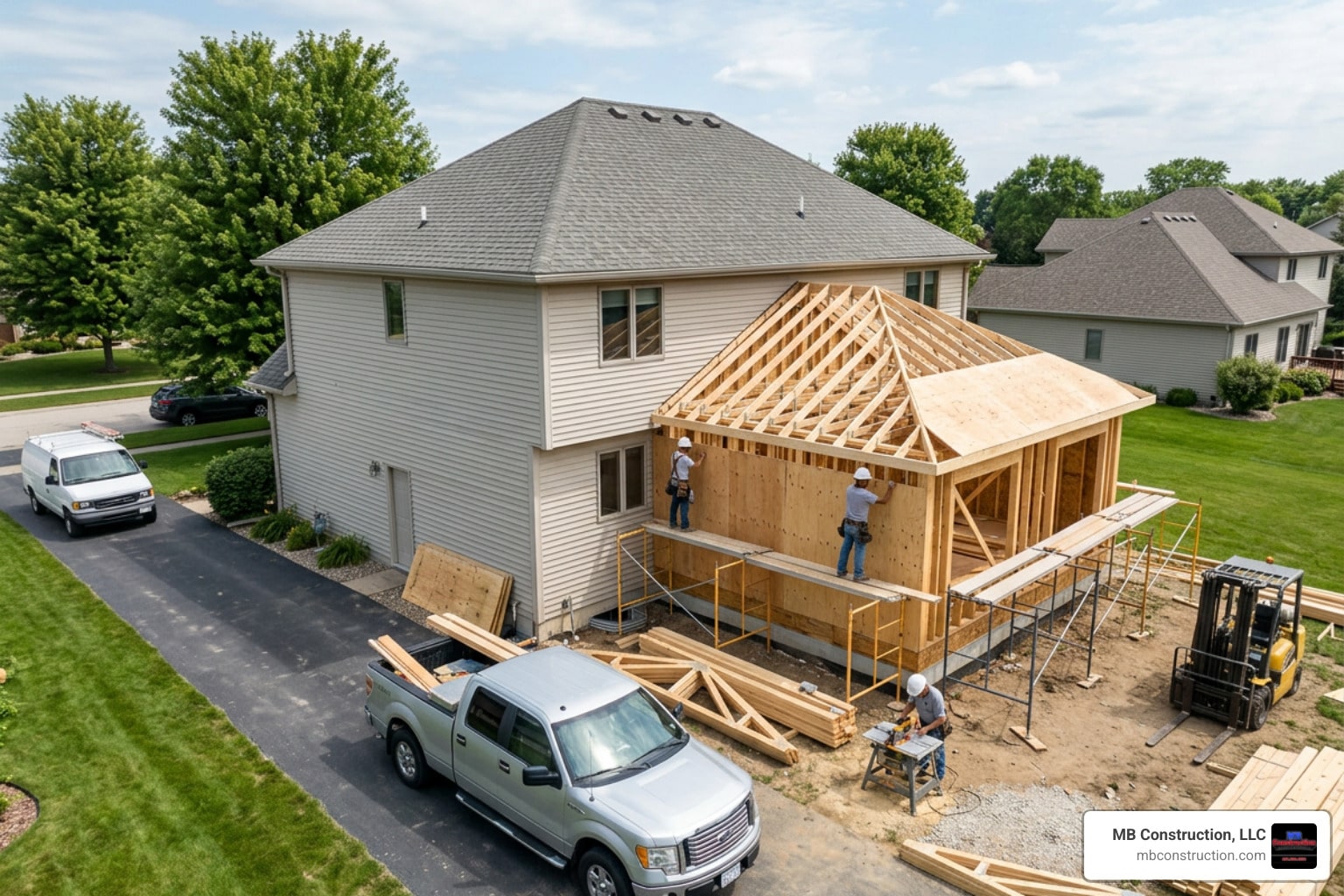
What You Need to Know Before Adding to a Hip Roof House
Planning an addition to a hip roof house is one of the more complex home expansion projects a homeowner can take on — but when done right, the results can be seamless, beautiful, and lasting.
Here is a quick overview of what the process involves:
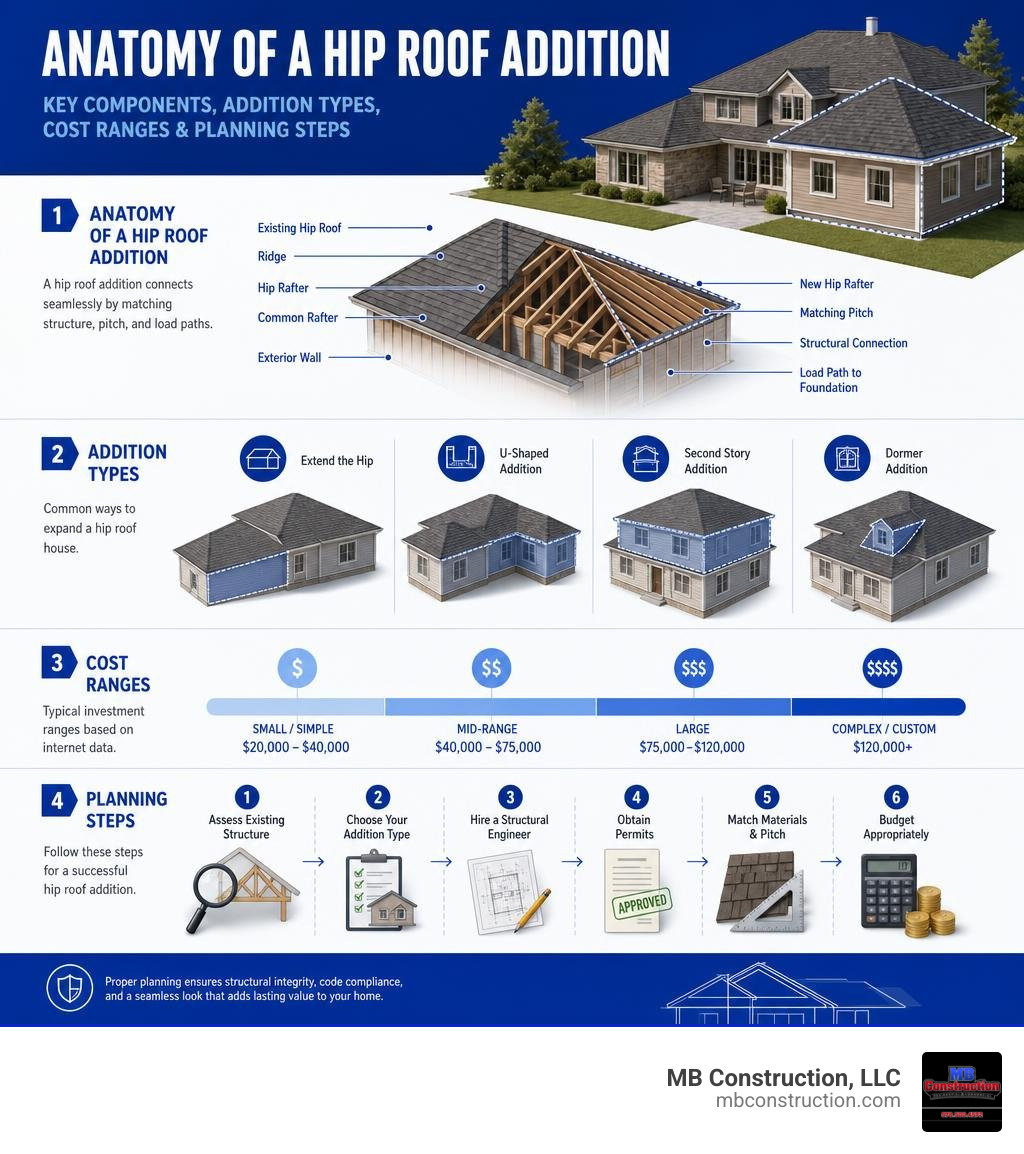
- Assess your existing roof structure — Determine whether you have traditional cut rafters or trusses, as this affects what modifications are possible.
- Choose your addition type — Options include extending an existing hip, adding a U-shaped addition, building a second story, or incorporating a dormer.
- Hire a structural engineer — Over 60% of hip roof addition projects require a formal engineering review due to changes in load paths and roof geometry.
- Obtain permits — Virtually all additions require building permits, zoning review, and setback approval.
- Match materials and pitch — The new roof section must align with the existing roofline, pitch, and materials to avoid a “tacked-on” appearance.
- Budget appropriately — Based on average internet data, costs typically range from $20,000 on the low end to $120,000 or more for larger, more complex projects.
Hip roofs slope downward on all four sides with no vertical ends. That design makes them strong, wind-resistant, and attractive — but it also makes adding onto them more technically demanding than other roof types like gable roofs.
The roofline is often the detail that makes or breaks an addition. As one Phoenix homeowner discovered, a flat-roof shortcut on a hip-roofed home can hurt curb appeal significantly. Getting the roof integration right from the start is what separates an addition that looks original from one that looks like an afterthought.
This guide walks Massachusetts homeowners — from Andover to Billerica to Burlington — through every stage of planning a successful hip roof addition.
Key terms for addition to hip roof house:
- adding a dormer to a split level home
- adding a second story to a split level house
- adding an addition with a basement
Understanding the Hip Roof and Its Structural Advantages
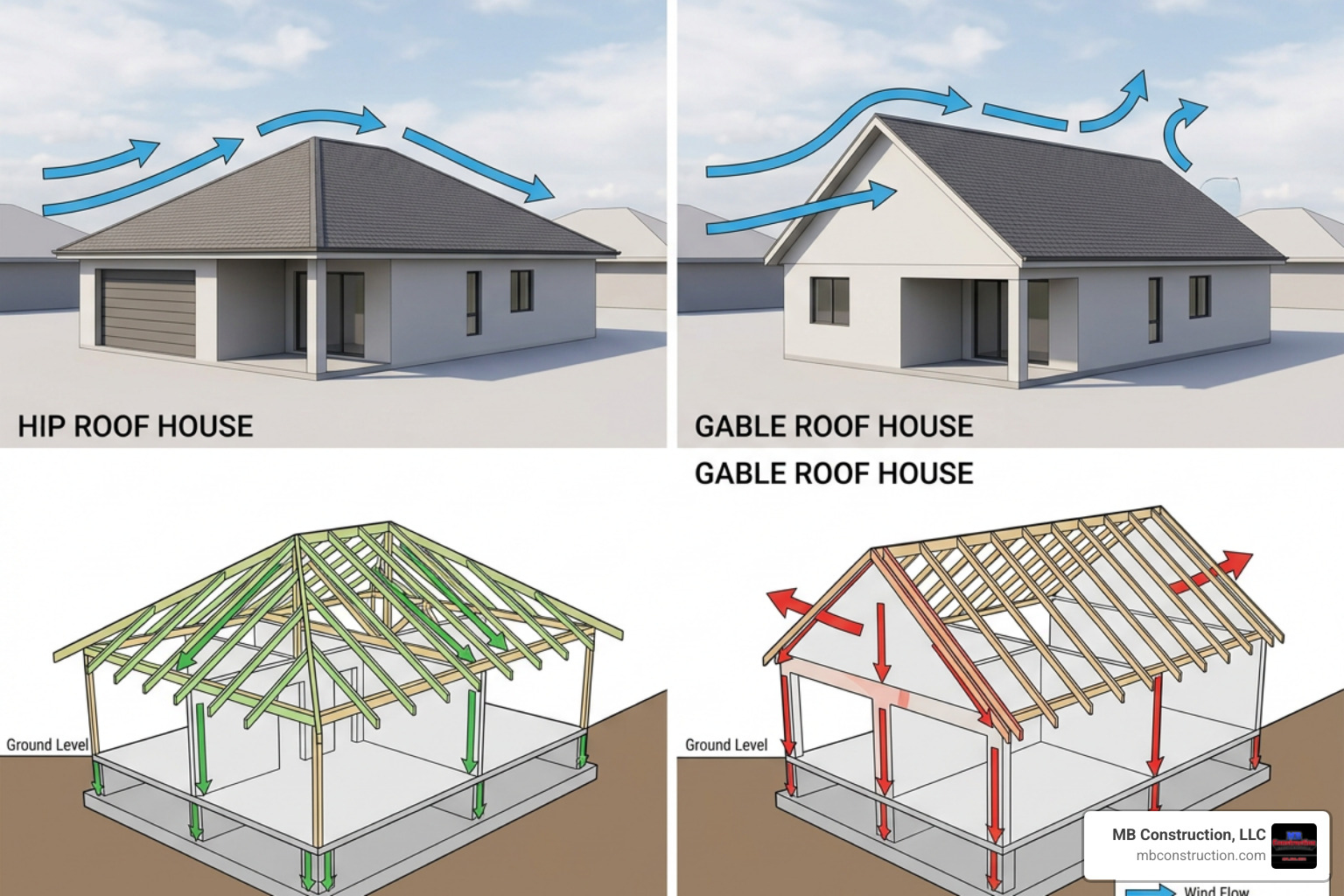
Before expanding your home, it helps to understand why your house was built with a hip roof in the first place. Unlike a standard gable roof, which features two sloping sides and vertical triangular end walls, a hip roof has slopes on all four sides. These four planes meet at the corners to form “hips” and join at a central ridge or peak.
This unique geometry provides several structural and functional advantages:
- Superior Wind Resistance: Because all four sides slope inward, hip roofs are exceptionally aerodynamic. They are 20-30% more resistant to high winds than gable roofs. This makes them highly desirable in storm-prone and coastal areas of Eastern MA and the Greater Boston region.
- Excellent Drainage and Snow Load Distribution: In Massachusetts, winter brings heavy snow loads. The uniform slope of a hip roof allows snow and rainwater to shed evenly on all sides, reducing the risk of localized structural stress or ice dams.
- Enhanced Durability: The inward-sloping planes act as natural bracing, making the entire roof structure incredibly stable and self-supporting.
When planning an addition to a hip roof house, maintaining these structural benefits is key. Across historic and modern neighborhoods alike—including the diverse architectural landscapes of Andover, MA—hip roofs have been a staple of timeless design. To explore how homeowners have successfully integrated these structures, you can browse through Hipped Roof Addition – Photos & Ideas to see real-world examples of architectural harmony.
Understanding local history and building trends, such as those detailed in Andover’s Architectural Styles, can also help you design an addition that honors your neighborhood’s character while providing the modern space you need.
Design Variations and Architectural Styles
Integrating an addition onto a hip roof house does not mean you are limited to a single design. Depending on your home’s existing layout and your space requirements, there are several distinct hip roof variations to consider:
- Full Hip Roof: The classic design where all four sides slope down to meet the exterior walls. This style offers maximum symmetry and wind resistance.
- Dutch Gable (or Dutch Hip) Roof: A hybrid design featuring a standard hip roof with a small gable at the top. This is an excellent option if you want to add a small loft or require extra headroom and ventilation in the attic space.
- Pyramid Hip Roof: A variation typically used on square structures where all four sloping sides meet at a single central point rather than a ridge line.
- Intersecting or Cross-Hip Roof: Ideal for L-shaped or T-shaped additions. This variation joins two hip roofs together, creating valleys where the roof planes meet. It is perfect for large family room extensions or master suite wings.
- Half-Hip (Jerkinhead) Roof: A gable roof with the top peak clipped off into a small hip. This offers a unique historical aesthetic that can match older homes in Middlesex County.
Choosing the right style is crucial for preserving your home’s curb appeal and market value. Homeowners report an average 15% increase in perceived home value after completing a hip roof addition that blends seamlessly with the original structure.
To gather visual inspiration and see how other homeowners have approached these design challenges, check out Hip Roof Addition – Pinterest for curated galleries. If you are looking to expand a single-story home, you might also consider how these styles apply to projects like The Ranch House Upgrade: Adding a Master Suite to Your Home.
Structural Considerations for an Addition to Hip Roof House
From a structural engineering standpoint, building an addition to a hip roof house is more demanding than expanding a gable-roofed home. Because hip roofs do not have flat, vertical end walls, there is no simple “flat” surface to tie a new roof into.
Here are the primary engineering hurdles we evaluate during the planning phase:
Load Paths and Bearing Walls
A hip roof distributes its weight outward to all four exterior walls. When you cut into or modify an existing hip roof to connect an addition, you alter these load paths. A licensed structural engineer must calculate how the new roof loads will transfer to the existing foundation. Over 60% of hip roof addition projects require a formal structural engineering review to ensure the home remains safe and stable.
Trusses vs. Traditional Stick Framing
If your existing roof was built using pre-engineered wood trusses, modifying it is highly complex. Trusses are manufactured as single, interconnected units; cutting even one web member can compromise the entire roof. Traditional stick-framed roofs (using individual rafters and ceiling joists) are much easier to modify, extend, or cut into for valleys.
Tying the Rooflines Together
To connect the new addition’s roof to the existing house, builders typically use one of two methods:
- Mounting on the Existing Roof: The new roof rafters are framed directly over the existing roof deck, creating a valley where the two structures meet.
- Extending the Ridgeline: The existing ridge board is extended by a few feet, and new hip rafters are run down to the new addition’s corners. This creates a highly integrated, original look but requires removing a portion of the existing roof.
To learn more about the technical details of these connections, you can read How Do You Put An Addition On A Hip Roof? (Updated 2026). Additionally, if your project involves a multi-level home, you will want to understand the unique structural demands discussed in The Highs and Lows of Adding a Second Story to Your Split-Level Home.
Step-by-Step Construction Phases for Your Home Expansion
A successful hip roof addition relies on a systematic, well-planned construction sequence. Here is what you can expect during each phase of the project:
Phase 1: Planning, Design, and Engineering
We begin by conducting a thorough site assessment. An architect or designer drafts detailed plans, and a structural engineer calculates the load requirements. During this phase, we also pull all necessary local permits and verify zoning setbacks.
Phase 2: Site Preparation and Foundation
Once permits are secured, excavation begins. We pour a concrete foundation—whether a crawlspace, slab, or full basement extension—ensuring it anchors perfectly to your home’s existing foundation.
Phase 3: Wall and Roof Framing
Our carpenters construct the wall frames for the new addition. Next comes the most critical step: framing the new hip roof. If we are extending the existing roofline, we carefully remove the shingles and sheathing from the connection zone, set the new ridge board, and install the hip and common rafters at a matching pitch.
Phase 4: Weatherproofing and Roofing
With the framing complete, we install plywood sheathing, followed by high-quality underlayment and ice-and-water barrier in the valleys. Shingles or metal roofing are then installed to match the existing home perfectly.
Phase 5: Insulation, Ventilation, and Finishing
Proper insulation and ventilation are vital. We install continuous soffit and ridge vents to prevent moisture buildup and heat retention. Finally, we finish the interior drywall, flooring, trim, and electrical systems. For a deeper dive into managing complex vertical expansions, check out Building Up Without Breaking Down: Your 3rd Floor Addition Guide.
Cost Breakdown, Permits, and Material Selection
Budgeting for an addition to a hip roof house requires balancing material quality with structural complexity. Based on average internet data, a home addition project can range widely from $15,000 on the lower end for small bump-outs to $350,000+ for massive, multi-story structural expansions. For a standard hip roof addition, structural and roofing work typically accounts for 40% to 60% of the total budget.
To help you compare your options, here is a breakdown of common roofing materials:
| Material | Average Cost | Durability (Years) | Aesthetic & Performance Notes |
|---|---|---|---|
| Asphalt Shingles | Moderate | 20 – 30 | Most common; easiest to match to existing roofs. |
| Metal Roofing | High | 40 – 70 | Excellent wind resistance; modern look; highly durable. |
| Clay / Concrete Tiles | Very High | 50 – 100 | Extremely heavy; requires reinforced framing; classic look. |
| Synthetic / Brava Tiles | High | 50+ | Mimics slate or cedar shake without the weight or maintenance. |
Beyond materials, you must budget for design, engineering, and municipal permits. In towns like Billerica, Lexington, and Reading, building codes dictate strict rules regarding property line setbacks, maximum building heights, and local snow load standards. Working with a licensed contractor ensures your plans pass municipal reviews without costly delays. To learn more about budgeting for these projects, refer to our House Addition Cost: Complete Guide.
Frequently Asked Questions about Hip Roof Additions
Can You Build a Second-Story Addition to Hip Roof House?
Yes, you can build a second-story addition on a hip roof house, but it requires removing the existing roof entirely and reinforcing the first-floor framing and foundation. Because hip roofs distribute weight to all outer walls, a structural engineer must verify that your existing foundation can handle the load of a second story. For more information on this type of expansion, read Level Up Your Home by Adding a Second Story Master Suite.
How Do You Vent an Addition to Hip Roof House?
Venting a hip roof addition requires a balanced system of intake and exhaust. Because hip roofs have limited ridge length compared to gable roofs, standard ridge vents may not provide enough exhaust area. We solve this by combining continuous soffit vents (for intake) with specialized hip vents or powered attic ventilators to ensure continuous airflow, reducing attic heat gain by up to 25%.
What is the difference between a hip roof and a gable roof?
A hip roof has slopes on all four sides that meet at a ridge or peak, whereas a gable roof has only two sloping sides with vertical, triangular walls at each end. Hip roofs offer superior wind resistance and durability but are more complex and expensive to frame than gable roofs.
Conclusion
Expanding your home with an addition to a hip roof house is a highly rewarding investment that enhances your living space, preserves your home’s structural integrity, and boosts curb appeal. Because of the engineering complexities involved in modifying hip roof load paths, partnering with an experienced, quality-driven team is essential.
At MB Construction, LLC, based in Billerica, MA, we specialize in delivering premium home additions across Middlesex County, Eastern Massachusetts, and the Greater Boston area. Our expert craftsmen use top-tier materials to ensure your new addition looks original and stands up to New England’s harshest winters.
Ready to expand your home with confidence? Schedule a consultation for your home addition with MB Construction, LLC today, and let’s bring your vision to life.