
The Cost of Adding an Addition to a House
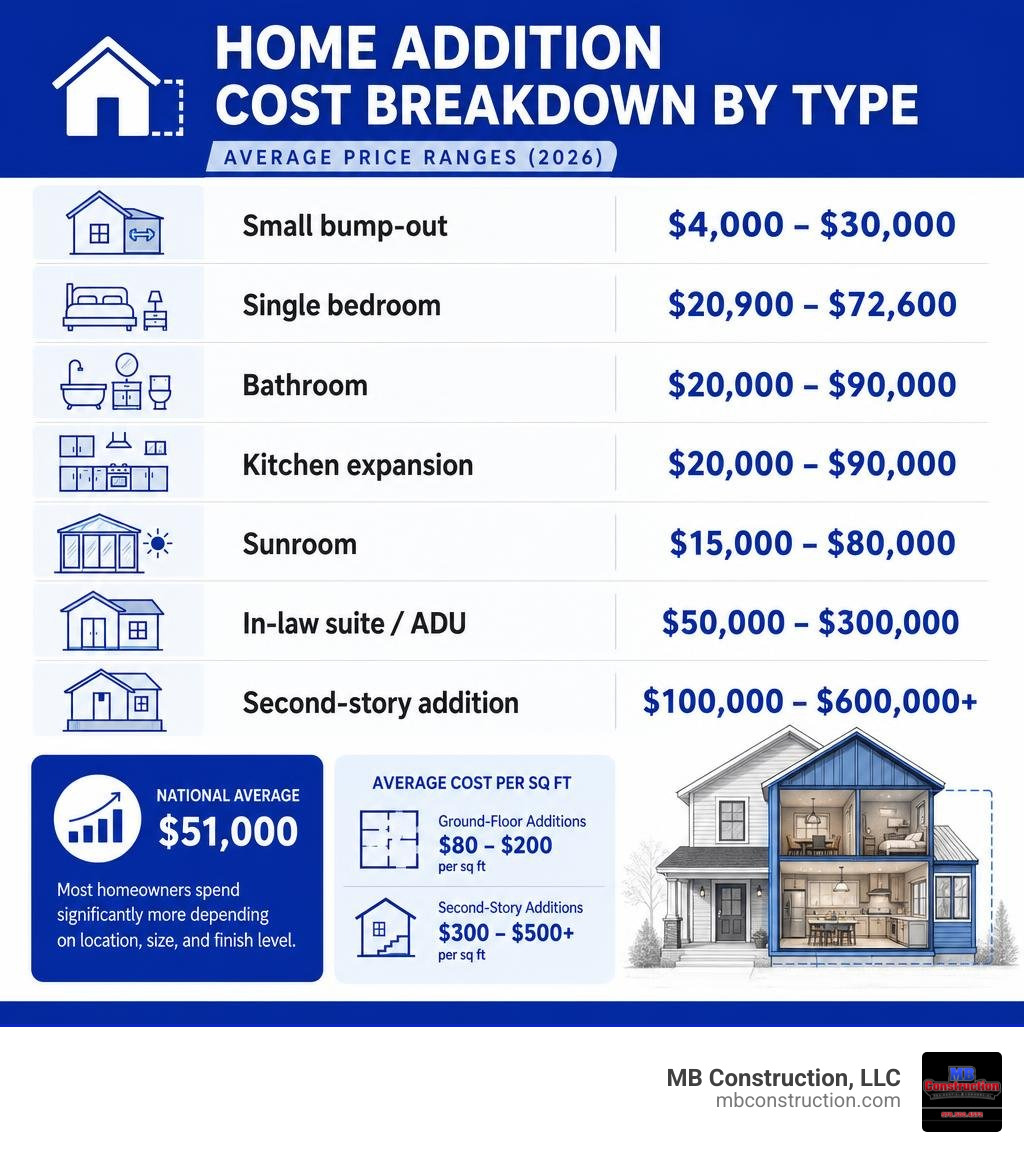
The cost of adding an addition to a house typically falls between $22,000 and $600,000+, depending on size, type, and location. Here’s a quick snapshot based on average internet data:
| Addition Type | Typical Cost Range |
|---|---|
| Small bump-out | $4,000 – $30,000 |
| Single bedroom | $20,900 – $72,600 |
| Bathroom | $20,000 – $90,000 |
| Kitchen expansion | $20,000 – $90,000 |
| Sunroom | $15,000 – $80,000 |
| In-law suite / ADU | $50,000 – $300,000 |
| Second-story addition | $100,000 – $600,000+ |
The national average is around $51,000, but most homeowners in the Greater Boston area and Middlesex County should budget significantly more due to regional labor rates and material costs.
Most ground-floor additions cost $80 to $200 per square foot. Second-story additions run $300 to $500 per square foot — sometimes more in Massachusetts.
You love your home, but you’ve outgrown it. Maybe your family is growing. Maybe you need space for a parent. Maybe you’re just done sharing one bathroom.
A home addition seems like the obvious fix. But the moment you start researching costs, the numbers get confusing fast. One source says $50,000. Another says $400,000. Both are technically correct — and that wide range is exactly why this guide exists.
The price gap comes down to what you’re building, how you’re building it, and where you live. A simple bedroom addition in the Midwest is nothing like a second-story addition in Andover or Chelmsford, MA.
This guide breaks down the real costs — clearly and honestly — so you can plan with confidence before the first shovel hits the ground.
Cost of adding an addition to a house further reading:
Average Cost of Adding an Addition to a House in 2026
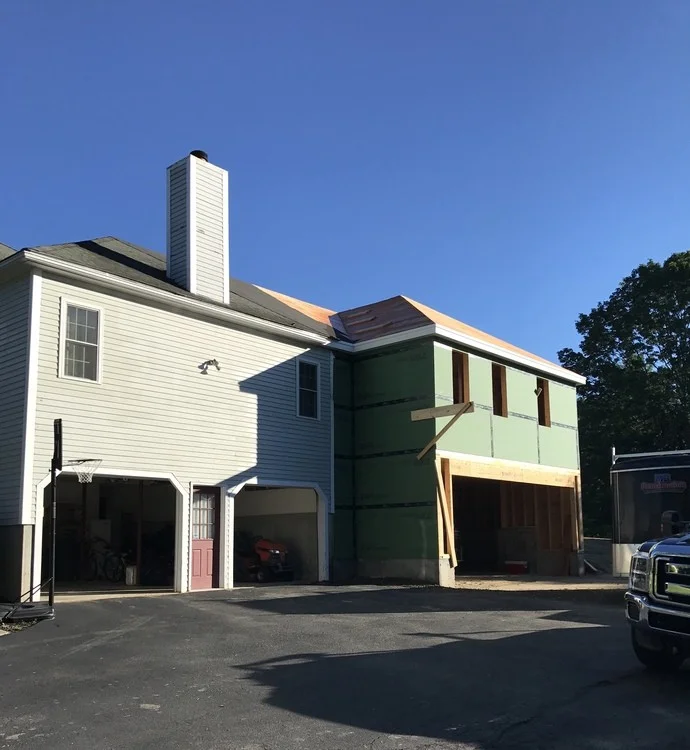
When planning a home expansion in Middlesex County or anywhere in Greater Boston, understanding the baseline financial landscape is crucial. Based on internet data, the average cost of adding an addition to a house is approximately $51,065. However, because home additions vary wildly from simple closets to entire multi-story wings, the actual market pricing spans a wide range.
If we look at average pricing from across the country, a typical project can range anywhere from $5,000 on the very low end for a minor DIY structural bump-out, up to $550,000 or more for complex, high-end multi-story expansions. In high-cost-of-living regions like Massachusetts, project basements often start higher, and custom high-end designs frequently exceed half a million dollars.
For local context, you can read our deep dive on More info on Massachusetts addition costs.
Several national resources compile these cost ranges annually to help homeowners establish a baseline:
- According to national cost data, standard home additions typically run from $5,000 on the low end to over $550,000 for high-end projects, with labor accounting for 40% to 60% of the total budget.
- Regional factors alter these numbers significantly; older New England homes require specialized framing and structural tie-ins that can push local costs above national medians.
- Furthermore, municipal zoning, historic district regulations, and modern energy codes in towns like Lexington and Concord add unique soft costs to the bottom line.
Estimating the Cost of Adding an Addition to a House by Square Foot
Estimating your construction costs per square foot is a helpful way to sketch out an initial budget. On a national level, basic ground-floor additions cost between $80 and $200 per square foot. However, if you are building in Middlesex County towns such as Billerica, Burlington, or Bedford, you should expect actual pricing to land closer to $150 to $400+ per square foot due to local labor rates and strict New England building codes.
One of the most important concepts to understand when estimating your cost per square foot is the difference between “wet” and “dry” rooms:
- Dry Rooms: These are spaces like bedrooms, family rooms, or home offices. They do not require plumbing lines, extensive venting, or complex drainage systems. Because they primarily require framing, drywall, insulation, electrical wiring, and flooring, they sit on the lower end of the cost-per-square-foot spectrum.
- Wet Rooms: These are bathrooms, kitchens, and in-law suites with kitchenettes. Because they require tying into your existing plumbing stack, installing specialized ventilation, and adding dedicated electrical circuits, their cost per square foot can easily double or triple that of a dry room.
To learn how to run these numbers for your own property like a professional estimator, check out our guide on how to Calculate your addition cost like a pro. If you are considering a mid-sized project, you can also explore our 300 sq ft addition guide for a detailed financial breakdown.
Cost Breakdown by Addition Type and Room Function
The final price of your project is heavily dictated by what the new space will be used for. A room with heavy plumbing and custom cabinetry will naturally require a larger investment than a simple structural extension.
Below is a comparative look at common addition types, their average cost ranges based on internet data, and their typical return on investment (ROI) at resale:
| Addition Type | Average Cost Range (Internet Data) | Typical ROI Range | Main Cost Drivers |
|---|---|---|---|
| Bedroom Addition | $25,000 – $250,000+ | 50% – 60% | Framing, windows, HVAC integration |
| In-Law Suite / ADU | $50,000 – $500,000+ | 60% – 70% | Independent plumbing, kitchens, separate HVAC |
| Bathroom Addition | $20,000 – $200,000+ | 55% – 75% | Plumbing density, tile work, fixtures |
| Kitchen Expansion | $25,000 – $250,000+ | 60% – 80% | Custom cabinetry, countertops, gas lines |
| Two-Car Garage | $15,000 – $150,000+ | 60% – 70% | Slab foundation, framing, garage doors |
| Basement Conversion | $10,000 – $100,000+ | 65% – 75% | Moisture proofing, egress windows, subfloors |
| Four-Season Room | $15,000 – $150,000+ | 45% – 55% | Insulated glass, independent heating/cooling |
For a broader perspective on how these different spaces compare, read our comprehensive House addition cost guide.
Bedrooms, In-Law Suites, and Family Rooms
Adding dry living space is one of the most common ways to accommodate a growing family or create a comfortable work-from-home environment.
A standard 10×12 bedroom addition is relatively straightforward, but costs will scale depending on your choice of exterior finishes and how easily we can tie the new roofline into your existing home. If you want to create a primary suite, which blends a dry bedroom with a wet bathroom and walk-in closets, expect costs to rise due to the added plumbing and high-end tile finishes.
For multi-generational families in towns like Carlisle, Reading, or North Andover, in-law suites (often designed as Accessory Dwelling Units, or ADUs) are incredibly popular. These additions function as self-contained apartments, complete with a living area, bedroom, bathroom, and kitchenette. Because they require independent utility connections and must meet specific local zoning bylaws, they represent a larger initial investment. To understand the layout options and financial requirements, check out our guide on In-law addition costs.
Kitchens and Bathrooms
Because kitchens and bathrooms require a high density of mechanical systems, plumbing, and electrical work, they are the most expensive rooms to build per square foot.
A bathroom addition requires extending hot and cold water supply lines, as well as main waste and vent stacks. If your new bathroom is located far from your home’s existing plumbing core, the cost of trenching through concrete or opening up finished ceilings to run pipe can add thousands to your budget. To keep costs manageable, you can read our breakdown of Small bathroom remodeling costs.
Kitchen expansions are similarly complex. Moving or adding gas lines, installing heavy-duty electrical circuits for commercial-grade appliances, and routing range hoods to the exterior require certified trade professionals. Additionally, the cost of custom cabinetry, stone countertops, and plumbing fixtures means the sky is the limit when it comes to material selections.
Garages, Basements, and Sunrooms
If you want to add functional square footage without necessarily extending the primary living footprint of your home, garages, basements, and sunrooms are excellent options.
A new garage protects your vehicles from harsh New England winters and provides valuable overhead storage. To see what goes into framing and pouring concrete for these structures, read our resource on Garage addition costs. If you have multiple vehicles or require a workshop space, you can also review our detailed guide on Two-car garage pricing.
Converting an existing basement is often one of the most cost-effective ways to add living space because the structural shell is already in place. However, you must account for moisture mitigation, proper insulation, and the installation of code-compliant egress windows. For a step-by-step look at this process, check out our Basement addition guide.
Finally, four-season rooms or sunrooms offer a beautiful way to enjoy natural light year-round. Unlike cheap three-season porches, a true four-season room requires insulated glass and a dedicated heating and cooling source to withstand Massachusetts winters. To see a realistic breakdown of these projects, read our article on Four-season room costs. If you are considering adding a bathroom to an existing garage structure to create a pool house or workshop, you may also find our guide on How Much Does Adding a Bathroom to Your Garage Actually Cost? helpful.
Key Factors Influencing Home Addition Pricing
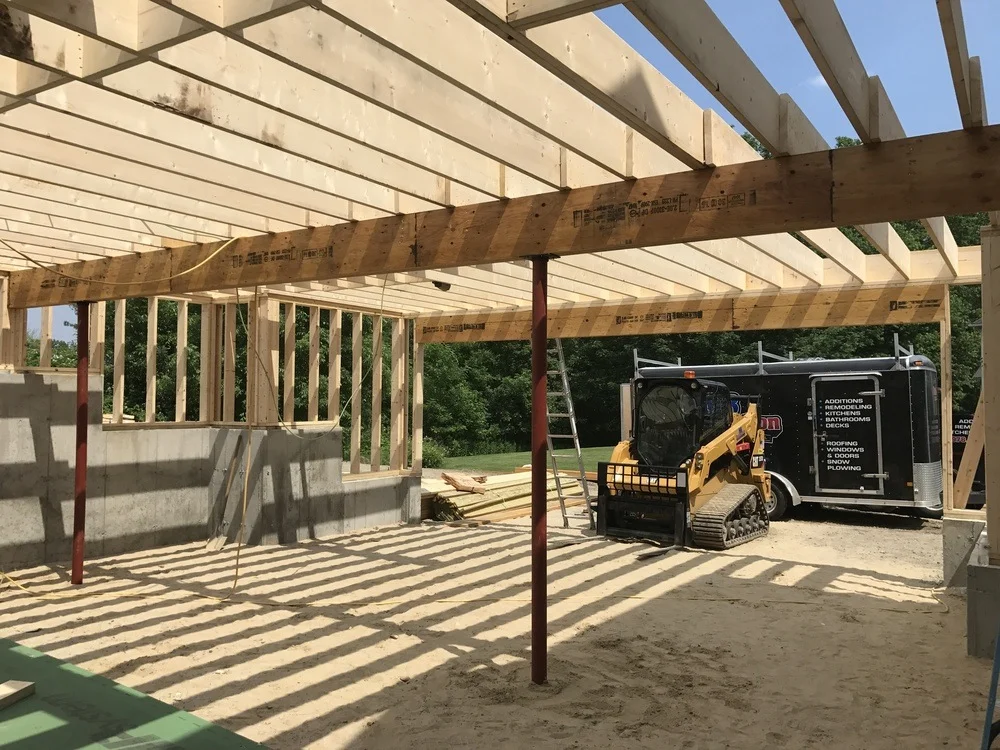
When budgeting for a home addition, it is easy to focus entirely on the visible finishes like flooring, paint, and light fixtures. However, the structural and mechanical bones of the addition are what truly drive the budget.
To build a realistic financial plan, we must consider several key phases:
- Site Prep and Excavation: Before any building can begin, the land must be cleared, graded, and excavated. If your yard has a steep slope, large boulder deposits, or a high water table, site preparation costs will increase.
- Foundation Type: Your addition will require a solid structural base. Pouring a full poured-concrete basement foundation is the most expensive option, but it provides valuable future living or storage space. A crawlspace foundation is a mid-priced alternative, while building on concrete piers or a slab-on-grade is generally the most budget-friendly.
- Framing and Roofing: This represents the structural shell of your addition. The complexity of your roofline plays a major role here. If we have to cut into your existing roof to create complex valley intersections, framing labor and material costs will rise compared to a simple gable roof tie-in.
- Mechanical Extensions: Your new space will need heat, electricity, and ventilation. We must assess whether your existing electrical panel has enough open breaker spaces to handle the new load, and whether your current heating and cooling system has the capacity to conditioned the extra square footage.
Proper planning and budgeting during these early stages are essential to ensure your project stays on track and within your financial limits.
Structural Decisions: Building Up vs. Building Out
One of the first major decisions you will face is whether to build “out” (a ground-level extension) or build “up” (adding a second story).
- Building Out: This involves expanding your home’s footprint into your yard. It requires excavation, pouring a new foundation, and framing a new roof. While it is generally less disruptive because construction occurs outside your existing living space, it does consume yard space and may require variance permits if you get too close to your property lines.
- Building Up: This involves adding a second story over your existing first floor. While you save on foundation costs, building up requires a structural engineer to verify that your existing foundation and first-floor wall framing can support the immense weight of a second story. If they cannot, we must perform extensive structural reinforcement, which can add significant cost. Additionally, building up requires cutting a hole in your first-floor ceiling to build a staircase, and your home will likely be unlivable for several weeks while the roof is open.
Regional and Seasonal Factors Impacting the Cost of Adding an Addition to a House
Living in Eastern Massachusetts and Middlesex County means navigating unique regional and seasonal factors that directly affect construction costs.
In towns like Billerica, Andover, Chelmsford, and Burlington, local building departments enforce strict structural codes to handle heavy New England snow loads. This means your addition’s roof must be engineered with stronger, more expensive rafters or trusses than a home built in the South.
Furthermore, our local climate dictates when we can build efficiently. Pouring concrete in the freezing winter months requires specialized heated blankets and chemical additives, which can increase foundation costs. Conversely, the spring and summer months represent peak construction season, when material demand and subcontractor availability are at their tightest.
To learn how to navigate these local challenges, read our guide on Budgeting for your Bay State build.
Hidden Soft Costs and Financing Options
When budgeting, many homeowners only look at the contractor’s physical construction estimate. However, “soft costs” — the fees associated with planning, permitting, and preparing your property — can add 15% to 25% to your overall project budget.
- Architectural and Engineering Fees: For any structural addition, you will need professional, stamped blueprints to secure a building permit. Architect fees typically range from 8% to 15% of the total construction cost, while a structural engineer can cost between $1,500 and $5,000 to design load-bearing beams and foundation tie-ins.
- Permits and Inspections: Municipal building permits in Greater Boston are typically calculated as a percentage of the estimated project value. Between building, electrical, plumbing, and mechanical permits, you should budget anywhere from $1,000 to $5,000+.
- Property Taxes: Adding square footage increases your home’s assessed value. Once the town building inspector signs off on the final occupancy permit, your local tax assessor will reassess your property, which will increase your annual property taxes.
- Contingency Fund: We always advise our clients to maintain a 15% to 20% contingency fund. When opening up walls on older Massachusetts homes, it is common to discover outdated knob-and-tube wiring, plumbing leaks, or structural rot that must be repaired before the new construction can proceed.
To explore your funding options, including Home Equity Lines of Credit (HELOCs), cash-out refinances, and construction loans, read our guide on Financing your addition.
Frequently Asked Questions About Home Additions
Is it cheaper to build up or build out?
Generally, building out (a ground-level addition) is 20% to 40% cheaper per square foot than building up (adding a second story). Building up requires expensive structural reinforcement of your existing first-floor walls and foundation, staircase construction, and temporary housing costs while your roof is removed.
How long does a typical home addition project take?
A standard ground-floor room addition typically takes 3 to 6 months of active construction. However, you must add 2 to 4 months before construction begins for architectural design, engineering, and the municipal permit approval process.
Will a home addition increase my property taxes?
Yes. Your local municipality will reassess your home’s value based on the added square footage and improved finishes. You should expect your annual property taxes to rise, typically by $1,000 to $4,500 depending on your town’s specific millage rate.
Conclusion
Adding square footage to your home is a major investment, but when designed and executed correctly, it can transform how your family lives while building long-term equity.
At MB Construction, LLC, based in Billerica, MA, we specialize in high-quality, time-sensitive home additions across Middlesex County and Greater Boston. From the initial excavation to the final trim, our team of expert craftsmen uses premium materials to deliver guaranteed workmanship on every project.
Whether you are looking to build a spacious primary suite in Andover, an in-law apartment in Lexington, or a family room extension in Chelmsford, we are here to guide you through every step of the process.
Ready to start planning? Schedule a consultation for your home addition with our expert team today.
